
Staying Active With a Desk Job: Beating the Sitting Trap
A desk job means hours of stillness, and long, unbroken sitting quietly stiffens your spine and drains your energy. The fix isn't quitting your job — it's weaving small bursts of movement through the day. This is a practical guide to 'movement snacks,' walking, and standing breaks that counteract prolonged sitting, keep you feeling loose, and are easy to actually keep up. Plus how it fits with wellness care at Thrive Chiropractic in Troy, MI.
Why Sitting Still Is the Real Problem
If you work at a desk, you probably spend most of your waking hours seated — at the computer, in meetings, in the car, on the couch afterward. It adds up fast, and the body notices. But it's worth being precise about what the problem actually is, because it isn't sitting itself. Sitting is a normal, necessary position. The trouble is sitting still — holding one posture, unbroken, for hours at a time.
When you stay frozen in a chair, your spine is loaded continuously in the same way, your hip flexors shorten and tighten, the muscles that support your back and neck go quiet and underused, and circulation slows. Do that for a whole workday, most days, and the familiar results follow: a stiff lower back when you finally stand, a tight neck and shoulders, achy hips, and a heavy, sluggish feeling by mid-afternoon. The encouraging flip side is that the remedy is simple and entirely within reach — you don't have to quit your job or overhaul your life. You just have to interrupt the stillness, often, with small bursts of movement. This guide is about how to do that in ways that actually stick.
The Power of Movement Snacks
The single most useful idea for desk workers is the movement snack: a short, bite-sized burst of activity woven through the day, rather than relying on one workout to undo eight hours of stillness. Each snack is tiny — a minute or two — but scattered across a workday they add up to meaningfully more movement and, more importantly, far less unbroken sitting.
They're powerful precisely because they're so doable. You don't need a gym, a change of clothes, or a spare half hour; you just need to stand up and move for a moment. Some easy ones:
- Stand and stretch. Every half hour or so, stand up and do a gentle stretch — reach your arms overhead, open across your chest, roll your shoulders, tip your head side to side.
- A quick lap. Walk to the kitchen, the far side of the office, or just around the room and back. Pair it with something you'd do anyway, like refilling your water.
- A few simple moves. Ten slow squats, a set of calf raises, or a gentle back-and-hip loosener between tasks gets the blood moving and wakes up sleepy muscles.
- Take the stairs. Small choices like stairs over the elevator turn dead time into movement.
A handful of these across the day changes how your body feels by evening. For gentle stretches that work perfectly as movement snacks, see our daily stretches for a healthy spine.
Take Regular Standing Breaks
Beyond quick snacks, simply changing your default position regularly makes a real difference. Long stretches of sitting load your spine one way; standing shifts that load and lets tight hips open up. The key isn't standing instead of sitting — it's alternating between the two so you're never locked in either for too long.
- Break up sitting every half hour or so. Stand up, even briefly, to reset your posture and take the continuous load off your lower back.
- Use a sit-stand setup if you have one. Alternate between sitting and standing through the day. The benefit comes from the changing — standing rigidly still for hours has its own downsides, so keep shifting and moving regardless.
- Stand for the things that don't need you seated. Phone calls, reading on your screen, casual meetings — do them on your feet when you can.
Walk More Than You Think You Can
If movement snacks are the foundation, walking is the standout habit. It's gentle, rhythmic, easy to keep up, and about as good as it gets for a spine that's been sitting — it moves the joints, gets the blood flowing, loosens the hips, and lifts your energy and mood at the same time. The best part is how much of it you can sneak into a workday without setting aside dedicated time.
- Walk during calls. Take phone meetings on your feet, pacing or heading outside when you can.
- Walk to people. Cross the office to talk to a colleague instead of firing off a message.
- Build walks into breaks. A short walk at lunch or between big tasks resets both body and mind, and you'll often come back sharper.
- Bookend your commute with steps. Park a little farther away, get off a stop early, or take a lap around the block before you head in.
None of this depends on one big workout. Steps accumulated across the day — the "walk more than you think you can" approach — do a lot for a desk-bound body, and they compound. Walking pairs especially well with a strong, stable core, which is what keeps you upright and comfortable as you move; see core strength for everyday life for that side of it.
Move Better While You're Sitting
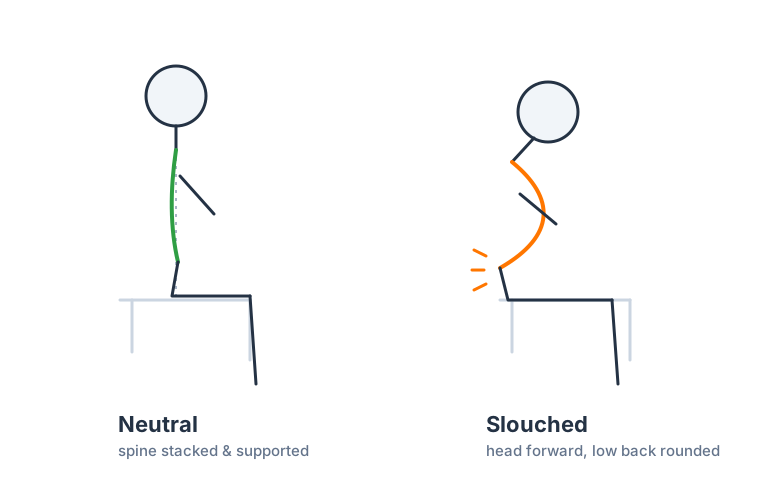
You can't stand and walk every minute, so the sitting you do still matters — and how you sit shapes how much strain a desk day puts on your spine. A well-set-up workstation removes a large, constant source of daily load, even before you factor in the movement.
- Support your lower back. Sit back into your chair with your lower back supported, using a cushion if the chair doesn't do it, so you're not slumped forward for hours.
- Set your screen at eye level. The top of your monitor around eye height keeps your head balanced over your shoulders instead of drifting forward and dragging on your neck.
- Keep your feet supported. Feet flat on the floor or a footrest, thighs roughly parallel to the ground, so your pelvis sits in a neutral position.
- Bring the work to you. Keyboard, mouse, and phone close, so you're not constantly reaching or leaning.
Even a great setup doesn't replace movement — the best chair in the world still needs you to get up regularly. But a good one means the sitting portion of your day isn't working against you. Our guide to desk ergonomics and workstation setup walks through it in detail, and if your job's toll on your back is a real concern, our Back Pain library — including back pain from desk work — goes deeper.
Making Movement Automatic
The habits above only help if they actually happen, and willpower alone tends to fade by a busy Wednesday afternoon. The trick is to make movement automatic — built into the day so it happens by default rather than by decision.
Anchor movement to things you already do: stand every time you take a call, do a lap whenever you refill your water, stretch at the end of each meeting, take the stairs every time. Use a reminder until the rhythm sticks. Make the active choice the easy one — keep your water glass a walk away, put the printer across the room, leave your walking shoes by the door. And keep the bar low: the aim isn't to become an athlete between emails, it's simply to break up stillness often. Small, frequent movement, kept up consistently, does far more for a desk-bound body than an occasional burst of intensity. If you want help fitting movement to your workplace specifically, our workplace wellness resources are built for exactly that. And for the bigger picture of staying ahead of desk-related strain, see preventing back pain.
How This Fits With Chiropractic Care
Staying active is the foundation, but sometimes a desk-bound spine needs a hand. Months or years of sitting can leave certain segments genuinely stiff and restricted, and muscles tight and guarded, in ways that regular movement alone doesn't fully resolve. That's where hands-on care complements your daily habits rather than replacing them.
At Thrive Chiropractic in Troy, MI, Dr. Rubinstein can assess how your spine is moving after a desk-heavy routine, restore motion to segments that have stiffened, and use massage therapy to release the tight neck, shoulder, and hip muscles that build up from sitting. For the desk-worker's forward-head, tight-neck pattern in particular, gentle upper cervical care can help. Alongside that, you'll get practical coaching on the movement, standing, and workspace habits in this guide, tuned to your situation. The care resets what sitting has tightened; the movement keeps it from creeping back.
If your desk-related stiffness has turned into pain that travels, lingers, or keeps returning, that's the moment to schedule a visit rather than just move around it. A quick exam sorts out what's simple sitting-stiffness and what deserves a closer look.
Frequently Asked Questions
Staying active with a desk job raises practical questions — how often to get up, what movement snacks are, whether a standing desk is worth it, whether sitting causes pain, and how to fit movement into a packed day. Those are answered in detail in the FAQ section on this page.
If sitting is taking a toll on your back or neck and you'd like guidance built for your workday rather than a generic list, schedule a visit with Dr. Rubinstein at Thrive Chiropractic in Troy, MI. You'll get an honest read on how your spine is holding up and practical, personalized advice. You can also explore the wider Wellness & Healthy Living library, including daily stretches for a healthy spine and core strength for everyday life.
Healthy Spine & Wellness Guide (PDF)A one-page take-home guide: everyday habits for a healthier spine, and the warning signs worth getting checked.PDFThis article is for general education and is not a substitute for professional medical advice, diagnosis, or treatment. Always consult a qualified healthcare provider about your specific situation.
Frequently Asked Questions
How often should I get up from my desk?
A good rule of thumb is to break up sitting every thirty minutes or so — even a minute of standing, stretching, or walking counts. The exact timing matters less than the habit of not staying frozen in one position for hours. Some people set a reminder every half hour; others tie it to natural breaks like finishing a task or a meeting. What your spine really wants is frequent change of position, not one long block of stillness.
What are movement snacks?
Movement snacks are short, bite-sized bursts of activity scattered through the day instead of one big workout — a minute of standing and stretching between tasks, a lap around the office, a few squats or shoulder rolls, taking the stairs. Each one is small enough to fit into a busy schedule, but together they add up to meaningfully more movement and far less unbroken sitting. They're one of the most practical ways for desk workers to stay active.
Is a standing desk worth it?
A standing desk can help, but mainly because it makes it easy to change position — and the real benefit is the changing, not standing still for hours, which has its own downsides. If you have one, alternate between sitting and standing and keep moving regardless of which you're doing. If you don't, you can get most of the same benefit simply by standing up and moving regularly. The habit of shifting position matters more than the equipment.
Can sitting all day cause back and neck pain?
Prolonged, still, often slumped sitting is one of the most common contributors to everyday back and neck stiffness and pain, because it loads the spine continuously and leaves the supporting muscles underused. Sitting itself isn't the enemy so much as sitting motionless for hours in a poor position. Breaking it up with regular movement, setting up your workspace well, and keeping generally active takes most of that strain off.
How can I fit more movement into a busy workday?
Piggyback movement onto things you already do: stand for phone calls, walk to a colleague instead of messaging, take the stairs, do a lap when you refill your water, and stretch for a minute between tasks. Park a little farther away or walk part of your commute if you can. None of it requires extra time carved out of the day — it's about turning existing moments into movement, so staying active happens by default rather than by willpower.
Ready to get evaluated at Thrive Chiropractic?
Dr. Rubinstein will assess what’s really going on and build a care plan tailored to you. Reach out and we’ll get you scheduled.
2133 Crooks Road | Troy MI 48084