
Everyday Posture Tips: Small Habits for a Comfortable Spine
Good posture isn't about standing rigidly at attention — it's a handful of small, sustainable habits woven through an ordinary day. Here's a practical guide to posture while standing, sitting, using your phone, and lifting, built around gentle, realistic changes that add up over time, plus how care at Thrive Chiropractic in Troy, MI supports a comfortable, well-moving spine.
What Good Posture Really Means
Ask most people to "sit up straight" and they'll snap into a stiff, chest-out pose they can hold for about thirty seconds before slumping right back. That's not good posture — it's a strain, and it's why willpower-based posture never lasts. Good posture is something gentler and more sustainable: a relaxed, balanced alignment where your body stacks up comfortably over itself, combined with the freedom to move and change position often.
In practice that means your head sitting over your shoulders rather than craned forward, your shoulders relaxed rather than hunched, and the natural curves of your spine gently maintained rather than collapsed or forced. Just as important, it means not freezing in any single position — even a "perfect" one — for hours. The healthiest posture is a moving one. This guide walks through small, realistic habits for the main moments of an ordinary day, and it sits within our wider Wellness & Healthy Living library. None of these habits is dramatic on its own; the power is in a few of them, kept up steadily.
Standing Tall Without Strain
Standing well is less about effort and more about letting your body settle into balance. When your bones stack up over each other, your muscles do far less work to keep you upright.
- Stack your head over your shoulders over your hips. Picture a gentle line running down through your ear, shoulder, and hip. When those stack up, the load travels straight down your frame instead of pulling forward.
- Let your weight settle evenly. Spread your weight across both feet rather than sinking into one hip, and keep a soft bend in your knees rather than locking them.
- Relax your shoulders down and back. Not yanked back in a rigid pose — just let them drop away from your ears and settle, opening the chest naturally.
- Keep the natural curves. Your lower back has a gentle inward curve by design; you're keeping it relaxed and neutral, not flattening it or over-arching.
If you stand for long stretches at work or at home, remember that even good standing gets tiring when it's held still — shift your weight, take a step, and change position often, the same way you would when sitting.
Sitting Through the Day
Most of us sit for a large chunk of the day, so a few sitting habits go a long way. The theme is simple: support your spine and don't hold still for hours.
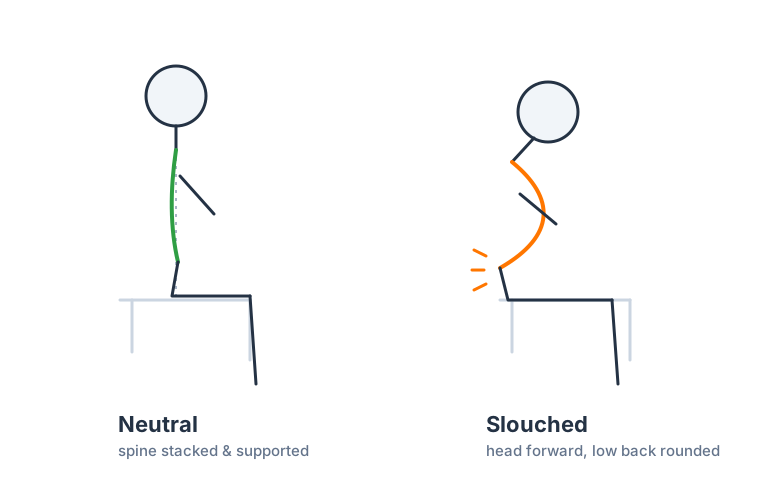
- Support your lower back. Sit back into your chair so your lower back is supported and keeps its gentle curve, using a small cushion or rolled towel if the chair doesn't do it.
- Keep your head balanced. Set screens at eye level so your head stays over your shoulders instead of drifting forward toward a low screen.
- Feet flat, hips supported. Feet on the floor or a footrest, knees roughly level with your hips, so your pelvis sits in a comfortable neutral position.
- Change position often. No single sitting posture is meant to be held for hours — the fix for a long sit is to move and reset regularly.
Because so much sitting happens at a desk, it's worth setting that space up properly once; our full guide to desk ergonomics and workstation setup walks through it step by step.
Phone and Device Habits
Phones and tablets pull our heads down more than almost anything else in modern life. Every time you drop your head to look at a screen in your lap, you tip a fair amount of weight forward onto your neck and upper back — and most of us do it hundreds of times a day.
- Bring the phone up, not your head down. Raise the device toward eye level so you can look at it with your head balanced over your shoulders, rather than bending your neck to meet it in your lap.
- Prop tablets and e-readers. Use a stand or rest them against something so you're not hunched over them for long reading or viewing sessions.
- Take scrolling breaks. Long, unbroken stretches of looking down are what add up — look up, roll your shoulders, and move your neck through its range now and then.
- Mind kids and teens too. The same habits matter for younger device users, whose necks take the same forward load.
This forward-head, screen-down pattern is common enough to have a name; if it already sounds like you, our guide to tech neck explains it in more depth, and neck pain from desk work covers the workday version.
Lifting and Carrying With Care
You don't have to lift anything heavy to strain your back — it's usually the countless everyday lifts done carelessly that cause trouble: a laundry basket, a grocery bag, a child, a box off the floor. A few simple mechanics protect you across all of them.
- Hinge at your hips and knees. Instead of bending from your waist and rounding your lower back, push your hips back and bend your knees, keeping your back in its natural position and your chest up.
- Keep the load close. Hold whatever you're lifting near your body — the farther it is from you, the more strain it puts on your back.
- Let your legs do the work. Stand up by driving through your hips and legs, not by yanking with your lower back.
- Turn with your feet. To change direction, step and pivot your feet rather than twisting your spine while holding a load.
- Know your limits. If something is clearly too heavy or awkward, get help or split it up — there's no prize for lifting it alone.
These same mechanics protect the countless small lifts of daily life. For everyday load in general, our core strength for everyday life guide covers building the trunk support that makes lifting safer.
Make the Habit Stick
The hardest part of posture isn't knowing what good posture is — it's remembering it in the moment, day after day. So the real skill is building gentle cues into your routine rather than relying on willpower.
- Anchor habits to things you already do. Reset your posture every time you sit down at your desk, or check your phone position each time you unlock it. Tying a habit to an existing action makes it far more likely to stick.
- Use reminders early on. A note on your monitor or a gentle phone reminder helps until the habit runs on its own.
- Aim for often, not perfect. You will slump, crane, and forget — everyone does. Success isn't never slipping; it's returning to a comfortable, balanced position regularly and moving often.
- Keep moving. Above all, the best posture is a changing one. No habit on this page replaces simply getting up and moving through your day.
Small, sustainable changes kept up over time genuinely compound into a body that feels more comfortable and moves more freely.
How Chiropractic Care Supports Posture
Everyday habits do most of the work, but hands-on care can be a helpful partner, especially if long-standing patterns have left you stiff or if posture habits alone aren't giving you the comfort you're after. The aim isn't to force your body into a pose — it's to help it move well so that a balanced posture comes more easily.
At Thrive Chiropractic in Troy, MI, that can look like a hands-on assessment of how you stand, sit, and move, gentle adjustments to keep stiff segments gliding freely, and massage therapy to release the tension that a forward-leaning day builds up. When your feet and how you stand quietly add strain up the chain, custom orthotics may be part of the plan, and upper cervical care can help when the head-forward pattern centers on the top of the neck. Dr. Rubinstein pairs any hands-on work with coaching on the everyday habits in this guide, because lasting comfort comes from the daily habits more than any single visit.
Frequently Asked Questions
Everyday posture raises practical questions — what good posture really looks like, how to improve it during a normal day, whether the occasional slouch is a problem, how phones affect your neck, and whether better posture eases aches. Those are answered in detail in the FAQ section on this page.
If aches keep returning despite good habits, schedule a visit with Dr. Rubinstein at Thrive Chiropractic in Troy, MI. You'll get a thorough look at how you move, honest guidance you can actually keep up, and a practical plan for a comfortable spine. You can also explore the wider Wellness & Healthy Living library, including desk ergonomics and workstation setup and sleep posture and your spine.
Healthy Spine & Wellness Guide (PDF)A one-page take-home guide: everyday habits for a healthier spine, and the warning signs worth getting checked.PDFThis article is for general education and is not a substitute for professional medical advice, diagnosis, or treatment. Always consult a qualified healthcare provider about your specific situation.
Frequently Asked Questions
What does good posture actually look like?
In standing, it's a relaxed alignment where your ears sit roughly over your shoulders and your shoulders over your hips, with a gentle natural curve in your lower back — not a stiff, chest-out military stance. In sitting, it's your lower back supported and your head balanced over your shoulders rather than craned forward. The key is that good posture is relaxed and easy to hold, and it always includes the freedom to shift and move rather than freezing in one 'correct' position.
How can I improve my posture during a normal day?
Focus on a few small, repeatable habits rather than one big correction. When standing, let your weight settle evenly and stack your head over your shoulders and hips. When sitting, support your lower back and keep your screen at eye level. Bring your phone up to eye level instead of dropping your head to it. And move often — the best posture is a changing one. Picking one habit at a time and letting it become automatic works far better than trying to hold a perfect pose all day.
Is it bad to slouch sometimes?
A brief slouch here and there isn't the problem — the body is built to handle a variety of positions, and even a relaxed slump for a few minutes is fine. Trouble comes from holding any one posture, slouched or otherwise, for hours on end. So rather than fearing every slouch, aim to change position regularly and return to a comfortable, balanced alignment as your default. Movement and variety matter more than rigid perfection.
Does looking down at my phone affect my posture?
It can, because dropping your head to look down at a phone tips a fair amount of weight forward onto your neck and upper back, and doing it for long stretches, many times a day, adds up. The simple fix is to raise the phone toward eye level instead of bending your neck down to it, and to take breaks from long scrolling sessions. Small adjustments to how you hold your device make a real difference to how your neck feels.
Can improving my posture reduce aches and pains?
Better everyday posture habits support comfort and function for many people, because they reduce the steady, one-position load that tends to leave you stiff and tired. It's fair to describe that as support rather than a cure, though — posture is one piece of a bigger picture that includes movement, strength, and sleep. If you have aches that keep returning despite good habits, that's worth having evaluated, since something more specific may be involved.
Ready to get evaluated at Thrive Chiropractic?
Dr. Rubinstein will assess what’s really going on and build a care plan tailored to you. Reach out and we’ll get you scheduled.
2133 Crooks Road | Troy MI 48084