
Core Strength for Everyday Life: Move Better, Feel Steadier
A strong, stable core is the quiet engine behind good posture and easy everyday movement — lifting kids, carrying groceries, doing the chores, staying steady on your feet. This is a general-fitness look at why your core matters so much, which muscles actually do the work, and a few foundational exercises anyone can build at home. Plus how core strength fits alongside wellness care at Thrive Chiropractic in Troy, MI.
What Your Core Really Does
Say "core" and most people picture abs and crunches. But the core that matters for real life is bigger and quieter than that. It's the whole band of muscles wrapping around your midsection — front, sides, and back — that work together to stabilize your trunk and spine. Think of it as the stable center that almost every movement you make radiates out from. When you stand tall, reach for a shelf, twist to grab a bag off the back seat, or lift a child off the floor, your core braces first so the rest of your body has something solid to move from.
That's why core strength shows up everywhere in daily life, usually without you noticing. A strong, coordinated core makes good posture easier to hold through a long day, keeps you steady on your feet, and lets ordinary tasks — carrying groceries, vacuuming, playing with the kids, loading the car — feel light and controlled rather than awkward and strained. A weak core, by contrast, leaves your back and limbs picking up the slack, which is often where that stiff, "out of shape" feeling and the little everyday aches come from. Building core strength isn't about looks; it's about making movement feel good.
Meet the Muscles That Stabilize You
"The core" is really a team of muscles, and the ones that do the practical stabilizing work aren't the surface six-pack:
- The deep abdominal muscles. The deepest of these wraps around your waist like a wide belt. When it tightens, it creates firm, all-around support that braces your spine and trunk from the front and sides — the foundation of a good "brace" before you lift or move.
- The muscles along the spine. Small muscles run the length of your back, connecting the vertebrae and fine-tuning the position of each segment. They keep you upright and steady and are a big part of why good posture feels effortless when the core is strong.
- The glutes and hips. The powerful muscles of your buttocks and hips aren't "abs," but they anchor and control the pelvis — the base your whole trunk sits on. Strong glutes take load off the lower back during standing, walking, and lifting, and they're central to steady, powerful everyday movement.
The goal of core training isn't to make these muscles bigger or to chase a certain look. It's to make them strong, coordinated, and quick to switch on so they stabilize you automatically — during a workout, sure, but far more importantly during the hundreds of ordinary movements you make every day.
Before You Start
Core work should feel like controlled effort, never pain. A few ground rules keep it productive:
- Brace gently — don't clench. Aim for a firm, low-level tension around your whole midsection, as if bracing for a light poke to the stomach. Not a hard suck-in, not a held breath.
- Keep breathing. Breathe steadily and smoothly through every rep and hold. If you have to hold your breath to manage a move, it's too hard — make it easier.
- Move slowly and with control. Stability comes from control, not speed or momentum. Slow, precise reps switch on the deep core; fast, sloppy ones don't.
- Start where you are. Begin with the easiest version of each exercise and build up. Short holds and a few clean reps beat long, shaky ones every time.
- Stop if something hurts. Mild muscle effort is expected; sharp pain, or pain that radiates into an arm or leg, means stop that movement and reassess.
Some symptoms mean core training should wait until you've been checked out.
Foundational Core Exercises
These five moves build practical, everyday stability. Start with the easier versions, keep your form clean, and build up gradually — a little more hold time or a few more controlled reps as they get comfortable.
- Glute bridge. Lying on your back with knees bent and feet flat, squeeze your glutes and lift your hips until your body forms a straight line from shoulders to knees. Hold briefly, then lower with control. This wakes up the glutes that power so much everyday movement.
- Bird-dog. On your hands and knees, brace gently and slowly extend one arm forward and the opposite leg back until they're in line with your body — keeping your back flat and level, hips square. Hold a moment, return with control, and switch sides. Excellent for coordinated, cross-body stability.
- Dead bug. Lying on your back with arms reaching toward the ceiling and knees bent at 90 degrees, keep your lower back gently supported as you slowly lower one arm overhead and the opposite leg toward the floor, then return and switch. The key is keeping your trunk still while your limbs move.
- Plank (from the knees first). Hold a straight line from head to knees on your forearms and knees, core braced and hips level, building up your hold gradually. Progress to a full plank on your toes only once the knee version feels easy and controlled.
- Side plank (from the knees first). Stacked on one forearm with your hips lifted and steady, hold a straight line to train the side core that resists twisting — a big part of staying steady when you carry something on one side.
Keep the numbers modest and the movement clean. A handful of controlled reps or a short, steady hold beats a pile of rushed ones. To round out this strength work with mobility, pair it with our daily stretches for a healthy spine.
Core Strength in Real Life
The whole point of training your core is what it does outside the exercises — in the ordinary movements that make up your day. A strong, coordinated core quietly changes how those feel:
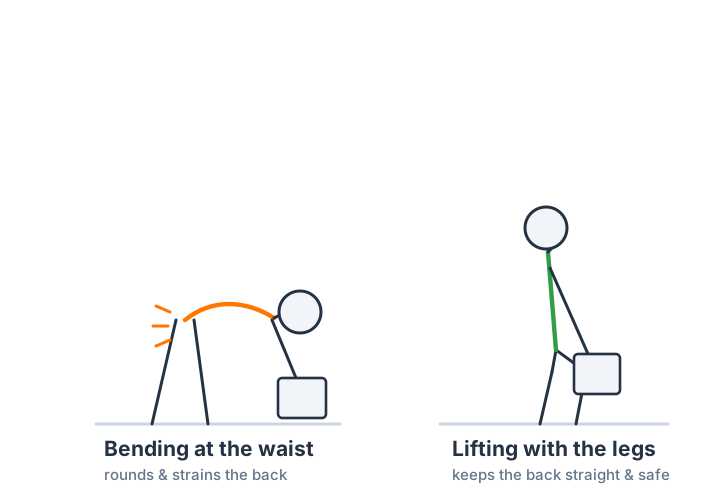
- Lifting kids and heavy things. Bracing your core before you lift, and keeping the load close, lets your legs and hips do the work while your trunk stays steady — which is how a lift feels controlled instead of jarring. Learning to lift with a hip hinge is a core skill in every sense.
- Carrying groceries and bags. A stable core keeps you upright and balanced when weight is unevenly loaded on one side, so you're not lurching or straining to stay level.
- Chores and daily tasks. Vacuuming, gardening, loading the dishwasher, reaching into the trunk — all the bending, twisting, and reaching of a normal day are easier and safer when your center is strong.
- Standing and posture. Good posture is far less effortful when the core doing the holding is strong. It's a lot of why a fit core makes you feel taller and less fatigued by evening.
Building It Into Your Week
You don't need a long or grueling program to build a genuinely useful core. For general fitness, a couple of short sessions a week — two or three, with a recovery day in between — is enough to build and keep everyday strength. A focused ten minutes of the moves above, done consistently over weeks, does far more than an occasional long, punishing session.
Make it sustainable. Keep sessions short, warm up with a minute of easy movement first, and stop while your form is still clean rather than grinding to exhaustion. Build up by adding a little hold time or a few reps before making the moves harder. And remember your core isn't only trained in dedicated sessions — it works quietly during walking and general activity, so staying active through the day supports it too. Our guide to staying active with a desk job covers keeping that background movement going even when work keeps you seated, and strong core habits are a cornerstone of preventing back pain over the long run.
How Core Strength Fits Your Wellness
Core training works best as one part of a well-rounded, active life — and it's most effective when your spine and hips are moving well to begin with. Sometimes a stiff segment or a tight, guarded muscle keeps the deep core from switching on no matter how diligently you train, and that's where hands-on care fits in.
At Thrive Chiropractic in Troy, MI, Dr. Rubinstein can check how well your spine and hips are moving, restore motion where things have stiffened, and use massage therapy to release tight muscles — then help you build a core and movement routine that suits your body and goals. For some people, how they stand and move from the feet up matters too, and supportive footwear or custom orthotics can be a useful piece of steady, well-aligned movement.
If you're finding that everyday movement is genuinely painful rather than just out-of-shape — or if back pain is the real reason you're here — that's the moment to schedule a visit rather than push through a general routine. And again, if back pain specifically is your concern, start with core stability for back pain, which is built for exactly that.
Frequently Asked Questions
Core strength for everyday life raises practical questions — why it matters so much, the best exercises for beginners, whether crunches are necessary, how often to train, and whether core work helps back pain. Those are answered in detail in the FAQ section on this page.
If you'd like a core and movement plan built for your body and goals rather than a generic list, schedule a visit with Dr. Rubinstein at Thrive Chiropractic in Troy, MI. You'll get an honest read on how you're moving and practical guidance to build on. You can also explore the wider Wellness & Healthy Living library, including daily stretches for a healthy spine and staying active with a desk job.
Healthy Spine & Wellness Guide (PDF)A one-page take-home guide: everyday habits for a healthier spine, and the warning signs worth getting checked.PDFThis article is for general education and is not a substitute for professional medical advice, diagnosis, or treatment. Always consult a qualified healthcare provider about your specific situation.
Frequently Asked Questions
Why is core strength important for everyday life?
Your core is the stable center that almost every movement works from. When it's strong and coordinated, standing tall, bending, twisting, reaching, lifting, and carrying all feel easier and steadier, and your posture holds up better through a long day. A weak core leaves your back and limbs doing more than their share, which is where everyday aches and that 'out of shape' feeling often creep in. Strengthening it pays off in how good ordinary movement feels.
What are the best core exercises for beginners?
Start with stability-style moves rather than crunches: the glute bridge, bird-dog, dead bug, a plank from your knees, and a side plank from your knees are among the safest and most effective. They train the deep core to brace and steady your trunk without straining your back. Begin with short holds and a few controlled reps, focus on clean form and steady breathing, and build up gradually. Quality matters far more than numbers.
Do I need to do crunches to build a strong core?
No. Crunches mostly work the surface abdominal muscles through repeated forward bending, and they're not the best way to build the deep, all-around stability that actually helps everyday movement — and for some people they can bother the lower back. Stability exercises like planks, bird-dogs, and dead bugs train the core to do its real job of steadying your trunk, which carries over to daily life far better than a pile of crunches.
How often should I train my core?
For general fitness, a few short sessions a week — think two or three — is plenty to build and maintain everyday core strength, with a day in between for recovery. Consistency over weeks matters much more than long or frequent sessions. A focused ten minutes done regularly beats an occasional marathon. Because the core also works quietly during walking and other activity, staying generally active supports it too.
Can core exercises help with back pain?
Core strength is a well-established part of long-term back care for many people — but if you're currently dealing with back pain, the right approach is a routine matched to what's driving it, not a general fitness program. Some moves that are fine for general fitness can aggravate a sore back. This article is general-fitness focused; if back pain is your reason for reading, our core stability guide for back pain, and ideally an exam, will serve you better.
Ready to get evaluated at Thrive Chiropractic?
Dr. Rubinstein will assess what’s really going on and build a care plan tailored to you. Reach out and we’ll get you scheduled.
2133 Crooks Road | Troy MI 48084