
Vestibular Neuritis & Labyrinthitis
Vestibular neuritis and labyrinthitis are inner-ear nerve inflammations — often after a virus — that cause sudden, severe, constant vertigo lasting days. This guide explains how they feel, how they differ from brief positional vertigo, why they need a medical diagnosis, how recovery and vestibular rehabilitation work, and how Thrive Chiropractic in Troy, MI can support the neck and tension side of the picture.
What Are Vestibular Neuritis & Labyrinthitis?
Vestibular neuritis and labyrinthitis are two closely related inner-ear conditions that cause a sudden, dramatic bout of vertigo. Both come from inflammation deep in the inner ear, and both are most often linked to a viral infection — sometimes arriving on the heels of a cold, the flu, or another upper-respiratory bug.
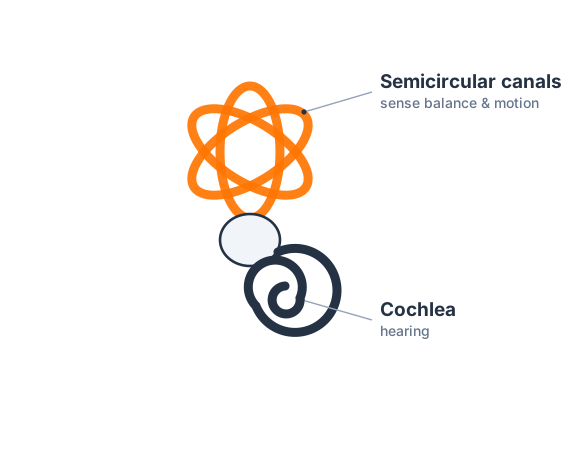
The difference between them comes down to what the inflammation touches. In vestibular neuritis, the inflamed structure is the balance nerve — the nerve that carries signals about head movement from your inner ear to your brain — so it causes vertigo without changing your hearing. In labyrinthitis, the inflammation involves that same balance nerve plus the hearing part of the inner ear, so the vertigo comes with hearing changes or ringing in the affected ear. The spinning feels much the same in both; the hearing piece is the tell that sets labyrinthitis apart.
What They Feel Like
The onset is what people remember most — it tends to arrive suddenly and hit hard:
- Sudden, severe vertigo — a strong, spinning sensation that comes on over hours
- Constant, not positional — unlike BPPV, it doesn't switch on and off with head movements; it's there and steady, though head motion can make it feel worse
- Lasting days, intense at first and then gradually easing over days to a couple of weeks
- Nausea and vomiting during the worst of it, along with a strong pull to keep still
- Unsteadiness on your feet, often needing to hold onto walls or furniture
- With labyrinthitis, hearing changes or ringing in the affected ear
That "sudden, severe, and constant" pattern — spinning that won't let up for a day or more — is the clearest sign this is something other than the brief positional spells of BPPV.
How They Differ From Other Causes of Vertigo
Vertigo is a symptom with several possible causes, and telling them apart is what makes care targeted. A few contrasts that help:
- Versus BPPV — BPPV gives brief spins triggered by head position that fade in under a minute; neuritis and labyrinthitis give sudden vertigo that is constant and lasts for days.
- Versus Ménière's disease — Ménière's comes in recurring episodes with fluctuating hearing loss, ringing, and ear fullness that come and go, rather than a single prolonged bout tied to a recent illness.
- Versus vestibular migraine — migraine-driven vertigo travels with light and sound sensitivity, nausea, or headache and tends to recur with your migraine pattern.
- Versus cervicogenic dizziness — a stiff, irritated neck produces a foggier, unsteady feeling tied to neck movement and tension, not the intense constant spinning of an inflamed balance nerve.
Because a first, severe episode can resemble more serious causes of sudden vertigo, this is one where the differences really matter. Our guide on what causes dizziness lays out the wider range of possibilities in plain terms.
Why a Medical Diagnosis Comes First
A sudden, severe, constant bout of vertigo needs a proper medical evaluation before anyone assumes it's "just" an inner-ear virus. The reason is simple: the same dramatic onset can, in some cases, point to something more urgent involving the brain rather than the inner ear. A clinician can examine your eye movements, balance, coordination, and neurological signs to distinguish an inner-ear cause from a central one — a distinction that changes everything about what happens next.
When you come to Thrive Chiropractic, Dr. Rubinstein's role in a picture like this is to take a careful history, screen for red flags, and — if the story points to a first-time inner-ear event — make sure you get the medical evaluation it deserves, while supporting the neck and tension side of things alongside your medical care.
Recovery and Vestibular Rehabilitation
The encouraging part is that most people recover well. As the inflammation settles, your brain does something remarkable: it gradually learns to lean on your other balance inputs — your eyes and the position sensors in your neck and body — to compensate for the affected ear. This process is called compensation, and it's the reason balance usually returns even when one inner ear has been knocked off-line.
Vestibular rehabilitation is a set of gentle, progressive exercises designed to encourage exactly that adaptation. Guided by a clinician trained in balance recovery, they coax your brain to recalibrate rather than avoid movement. A few themes tend to hold:
- Staying gently active helps. Lying perfectly still may feel safer, but easing back into movement generally speeds your brain's adaptation.
- Progress is gradual. The intense phase passes in days, but a lingering off-balance feeling can hang on for weeks as your system fine-tunes.
- Patience pays off. Pushing to the point of misery isn't the goal — steady, tolerable movement is.
Our vertigo exercises guide offers gentle movements you can try as part of your recovery, alongside whatever your medical team recommends.
How Thrive Chiropractic Can Support You
Here's the honest scope: chiropractic care does not treat the inner-ear nerve inflammation that drives vestibular neuritis or labyrinthitis. That's a condition managed medically, with symptom support and vestibular rehabilitation doing the heavy lifting. Where chiropractic genuinely helps is the neck and tension component that so often comes along for the ride.
Days of intense vertigo and nausea leave many people braced and rigid — shoulders up, neck guarded, upper back tight from holding still and clenching against the spinning. That tension can add a foggy, stiff, off-balance layer of its own. When the exam points that way, care at Thrive Chiropractic in Troy, MI may include:
- Gentle, specific chiropractic adjustments to restore motion to a stiff, guarded upper neck — the region our upper cervical care focuses on
- Soft-tissue and massage therapy to release the tension at the base of the skull and across the upper back that builds up during a hard episode
- Posture and movement guidance to keep you from stiffening as your balance recovers
- Coordination with your medical team, so the neck support fits neatly alongside the medical care and rehabilitation that address the inner ear
For a broader look at how hands-on care supports balance complaints, see our guide to chiropractic for vertigo.
When to Seek Prompt or Emergency Care
Vestibular neuritis and labyrinthitis are not dangerous in themselves, but their sudden, severe vertigo can mimic something urgent — so a first episode needs prompt medical attention, not a chiropractic visit.
Short of an emergency, a first-time bout of sudden, constant vertigo should be evaluated promptly so the cause can be confirmed. Once the inner-ear picture is clear, a chiropractic evaluation is a natural fit for the neck-related part of recovery — you can schedule a visit here.
Frequently Asked Questions
The questions Dr. Rubinstein hears most about vestibular neuritis and labyrinthitis — how they differ from each other, why the vertigo lasts so long, what recovery looks like, and where chiropractic care honestly fits — are answered in the FAQ section on this page. If your situation isn't covered there, the team is glad to talk it through before you come in.
Vertigo & Dizziness Guide (PDF)A one-page take-home guide: steps that help vertigo, common causes, and the warning signs that need urgent care.PDFThis article is for general education and is not a substitute for professional medical advice, diagnosis, or treatment. Always consult a qualified healthcare provider about your specific situation.
Frequently Asked Questions
What's the difference between vestibular neuritis and labyrinthitis?
They're closely related inner-ear problems. Vestibular neuritis is inflammation of the nerve that carries balance signals from your inner ear to your brain, so it causes vertigo without changing your hearing. Labyrinthitis involves the same balance nerve plus the part that handles hearing, so it brings vertigo along with hearing changes or ringing in the affected ear. The vertigo feels much the same; the hearing piece is what sets them apart.
How long does the vertigo last?
This is the big contrast with BPPV. Where BPPV gives brief spins that come and go with head position, vestibular neuritis and labyrinthitis cause vertigo that is sudden, severe, and constant — often intense for a day or two and then gradually easing over days to a couple of weeks. A lingering off-balance feeling can hang on for a while after the worst of it passes as your brain recalibrates.
What causes them?
They're most often linked to a viral infection — sometimes on the heels of a cold, the flu, or another upper-respiratory bug — that inflames the inner-ear balance nerve. Because a virus is frequently involved and the onset is dramatic, these conditions really do need a proper medical evaluation to confirm the diagnosis and rule out other causes of sudden vertigo.
Can a chiropractor treat vestibular neuritis?
Chiropractic care doesn't treat the inner-ear nerve inflammation itself, and it's honest to be clear about that — this is a condition managed medically, often with support for symptoms and vestibular rehabilitation. Where chiropractic can help is the neck and tension component: days of intense vertigo and nausea leave many people bracing and stiff through the neck and upper back, and gentle care can ease that layer while your balance system recovers.
Will my balance return to normal?
For most people, yes — the balance system is good at recalibrating. As the inflammation settles, your brain gradually learns to rely on your other balance inputs and compensates for the affected ear, which is exactly what vestibular rehabilitation exercises are designed to encourage. Recovery takes patience, and staying gently active rather than lying still tends to help your brain adapt faster.
Is this an emergency?
Vestibular neuritis and labyrinthitis themselves aren't dangerous, but their sudden, severe vertigo can look a lot like more serious causes, so a first-time episode should be checked promptly. Seek emergency care right away if the vertigo comes with slurred speech, facial droop, one-sided weakness or numbness, double vision, trouble walking, or the worst headache of your life — those point to something urgent rather than the inner ear.
Ready to get evaluated at Thrive Chiropractic?
Dr. Rubinstein will assess what’s really going on and build a care plan tailored to you. Reach out and we’ll get you scheduled.
2133 Crooks Road | Troy MI 48084