
Dizziness Red Flags: When It's an Emergency
Most dizziness is unpleasant but not dangerous. A small share is a warning sign of something serious — including a stroke. This calm, clear guide explains the difference between peripheral dizziness (inner-ear or neck, usually benign) and central dizziness (brain, dangerous), walks through the BE-FAST stroke screen, and spells out when dizziness is an emergency versus a routine evaluation. From Dr. Rubinstein at Thrive Chiropractic in Troy, MI.
Most Dizziness Is Not an Emergency
Let's start with reassurance, because it's the honest headline: the great majority of dizziness is unpleasant, sometimes even frightening, but not dangerous. Most of the time it comes from the inner ear or the neck — the peripheral balance system — and while a spinning room or a swaying floor can feel alarming, vertigo from these sources is generally benign and manageable.
That said, a small number of dizzy spells are the body flagging something serious, including a stroke. Knowing how to tell the difference is genuinely useful — not to make you anxious about every wave of lightheadedness, but so you can act fast on the rare one that matters. The goal of this guide is exactly that balance: calm about the common, clear and unmissable about the warning signs. If you learn the short screen below, you'll know when dizziness is almost certainly fine to have evaluated on a routine basis, and when it's time to call 911 without hesitation.
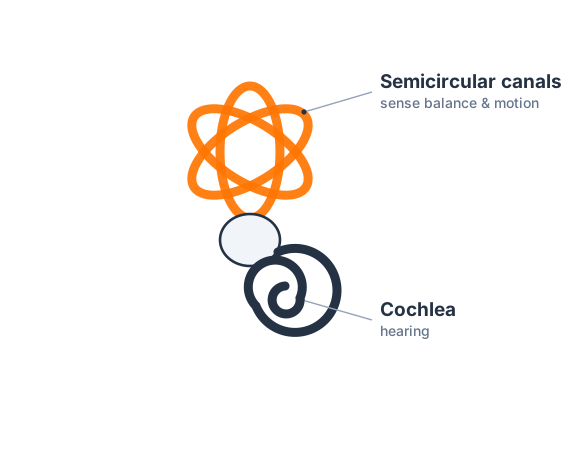
Peripheral vs. Central Dizziness
The single most useful way to think about dizziness is where it's coming from, because that's what separates the benign from the dangerous.
- Peripheral dizziness comes from the inner ear or the neck — the outer parts of the balance system. This includes BPPV, vestibular neuritis and labyrinthitis, Ménière's disease, and neck-related (cervicogenic) dizziness. It can feel intense — real spinning, nausea, unsteadiness — but it's usually not dangerous.
- Central dizziness comes from the brain or brainstem — the balance centers deep inside. This is the dangerous kind, because it can signal a stroke or another serious neurological problem. Central dizziness tends to travel with neurological company: double vision, slurred speech, one-sided weakness or numbness, or severe imbalance that makes walking hard.
The practical takeaway is the pattern. Peripheral dizziness is mostly just dizziness (or dizziness with ear symptoms like ringing or fullness). Central dizziness usually brings a neurological passenger along with it — and that passenger is the warning sign. The BE-FAST screen below is built to catch exactly those passengers.
The BE-FAST Stroke Screen
Because a stroke is the most time-critical cause of dangerous dizziness, it deserves its own simple screen. BE-FAST is a quick checklist for spotting one — and when dizziness comes with any of these signs, every minute counts.
Keep that pattern in mind: balance, eyes, face, arm, speech — time to call. You don't need to diagnose anything. If dizziness shows up with any of those, the safest and fastest move is to call 911, because strokes are treatable and time is the biggest factor in the outcome.
The Dizziness Red Flags
Beyond the stroke screen, a handful of other warning signs mean dizziness needs urgent attention rather than watchful waiting. Here's the full short list, and why each earns its place.
- Any stroke sign (BE-FAST). Dizziness with trouble balancing, double vision or vision loss, facial droop, one-sided weakness or numbness, or slurred speech is a 911 emergency — this is the most important one.
- The worst headache of your life. Sudden, severe head pain with dizziness can signal bleeding around the brain and needs emergency care immediately.
- Severe imbalance or inability to walk. Dizziness so severe you can't stand or walk, especially if it came on suddenly, points toward a central cause and warrants emergency assessment.
- New hearing loss with vertigo. A sudden drop in hearing arriving alongside vertigo needs urgent same-day evaluation, because some causes are time-sensitive to treat.
- Fainting or passing out. Dizziness that tips into loss of consciousness needs to be checked promptly to find out what's behind it.
- Chest pain with dizziness. Dizziness together with chest pain, shortness of breath, or palpitations can point to a heart or circulation problem and calls for urgent care.
Notice the common thread: these are the situations where dizziness is more than dizziness — where it brings a neurological or whole-body warning along with it. Those are the departures from an ordinary dizzy spell, and they're the ones that shouldn't wait.
Emergency Care vs. Routine Evaluation
Not every concerning dizzy spell is a 911 emergency — most deserve evaluation, but on a routine timeline rather than an ambulance. Knowing the difference helps.
Emergency — call 911 or go to the ER now: any BE-FAST stroke sign with dizziness; the worst headache of your life; severe imbalance or being unable to walk; fainting; or chest pain with dizziness. Add urgent same-day care for new hearing loss with vertigo. These don't wait.
Routine evaluation — see a provider soon, but not an emergency: dizziness that's new, that keeps returning, that's clearly different from your usual pattern, that travels with neck stiffness or old-injury history, or that increasingly disrupts your daily life. These deserve a proper appointment so the cause can be pinned down — including whether it's a neck-related or inner-ear pattern that hands-on care can help. Our guides to what causes dizziness and vertigo symptoms can help you describe what you're feeling.
If you're ever unsure which category you're in, treat the uncertainty as your answer and err toward getting checked — no one regrets a brief evaluation that turns out reassuring, and with a possible stroke, calling 911 is always the right call.
Where Chiropractic Care Fits
Chiropractic care sits firmly on the routine side of this line — it's for the everyday, recurring dizziness with a neck or positional component, and only after serious causes have been ruled out. That's why every dizziness evaluation at Thrive Chiropractic in Troy, MI begins with a red-flag screen: Dr. Rubinstein checks for exactly the warning signs on this page before any hands-on care, and arranges the right medical referral if anything raises concern.
Once those serious causes are cleared, care is a strong fit for the benign, peripheral kinds of dizziness with a neck contribution — where a stiff, irritated upper neck adds to that foggy, off-balance feeling. Gentle upper cervical care to restore neck motion, soft-tissue work, and posture coaching address that piece at the source. Our chiropractic for vertigo guide walks through what that care looks like, and when a hands-on evaluation makes sense you can schedule a visit here. The order matters, though: red flags first, routine care second.
Frequently Asked Questions
The questions Dr. Rubinstein hears most about dizziness warning signs — when it's a true emergency, how peripheral and central dizziness differ, whether dizziness can signal a stroke, and what BE-FAST means — are answered in the FAQ section on this page. If your situation isn't covered there, and it isn't an emergency, the team is glad to talk it through before you come in.
Vertigo & Dizziness Guide (PDF)A one-page take-home guide: steps that help vertigo, common causes, and the warning signs that need urgent care.PDFThis article is for general education and is not a substitute for professional medical advice, diagnosis, or treatment. Always consult a qualified healthcare provider about your specific situation.
Frequently Asked Questions
When is dizziness a medical emergency?
Treat dizziness as an emergency and call 911 if it comes with any sign of a stroke: sudden trouble with balance or walking, double vision or vision loss, facial drooping, weakness or numbness on one side, or slurred speech. Also seek emergency care for the worst headache of your life alongside dizziness. And get urgent same-day care for new hearing loss with vertigo, fainting, or dizziness with chest pain. Short of these, dizziness usually isn't an emergency but still deserves evaluation.
What is the difference between peripheral and central vertigo?
Peripheral vertigo comes from the inner ear or the neck — conditions like BPPV, vestibular neuritis, or neck-related dizziness — and is usually benign, even when it feels intense. Central vertigo comes from the brain or brainstem and is the dangerous kind, because it can signal a stroke or other serious problem. Central causes often bring neurological signs like double vision, slurred speech, one-sided weakness, or severe imbalance, which is exactly what the BE-FAST screen looks for.
Can dizziness be a sign of a stroke?
Yes. A stroke affecting the balance centers of the brain can cause sudden, severe dizziness or vertigo — sometimes as the main symptom. The key is what comes with it: dizziness plus any stroke sign (trouble with balance, double vision or vision loss, facial droop, one-sided weakness or numbness, or slurred speech) is a 911 emergency. Severe imbalance or being unable to walk, especially of sudden onset, is another warning sign to take seriously.
What does BE-FAST stand for?
BE-FAST is a quick way to spot a possible stroke: B for Balance (sudden loss of balance or coordination), E for Eyes (double vision or vision loss), F for Face (drooping on one side), A for Arm (weakness or numbness on one side), S for Speech (slurred or garbled), and T for Time (call 911 immediately). When dizziness comes with any of these, don't wait — call 911 right away, because with stroke, time is critical.
Should I go to the ER for dizziness?
Go to the ER or call 911 if dizziness comes with any stroke sign on the BE-FAST screen, with the worst headache of your life, or with severe imbalance that leaves you unable to walk. Also seek urgent care for new hearing loss with vertigo, fainting, or chest pain. If your dizziness has none of those and is more of a recurring nuisance, it usually isn't an ER matter — but a routine evaluation is still worth it to identify the cause.
Ready to get evaluated at Thrive Chiropractic?
Dr. Rubinstein will assess what’s really going on and build a care plan tailored to you. Reach out and we’ll get you scheduled.
2133 Crooks Road | Troy MI 48084