
Vertigo Exercises: Epley & Balance Training
Exercises can genuinely help some kinds of vertigo — but only the right exercise for the right cause, done safely. This guide walks through the Epley maneuver for positional vertigo, Brandt-Daroff exercises, and gaze-stabilization and balance basics, with clear safety cautions throughout — including why you should get diagnosed before trying the Epley yourself. From Dr. Rubinstein at Thrive Chiropractic in Troy, MI.
Get Diagnosed Before You Start
Exercises can genuinely help some kinds of vertigo — but here's the single most important thing to understand before you begin: the right exercise depends entirely on what's causing your dizziness, and the wrong one can make things worse. That's why a proper diagnosis comes first, not after.
The reason is specific. The most effective vertigo exercise — the Epley maneuver — only works for BPPV, and even then it has to match the affected ear and the specific canal the loose crystals have drifted into. Guess wrong, and you can shift the problem or provoke a harder spell instead of settling it. Meanwhile, some kinds of dizziness — inner-ear disease, migraine, or a neck-related pattern — call for a different approach entirely. A brief exam sorts out which category you're in, so the exercise you do is the one that actually helps.
With that groundwork laid, here's what the main vertigo exercises are and how they work.
The Epley Maneuver for BPPV
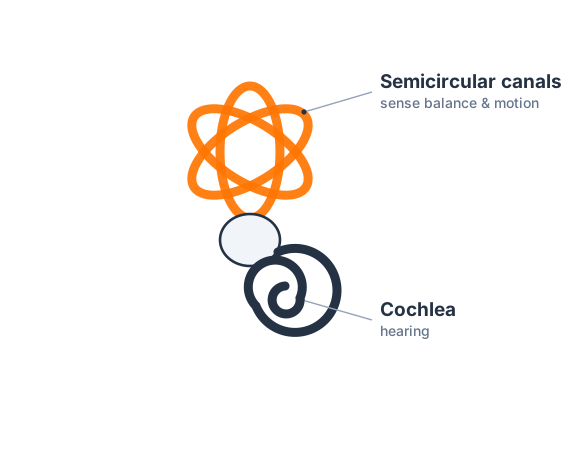
The Epley maneuver is a sequence of slow, deliberate head and body movements designed to guide the loose calcium crystals behind BPPV back to where they belong in your inner ear. When it's matched correctly to the affected side, it's one of the most effective things you can do for positional vertigo — often bringing relief quickly.
The maneuver moves your head through a set series of positions, pausing in each while the crystals settle, so that gravity carries them out of the canal they've drifted into and back into the chamber where they don't cause trouble. Because each step has to be held correctly and sequenced for the right ear, it's genuinely worth having it performed or taught by a provider the first time rather than improvised from memory. Done right, it's gentle and drug-free; done to the wrong side, it can misfire — which loops back to why diagnosis comes first. Our chiropractic for vertigo guide explains how this kind of repositioning fits into in-office care.
Brandt-Daroff Exercises
Brandt-Daroff exercises are a gentler, repeat-at-home option sometimes used for BPPV, and they work a little differently from the Epley. Instead of moving crystals in one guided sequence, they have you move repeatedly from sitting to lying on one side, then to the other, provoking mild dizziness on purpose so your balance system can habituate — and, in some cases, so the loose crystals disperse over time.
They tend to work more slowly than a targeted repositioning maneuver, and they deliberately bring on brief dizziness, so they take a bit of patience. Because whether they'll help (and how to do them safely) depends on your exact diagnosis, they're best done as part of a plan your provider has guided rather than picked up piecemeal. Move slowly between positions, and give yourself a clear, safe space to do them.
Gaze Stabilization & Balance Training
Beyond the crystal-repositioning moves, a set of vestibular rehabilitation basics helps your brain recalibrate when balance is off — especially after inner-ear conditions like vestibular neuritis. Two families of exercise do most of the work:
- Gaze stabilization. You fix your eyes on a target and turn your head slowly side to side (and then up and down) while keeping the target in focus. This retrains the reflex that keeps your vision steady when your head moves — the reflex that gets thrown off when the balance system is disrupted.
- Balance training. Standing with your feet closer together, then eventually on a softer surface or with eyes closed (only with support nearby), gently challenges your balance so your brain relearns to steady you using the inputs it has.
These work gradually, over days to weeks, as your brain adapts — so consistency matters more than intensity. Start easy, progress slowly, and always keep a wall, counter, or sturdy chair within reach.
Safety Cautions You Shouldn't Skip
Vertigo exercises are safe for many people, but they deliberately provoke dizziness, which means fall risk is real. A few cautions make the difference:
- Do them with guidance at first. Have a provider confirm the diagnosis and, ideally, teach you the movements before you do them solo.
- Clear your space and stay supported. Practice near a bed or padded floor, with a sturdy surface to hold or someone nearby — especially for anything done with eyes closed or on a soft surface.
- Mind who's at higher risk. If you're older, unsteady on your feet, or have significant neck or back problems, get individualized guidance rather than following a generic routine.
- Stop if symptoms are severe. A little provoked dizziness is expected; intense spinning, vomiting, or feeling faint is a signal to stop and rest.
- Know they're not for every kind of dizziness. These exercises target mechanical and inner-ear balance problems. If your dizziness has a different cause, they may do nothing — or the wrong thing — which is the whole reason diagnosis comes first.
How Professional Care Fits In
You don't have to figure all of this out alone — and for most people, you shouldn't. A proper evaluation does two things at once: it confirms which kind of dizziness you have, and it makes sure the exercise you do is matched to it and done safely. That's especially true for the Epley, where getting the affected side right is the whole ballgame.
At Thrive Chiropractic in Troy, MI, Dr. Rubinstein starts by screening for anything urgent, then assesses whether your dizziness has a positional (BPPV) or neck-related component that hands-on care can help. When BPPV is identified, repositioning can be performed and the right home exercises taught; when the neck is contributing, gentle upper cervical care addresses that piece. Either way, you leave knowing exactly what to do at home and how to do it without setting yourself back.
When to Stop and Get Checked
Exercises are a tool, not a substitute for evaluation — and a few situations mean it's time to stop and be seen rather than keep going.
Short of that, stop and get re-evaluated if an exercise consistently makes you worse, if you're doing it correctly but seeing no improvement over a couple of weeks, or if your symptoms change character. Our dizziness red flags guide covers the warning signs in detail, and when a hands-on evaluation makes sense you can schedule a visit here.
Frequently Asked Questions
The questions Dr. Rubinstein hears most about vertigo exercises — whether you can do the Epley at home, which exercises actually help, how safe they are, and how long they take — are answered in the FAQ section on this page. If your situation isn't covered there, the team is glad to talk it through before you come in.
Vertigo & Dizziness Guide (PDF)A one-page take-home guide: steps that help vertigo, common causes, and the warning signs that need urgent care.PDFThis article is for general education and is not a substitute for professional medical advice, diagnosis, or treatment. Always consult a qualified healthcare provider about your specific situation.
Frequently Asked Questions
Can I do the Epley maneuver at home?
Sometimes — but only after you've been properly diagnosed. The Epley maneuver has to match the affected ear and the specific canal the loose crystals are in, and doing the wrong version can make things worse or move the problem rather than fix it. Get a proper diagnosis first so you know it's genuinely BPPV and which side to treat; then, if it's appropriate, your provider can guide you on doing it safely at home.
What exercises help vertigo?
It depends on the cause. For positional vertigo (BPPV), repositioning moves like the Epley maneuver help most. Brandt-Daroff exercises can help the balance system adapt. For inner-ear or balance issues more broadly, gaze-stabilization and balance-training exercises — the basics of vestibular rehab — help your brain recalibrate over time. Because the right exercise depends on the diagnosis, an exam should come before you pick one.
Are vertigo exercises safe?
They're generally safe when matched to the right cause and done thoughtfully, but they carry a real fall risk because they deliberately provoke dizziness. Do them with guidance at first, clear space around you, have something sturdy to hold or someone nearby, and stop if symptoms become severe. They also aren't right for every kind of dizziness — which is exactly why getting diagnosed before starting matters.
How long do vertigo exercises take to work?
For BPPV, a correctly performed repositioning maneuver can bring relief quickly, sometimes after one or a few sessions. Balance-retraining exercises like gaze stabilization work more gradually, over days to weeks, as your brain adapts. If you've been doing an exercise correctly and things aren't improving — or are getting worse — that's a sign to stop and get re-evaluated rather than push on.
Do Brandt-Daroff exercises cure vertigo?
They can help, but they're not a guaranteed cure. Brandt-Daroff exercises are designed to help the balance system habituate and, in some cases, to disperse the loose crystals behind BPPV. They tend to work more slowly than a targeted repositioning maneuver. Because whether they'll help depends on the exact cause of your dizziness, they work best as part of a plan guided by a proper diagnosis.
Ready to get evaluated at Thrive Chiropractic?
Dr. Rubinstein will assess what’s really going on and build a care plan tailored to you. Reach out and we’ll get you scheduled.
2133 Crooks Road | Troy MI 48084