
BPPV (Benign Paroxysmal Positional Vertigo)
BPPV is the most common cause of vertigo — brief, intense spinning triggered by changes in head position, like rolling over in bed or looking up. This guide explains what causes it, how it's told apart from other kinds of dizziness, why the Epley repositioning maneuver is the mainstay of treatment, and how Thrive Chiropractic in Troy, MI fits into your care.
What Is BPPV?
BPPV — short for benign paroxysmal positional vertigo — is the most common cause of vertigo, that false sense that you or the room is spinning. The name sounds intimidating, but each word describes something reassuringly ordinary: benign means it isn't dangerous, paroxysmal means it comes in sudden brief bursts, positional means it's set off by how you move your head, and vertigo is the spinning itself. Put together, it's short spells of spinning triggered by everyday head movements.
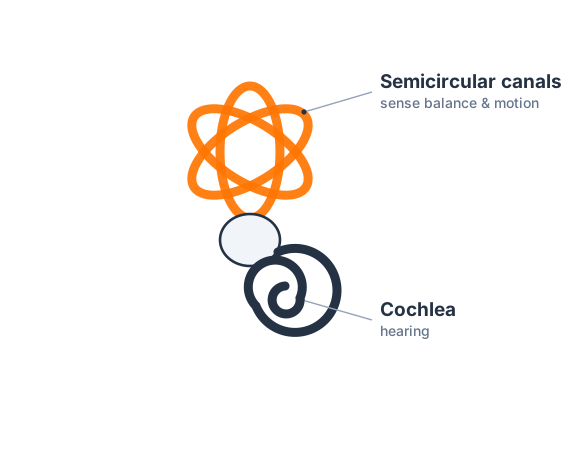
The cause sits deep in your inner ear. Tiny calcium crystals called otoconia normally rest in one chamber of your balance organ, where they help you sense gravity and movement. In BPPV, some of these crystals break loose and drift into the fluid-filled canals next door — canals that aren't meant to have them. From then on, certain head positions send the crystals sliding through the fluid, and your brain reads that motion as a violent spin that isn't really happening.
What It Feels Like
BPPV has a recognizable signature that sets it apart from a vague, all-day dizziness:
- Sudden, intense spinning that hits when you change head position
- Brief spells — usually seconds to under a minute — that settle once you hold still
- Triggered by specific movements: rolling over in bed, lying down, sitting up, or tipping your head back to look up
- Often worse in the morning or when you first lie down at night
- Sometimes nausea or a wave of imbalance in the moments right after a spell
Between spells, many people feel completely normal, or just a little off-balance and wary of the next trigger. That "fine until I move my head a certain way" pattern is the clearest clue that you may be dealing with BPPV rather than another cause of dizziness.
Why the Crystals Cause Spinning
Your inner ear houses a set of looping canals filled with fluid. When you turn your head, the fluid moves and tiny hair cells sense the flow, telling your brain exactly how your head is rotating. It's an elegant system — as long as nothing is floating in the fluid that shouldn't be.
In BPPV, the loose otoconia crystals settle into one of those canals. Now, when you tip your head into the triggering position, the crystals tumble through the fluid under gravity and keep the fluid moving even after your head has stopped. Your inner ear insists you're still spinning; your eyes and the rest of your body disagree. That mismatch is the spinning sensation. It's brief because the crystals soon come to rest — and it returns the next time you move into the same position.
How BPPV Differs From Other Causes of Vertigo
Vertigo is a symptom, not a diagnosis, and several conditions can produce it. What makes BPPV distinctive is the timing and the trigger:
- Versus vestibular neuritis and labyrinthitis — those inner-ear nerve inflammations bring sudden, severe vertigo that is constant and lasts for days, not brief spells that come and go with head position.
- Versus Ménière's disease — Ménière's episodes last much longer and travel with fluctuating hearing loss, ringing, and a full feeling in the ear, none of which are part of ordinary BPPV.
- Versus vestibular migraine — migraine-driven vertigo tends to last longer and arrives with light sensitivity, nausea, or a headache.
- Versus cervicogenic dizziness — a stiff, irritated neck can create a foggy, unsteady feeling of its own that's tied to neck movement and tension rather than the brief, gravity-triggered spins of BPPV.
Because these can overlap — and BPPV can even sit alongside a cranky neck — sorting out which one you're dealing with is what makes care targeted. Our guide on vertigo vs. dizziness walks through the differences in plain language if you're not sure what you're feeling.
How BPPV Is Evaluated
BPPV is diagnosed by watching what your eyes and inner ear do when your head moves into a triggering position, so a proper evaluation matters before anyone attempts to treat it. A clinician trained in positional testing can move your head through a specific sequence and watch for the tell-tale eye movements that confirm BPPV — and, importantly, identify which ear and which canal are involved, since that determines how the crystals need to be moved back.
When you come to Thrive Chiropractic, Dr. Rubinstein starts with a detailed history: what your spells feel like, how long they last, exactly which movements set them off, and whether neck stiffness travels with them. That history, plus a screen for red flags, helps sort a straightforward positional pattern from anything that needs a different path or a referral for formal positional testing and repositioning.
The Epley Maneuver: The Mainstay of Treatment
The reason BPPV is so satisfying to treat is that the fix is mechanical. The Epley maneuver — also called canalith repositioning — is a slow, guided series of head and body positions that uses gravity to walk the loose crystals back out of the balance canal and into the chamber where they belong. Once they're back home, they stop triggering the spinning. For true BPPV, it is highly effective and is the mainstay of treatment.
Two things make the maneuver work well, and both argue for a professional diagnosis first:
- It has to match the exact ear and canal involved. The same movements done for the wrong side won't help and can muddy the picture.
- It's most reliable when guided by someone who can confirm the diagnosis and adjust the sequence to how you respond.
How Thrive Chiropractic Fits In
Here's the honest version: chiropractic care does not repair the inner-ear crystals that cause BPPV, and repositioning maneuvers are the treatment that actually addresses them. What we can do is help with the parts of the picture that live in your neck. It's very common to tense up and guard your neck during a run of vertigo — bracing against the next spin — and that stiffness can add its own foggy, off-balance quality on top of the BPPV.
When the exam points to a neck contribution, care at Thrive Chiropractic in Troy, MI may include:
- Gentle, specific chiropractic adjustments to restore motion to stiff upper-neck joints, the region our upper cervical care is built around
- Soft-tissue and massage therapy to release the tension at the base of the skull and across the upper back that builds up when you're guarding
- Posture and movement guidance to keep the neck from stiffening as you recover
- Clear coordination — if your pattern looks like BPPV, we'll steer you toward the positional testing and repositioning care that fits, and support the neck alongside it
If you'd like a broader look at how hands-on care supports balance complaints, see our guide to chiropractic for vertigo, and for gentle at-home movements, our vertigo exercises guide.
When to Seek Prompt or Emergency Care
BPPV is, by definition, benign — but sudden vertigo can occasionally be the sign of something urgent, and those symptoms need immediate medical attention, not a chiropractic visit.
Short of an emergency, get a prompt evaluation for vertigo that's new, keeps returning, or feels different from your usual pattern, so the cause can be pinned down. For the neck-related part of the picture, a chiropractic evaluation is a natural fit — you can schedule a visit here.
Frequently Asked Questions
The questions Dr. Rubinstein hears most about BPPV — what causes the crystals to shift, why the spells are so brief, whether the Epley maneuver really works, and where chiropractic care honestly fits — are answered in the FAQ section on this page. If your situation isn't covered there, the team is glad to talk it through before you come in.
Vertigo & Dizziness Guide (PDF)A one-page take-home guide: steps that help vertigo, common causes, and the warning signs that need urgent care.PDFThis article is for general education and is not a substitute for professional medical advice, diagnosis, or treatment. Always consult a qualified healthcare provider about your specific situation.
Frequently Asked Questions
What actually causes BPPV?
BPPV comes from tiny calcium crystals called otoconia that normally sit in one part of your inner ear. When some of them break loose and drift into the fluid-filled balance canals, ordinary head movements suddenly send your brain a false sense of spinning. Sometimes it follows a head bump or a long stretch lying flat, but often there's no obvious trigger at all — the crystals simply shift over time.
How long does a BPPV spinning spell last?
The hallmark of BPPV is that each spell is brief — usually seconds to under a minute — and it's set off by a specific head movement, like rolling over, lying back, or looking up. The spinning fades once your head is still again. That short, position-triggered pattern is a big part of what tells BPPV apart from causes of vertigo that last for hours or days.
Does the Epley maneuver really work?
For true BPPV, the Epley (canalith-repositioning) maneuver is remarkably effective — it's a series of slow, guided head and body positions that walks the loose crystals back to where they belong so they stop triggering the spinning. Because it works best when it matches the exact ear and canal involved, the maneuver should be done after a proper diagnosis rather than guessed at from a video.
Can a chiropractor treat my BPPV?
Chiropractic care doesn't repair the inner-ear crystals that cause BPPV, and it's honest to say so. What it can do is ease a stiff, tense neck that often tightens up around a bout of vertigo and adds to the off-balance feeling. At Thrive, Dr. Rubinstein focuses on that neck component and will point you toward the repositioning care that actually addresses the crystals.
Will BPPV come back?
It can. Even after a successful repositioning maneuver clears an episode, the crystals can drift loose again weeks or months later, so some people have BPPV return now and then. The good news is that it usually responds to repositioning again. If your spells keep returning or feel different from before, a fresh evaluation makes sure nothing else is going on.
Is BPPV dangerous?
BPPV itself isn't dangerous — it's uncomfortable and can raise your risk of a fall, but it doesn't harm the brain. The catch is that sudden vertigo can occasionally signal something urgent, so new or dramatically different dizziness shouldn't be brushed off. Seek emergency care if vertigo comes with slurred speech, facial droop, one-sided weakness, double vision, or trouble walking or standing.
Ready to get evaluated at Thrive Chiropractic?
Dr. Rubinstein will assess what’s really going on and build a care plan tailored to you. Reach out and we’ll get you scheduled.
2133 Crooks Road | Troy MI 48084