Tennis Elbow & Golfer's Elbow: Causes, Relief & Honest Recovery
Tennis elbow and golfer's elbow are the same kind of injury on opposite sides of the joint — an overuse tendinopathy where the forearm tendons attach at the elbow. They come from repetitive gripping, swinging, and wrist load, and they're stubborn: honest recovery takes patience and progressive loading, not just rest. This guide explains what's happening, the symptoms, how load management, soft-tissue care, and bracing help, and what a realistic timeline looks like — from Thrive Chiropractic in Troy, MI.
Tennis Elbow vs. Golfer's Elbow
Tennis elbow and golfer's elbow are the same injury on opposite sides of the joint. Both are an overuse tendinopathy — a breakdown of the forearm tendons where they anchor to the bony bumps of the elbow. Tennis elbow (lateral epicondylitis) affects the tendons on the outside of the elbow, the ones that extend the wrist and fingers. Golfer's elbow (medial epicondylitis) affects the tendons on the inside, the ones that flex the wrist and grip. The names are sporty, but you don't have to play either game to get them — anything that repeatedly grips, twists, and loads the wrist can do it.
Here's the honest headline: despite the "-itis," these aren't a hot, short-lived inflammation. They're a tendon that has gradually broken down under repeated load, and that changes everything about how they recover. It's why rest alone so often disappoints, why the timeline is measured in weeks to months rather than days, and why progressive loading — not simply backing off — is at the center of care. Elbow tendinopathy sits within the wider family of sports injuries and behaves like a classic overuse injury: it builds gradually, flares with the aggravating activity, and rewards patience.
Why the Tendon Breaks Down
Picture the forearm tendons as ropes anchored to the elbow. Every grip, swing, and twist tugs on that anchor. Do it occasionally and the tendon adapts and gets stronger. Do it repeatedly, faster than the tendon can recover, and the fibers at the anchor start to break down faster than they rebuild. A few things push it there:
- Repetitive gripping and wrist load — the backhand in tennis, the swing in golf, but also racquet sports generally, throwing, climbing, and rowing. It's the repetition under load that matters.
- A spike in volume or intensity — a sudden increase in playing time, a new technique, a heavier racquet or grip, or ramping up after time off, before the tendon has adapted.
- Technique and equipment — a stroke that overloads the wrist, a grip that's the wrong size, or string tension and gear that push more load onto the tendon.
- A tendon that hasn't been conditioned — forearm strength that hasn't kept pace with the demand, leaving the tendon under-prepared for the load it's asked to carry.
Because the problem is a tendon that's under-capacity for its load, the fix isn't only to reduce the load — it's to rebuild the capacity. That's the logic behind everything in the care plan, and the reason "just rest it" tends to leave people flaring again on their return.
Common Symptoms
Elbow tendinopathy has a recognizable pattern, and which side hurts tells you which tendon is involved:
- Pain over the bony bump of the elbow — the outside for tennis elbow, the inside for golfer's elbow — that may radiate down the forearm
- Pain with gripping and lifting, from a racquet or club to a coffee mug, a jug, or a doorknob
- A weak or unreliable grip, sometimes with things slipping out of the hand because gripping hurts
- Pain that worsens with the provoking motion — wrist extension and backhand for tennis elbow, wrist flexion and gripping for golfer's elbow
- Tenderness to the touch right over the affected bump, and often tightness through the forearm above it
- Stiffness and aching after activity, sometimes lingering into the next day
Tendinopathy tends to stay localized to the elbow and forearm and to track with how much you grip and swing. Numbness or tingling into the hand and fingers is a different signal — it points toward a nerve rather than the tendon — and is worth having checked rather than assuming it's just the elbow.
Who's Most at Risk?
Anyone who loads the forearm repeatedly can develop it, but it's more likely when:
- You play a gripping, swinging sport — tennis and other racquet sports, golf, throwing sports, climbing, and rowing top the list
- You've spiked your volume or changed something — more playing time, a new stroke, new equipment, or ramping up after a layoff
- Your technique or gear loads the wrist — a stroke that overworks the forearm, a grip that's the wrong size, or racquet setup that adds load
- Your forearm is under-conditioned — strength that hasn't kept up with the demand
- Your work also loads the wrist — gripping, twisting, and repetitive hand tasks stack on top of sport, which is why these injuries turn up in manual and desk workers as well as athletes
- You've had it before — a prior bout and a tendon that never fully rebuilt make a repeat more likely
Most overuse injuries happen where a demand meets a vulnerability — repeated gripping meeting a tendon that wasn't ready. Each of those vulnerabilities is something you can address.
How Elbow Tendinopathy Is Evaluated
The evaluation exists to confirm this is a tendinopathy rather than something else — a nerve issue or a structural injury — and to gauge how irritated and how deconditioned the tendon is. At Thrive Chiropractic, Dr. Rubinstein starts with your history — your sport and activities, whether something changed recently, exactly where it hurts (outside vs. inside), and which movements provoke it.
The physical exam typically includes:
- Palpation to pinpoint the tender anchor and the tight forearm above it
- Resisted and stretch testing — loading the wrist extensors or flexors to reproduce the pain and confirm which tendon is involved
- Grip and neurological screening to check strength and to rule out nerve involvement when there's numbness or tingling into the hand
The exam confirms which tendon is involved, flags the few situations that need different care, and gauges the tendon so the loading program starts at the right level.
What to Expect at Thrive Chiropractic
At Thrive Chiropractic in Troy, MI, care for elbow tendinopathy is conservative and built around the reality that a tendon has to be rebuilt, not just rested. The early aim is to calm the irritated tendon and manage load; the central aim is a progressive program that restores the tendon's capacity. Care often includes:
- Soft-tissue and massage therapy to calm the irritated tendon and release the tight forearm muscles pulling on it — part of the early relief
- Gentle mobilization where the elbow or wrist is stiff, so the joint moves and loads more evenly
- A graded strengthening program — the core of recovery, progressively loading the tendon to rebuild its capacity, started at a level your tendon tolerates and advanced over time
- Guidance on load management, bracing, and technique, plus a look at the wrist and even the neck and shoulder where they feed into how the arm loads
The plan is honest about the arc: tendons are slow to rebuild, so this rewards patience and consistency more than any quick fix. You'll get a realistic timeline after the exam, and if anything suggests a nerve problem or a structural injury rather than tendinopathy, Dr. Rubinstein will say so and coordinate the right next step. Chiropractic care is one conservative option among several for the athletic elbow, coordinated with medical care where needed.
Load Management, Bracing & Return to Sport
For elbow tendinopathy, how you manage load is the treatment — and going straight back to full playing volume is the most common way it turns into a recurring problem. The principle is load management: bring the aggravating load down to a tolerable level, rebuild the tendon's capacity, then progress.
- Reduce, don't necessarily stop. Bring the volume and intensity of gripping and swinging down so the tendon isn't repeatedly overloaded — but keep it moving and loaded within a tolerable range rather than resting it completely.
- Use bracing to offload. A counterforce strap on the forearm changes where the tendon is pulled and can take the edge off during activity; a wrist brace can offload the tendon in stubborn cases. Bracing buys comfort while the loading program does the rebuilding.
- Rebuild with progressive loading. Advance the strengthening program as the tendon tolerates it — this is the piece that actually restores capacity and prevents the flare on return.
- Address technique and equipment. Where a stroke, grip size, or gear is loading the wrist, fixing it removes a driver rather than just managing the symptom.
- Return by milestones, not the calendar. Full return is earned when you can grip and swing at your sport's demands without provoking the tendon, not simply because time has passed.
Rebuilding the tendon and easing back in is the phase that turns "less irritated" into "less likely to come back."
Supporting Your Recovery at Home
What you do between visits has a real effect on how cleanly an elbow tendinopathy settles.
- Keep loading within tolerance. Do the strengthening program consistently rather than resting the arm completely — the controlled load is what rebuilds the tendon.
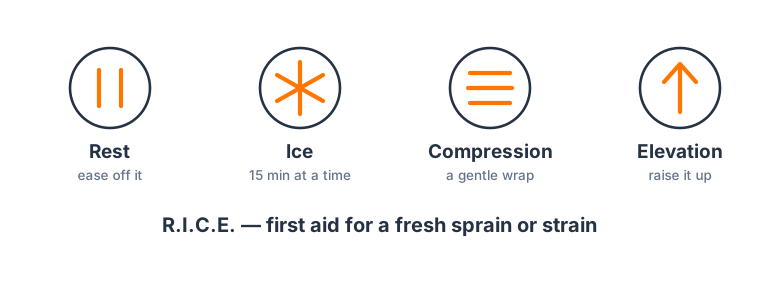
- Use ice or heat sensibly. Ice can settle a sharply irritated elbow after activity; heat helps loosen a stiff, aching forearm before gentle movement. Both ease symptoms — the loading is what changes the cause.
- Wear the brace when it helps. A counterforce strap or wrist brace during aggravating activity can keep you comfortable and reduce provocation while you rebuild.
- Fix the provoking habits. Check grip size, technique, and how much repetitive wrist load your day adds on top of sport, and adjust what you can.
If your elbow isn't improving on the expected timeline despite consistent loading, keeps recurring, or develops numbness or tingling into the hand, treat that as a reason to be re-evaluated rather than to push through.
When to Seek Prompt or Emergency Care
The large majority of tennis and golfer's elbow is a tendinopathy that recovers well with patient, conservative care. A small set of warning signs, though, points to something beyond tendinopathy that needs prompt evaluation — these are not symptoms to play through.
Short of those situations, it's still worth being evaluated when an elbow isn't improving on the expected timeline despite a proper loading program, keeps recurring, or interferes with sport, work, and daily life. Getting the right care early — care built around progressive loading rather than rest alone — helps the tendon rebuild cleanly and keeps it from becoming a season-after-season problem.
Frequently Asked Questions
Tennis and golfer's elbow raise a lot of practical questions — whether to stop playing, why rest isn't fixing it, whether a chiropractor can help, whether braces work, and how long recovery honestly takes. Those are answered in detail in the FAQ section on this page.
If your elbow has been aching with gripping and swinging and you want a clear read on the injury and a realistic path back, schedule a visit with Dr. Rubinstein at Thrive Chiropractic in Troy, MI. You'll get a thorough exam, a check for anything beyond tendinopathy, and a conservative plan built around load management and rebuilding the tendon.
Sports Injury & Performance Guide (PDF)A one-page take-home guide: R.I.C.E. and recovery basics, common sports injuries, and the red flags that need evaluation.PDFThis article is for general education and is not a substitute for professional medical advice, diagnosis, or treatment. Always consult a qualified healthcare provider about your specific situation.
Frequently Asked Questions
Should I stop playing completely with tennis or golfer's elbow?
Usually not completely — but you do need to bring the aggravating load down. Total rest can calm a tendon short-term, but tendons that are only rested tend to flare again when you return, because rest doesn't rebuild the tendon's capacity. The better approach is load management: reduce the volume and intensity that provoke it, keep pain within a tolerable range, and progress a graded strengthening program. Dr. Rubinstein can help you find the level that lets the tendon settle while you rebuild it.
Why isn't rest fixing my elbow?
Because these injuries aren't a simple inflammation that rest cools down — they're a tendon that has gradually broken down under repeated load. Rest lowers the irritation, but it doesn't restore the tendon's strength, so as soon as you go back to gripping and swinging, the same under-capacity tendon gets overloaded again. What actually rebuilds a tendon is controlled, progressive loading — which is why a graded strengthening program, not rest alone, is at the center of recovery.
Can a chiropractor help tennis or golfer's elbow?
Yes. Conservative care lines up well with what these injuries need — soft-tissue and massage therapy to calm the irritated tendon and the tight forearm muscles above it, restoring motion where the elbow or wrist is stiff, guidance on load management and bracing, and a graded strengthening program to rebuild the tendon. Care is matched to the exam, and if the findings suggest something beyond tendinopathy — a nerve issue or a structural injury — that's referred appropriately.
Do elbow braces and straps actually work?
They can help as part of the plan, not as a cure on their own. A counterforce strap worn on the forearm just below the elbow changes where load pulls on the tendon, which can take the edge off pain during activity and let you keep training at a reduced level. A wrist brace can offload the tendon in more stubborn cases. Bracing buys comfort and reduces provocation while the real work — load management and progressive strengthening — rebuilds the tendon. Dr. Rubinstein can advise what's worth trying for your elbow.
How long does tennis or golfer's elbow take to heal?
Honestly, longer than most people hope — tendon injuries are slow to rebuild, and a stubborn case can take several months of consistent loading to fully settle. Milder, recently-started cases move faster. The reason it's not quicker is the biology: rebuilding a tendon's capacity takes progressive load applied patiently over time. The good news is that with the right program most cases do recover well without surgery. Dr. Rubinstein will give you a realistic timeline for your elbow after the exam.
Ready to get evaluated at Thrive Chiropractic?
Dr. Rubinstein will assess what’s really going on and build a care plan tailored to you. Reach out and we’ll get you scheduled.
2133 Crooks Road | Troy MI 48084