
Sports Massage & Recovery: What It Helps and What It Doesn't
Therapeutic sports massage is a useful tool for athletes — it can ease muscle soreness and tightness, support mobility between hard training sessions, and complement rehab after an injury. But it's not a cure-all, and it doesn't replace strengthening or evaluation of a real injury. This guide explains what sports massage genuinely helps with, what it doesn't, how it fits into recovery, and how massage therapy at Thrive Chiropractic in Troy, MI supports your training and healing.
What Is Sports Massage?
Sports massage is soft-tissue work tailored to people who train and compete. It uses hands-on techniques on the muscles and connective tissue to ease tightness, support mobility, and help an athlete feel looser and more comfortable — around training, around competition, and during recovery from injury. It sits within the broader family of massage therapy, applied with an athlete's demands in mind.
It helps to be clear-eyed from the start about what this is and isn't. Sports massage is a genuinely useful supportive tool — many athletes find it eases soreness, loosens up guarded muscle, and simply feels good in a way that helps them keep training. What it is not is a replacement for the parts of recovery that do the structural work: restoring motion, rebuilding strength, and evaluating an injury that isn't behaving. The most useful way to think about massage is as one helpful piece of a sports-injury recovery plan — valuable in its lane, and honest about where that lane ends. The rest of this guide draws those lines clearly so you can use it well.
What Sports Massage Helps With
Used sensibly, sports massage offers several real benefits that athletes tend to value:
- Easing muscle soreness. The deep, achy soreness that follows hard training often responds well to soft-tissue work, leaving the muscles feeling looser and more comfortable.
- Reducing muscle tightness and guarding. Massage can help release tight, protective muscle — the kind that clamps down around an overworked or recovering area — which many athletes experience as feeling "unlocked."
- Supporting mobility. By easing tightness in the muscles around a joint, massage can help you move more freely, which complements the mobility work in a training or rehab program.
- Aiding a sense of recovery and readiness. Beyond the physical, many athletes find a session leaves them feeling recovered and mentally reset between hard efforts — a benefit worth taking seriously even where it's hard to measure.
These are meaningful benefits for comfort, mobility, and how you feel between sessions. Notice, though, that they're all about easing and supporting — none of them rebuilds strength or fixes a structural injury, which is the subject of the next section.
What Sports Massage Doesn't Do
Being honest about the limits is what keeps massage useful rather than overpromised. Sports massage does not:
- Rebuild strength. Massage can loosen a muscle, but it can't reload and strengthen a tissue that lost capacity after an injury — only progressive strengthening does that, and it's the phase that most determines whether an injury stays gone.
- Fix a structural injury. An unstable joint, a torn ligament, a fracture, or a significant tear is not something massage resolves. Those need proper evaluation and a targeted plan.
- Replace evaluating an injury. If something is sharply or persistently painful, or clearly not settling, the answer is to have it assessed — not to keep massaging it and hope.
- Deliver guaranteed performance gains. Massage can help you feel loose and recovered, but treating it as a guaranteed route to better performance overstates what it does.
Kept in that lane, sports massage is a reliable ally. Asked to be more than it is, it disappoints — so the sections below focus on using it where it genuinely shines.
Massage for Everyday Soreness & Recovery
For the ordinary soreness and tightness of training — not a specific injury, just the accumulated toll of hard work — massage fits naturally into a recovery routine. When you push your training, the day-or-two-later soreness and the tight, guarded muscles are a normal part of adapting, and soft-tissue work can help them ease.
- Between hard sessions, a massage can help loosen tight areas and leave you feeling more recovered heading into your next effort.
- During heavy training blocks, when soreness and tightness accumulate, some athletes find regular sessions help them keep training comfortably.
- Alongside the basics, remember that sleep, sensible training progression, and gentle movement do the heavy lifting for recovery — massage complements them rather than replacing them.
Think of it as one of several recovery habits. The athletes who benefit most use massage to support a training plan that's already sensibly progressed — not as a way to paper over training that's ramping too fast, which is its own problem best addressed by managing load, as our overuse injuries guide covers.
Massage as Part of Injury Recovery
When you're recovering from an actual soft-tissue injury, massage has a role — but a specific and secondary one, timed to the phase you're in. Recovery moves through protecting and calming the injury, restoring motion, and rebuilding strength, and massage slots into the middle of that arc rather than the start.
- Not in the acutely inflamed stage. In the first days after an acute injury, the priority is protecting and calming it — deep work on freshly injured, inflamed tissue isn't the move.
- As the injury settles, soft-tissue and massage work can help release the protective spasm and support the injured muscle, which often helps restore the motion that guarding was holding back.
- Alongside strengthening, not instead of it. Massage can keep tissue feeling loose while you do the progressive strengthening that actually rebuilds the injured area's capacity. It supports that work; it doesn't substitute for it.
Used this way — after the acute stage, in support of restoring motion and rebuilding strength — massage is a helpful part of the plan. Used as a substitute for those phases, it quietly delays the real recovery.
How Often Should Athletes Get Massage?
There's no universal prescription, and anyone selling a fixed schedule is overstating the science. How often massage helps depends on your training load, how your body is responding, and where you are in a season or a rehab plan.
- During heavy training, some athletes find more frequent sessions help them manage accumulated soreness and tightness.
- Around competition, lighter work in the days close to an event tends to suit better than a deep session, which is better placed in a recovery window with time to settle afterward.
- In lighter periods or off-season, less frequent, more general work is often plenty.
The honest guide is your own response and your goals, ideally coordinated with the rest of your recovery so massage supports your plan rather than standing in for it. If you're building a routine, it's worth folding this into a broader conversation about training load, recovery, and any nagging areas rather than treating massage in isolation.
How Thrive Chiropractic Uses Massage Therapy
At Thrive Chiropractic in Troy, MI, massage therapy is one tool within a broader, conservative approach to keeping athletes training and helping them recover — not a standalone fix. For an athlete, that typically means:
- Soft-tissue and massage work to ease muscle soreness and tightness and help release the protective spasm around a recovering area.
- Integration with the rest of recovery — restoring motion with gentle adjustment or mobilization, and guiding the staged strengthening that rebuilds an injured tissue's capacity, so massage complements the work that resolves the injury.
- Attention to the whole picture, including foot and lower-limb mechanics with custom orthotics where a recurrent lower-limb issue calls for it, and coordination with your sports-medicine team when a real injury is involved.
The point is to use massage for what it genuinely does — ease soreness, loosen tightness, support mobility and a sense of recovery — while pairing it with the evaluation and strengthening that massage alone can't provide. You can read more in our sports-injury recovery and chiropractic for athletes guides.
When to Seek Prompt or Emergency Care
Massage is for soreness, tightness, and supporting recovery — not for injuries that need evaluation. Some signs mean the right next step is an assessment or prompt care, not a session on the table.
Short of those, it's worth having a nagging problem evaluated rather than repeatedly massaged when it's sharp, focal, or simply not improving on the timeline you'd expect. Massage can then take its proper place — supporting a recovery that's actually being addressed.
Frequently Asked Questions
Sports massage raises practical questions — whether it truly helps recovery, whether it eases post-workout soreness, timing around competition, its role in injury recovery, and how often to get it. Those are answered in detail in the FAQ section on this page.
If you want massage that fits into a real recovery plan — easing soreness and tightness while the strengthening and evaluation that resolve an injury happen alongside — schedule a visit with Dr. Rubinstein at Thrive Chiropractic in Troy, MI. You'll get an honest read on where massage helps, where it doesn't, and how to fit it into training and healing. Explore the wider Sports Performance & Injury Recovery library for related guides.
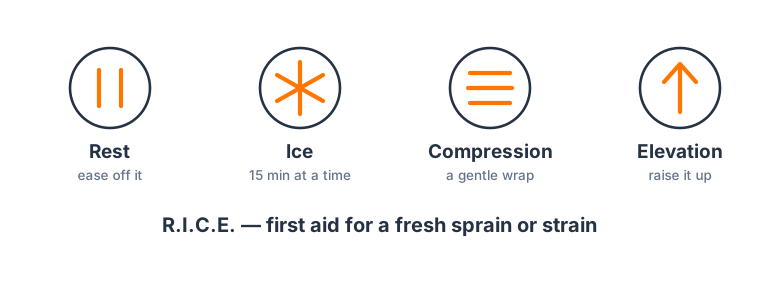
Sports Injury & Performance Guide (PDF)A one-page take-home guide: R.I.C.E. and recovery basics, common sports injuries, and the red flags that need evaluation.PDFThis article is for general education and is not a substitute for professional medical advice, diagnosis, or treatment. Always consult a qualified healthcare provider about your specific situation.
Frequently Asked Questions
Does sports massage actually help recovery?
For many athletes, yes — as a complement. Sports massage can ease muscle soreness and tightness, help you feel looser, and support mobility between hard sessions, which many athletes find genuinely useful for recovery and comfort. What it doesn't do is replace the strengthening and progressive loading that rebuild an injured tissue's capacity. Think of it as one supportive tool within a recovery plan, not the plan itself.
Can massage help sore muscles after a workout?
It often can. That deep, achy soreness in the day or two after hard training tends to respond well to soft-tissue work, which can ease the tightness and leave the muscles feeling looser and more comfortable. It won't erase soreness entirely, and gentle movement, sleep, and sensible training progression matter just as much — but as part of that mix, massage is a reasonable and pleasant recovery aid.
Should I get a massage before or after competition?
It depends on the goal. Lighter, flushing work is generally better suited to the days right around a competition, when you want to feel loose without being worked over deeply. Firmer, more focused soft-tissue work fits better into the recovery window between hard training blocks, giving the tissue time to settle before your next big effort. A deep session the night before a race isn't ideal.
Is massage good for a sports injury?
It can be a useful part of recovery for many soft-tissue sports injuries — once the injury is past the acutely inflamed stage and as part of a broader plan that also restores motion and rebuilds strength. What massage can't do is substitute for evaluating the injury or for the strengthening phase, and it isn't the right answer for an unstable joint, a suspected fracture, or a sharp, worsening problem. Those need to be assessed first.
How often should an athlete get a sports massage?
There's no single right frequency — it depends on your training load, how you're feeling, and where you are in a season or a rehab plan. Some athletes find regular sessions during heavy training blocks helpful, while others use it more selectively around tough stretches or nagging tightness. The honest guide is your own response and your goals, ideally coordinated with the rest of your recovery so massage supports it rather than standing in for it.
Ready to get evaluated at Thrive Chiropractic?
Dr. Rubinstein will assess what’s really going on and build a care plan tailored to you. Reach out and we’ll get you scheduled.
2133 Crooks Road | Troy MI 48084