
Recovering From a Sports Injury: Phases, Timelines & Return to Play
Recovering from a musculoskeletal sports injury isn't a single event — it's a progression through predictable phases: protecting and calming the injury, restoring motion, rebuilding strength, and returning to sport. This guide walks through those phases, offers realistic qualitative timelines, and explains why return to play is earned through pain-free full motion and restored strength rather than the calendar — plus how conservative care at Thrive Chiropractic in Troy, MI supports each stage.
Recovery Is a Journey, Not an Event
When you injure yourself in sport, it's tempting to think of recovery as a switch — hurt one day, healed the next. It rarely works that way. Recovering from a musculoskeletal sports injury is a progression: the injured tissue has to be protected while it calms down, then coaxed back to full motion, then rebuilt to the strength your sport demands, and only then loaded back to full intensity. Each of those is a distinct phase with a distinct job, and they overlap rather than click over cleanly.
Understanding the phases matters because the most common mistake athletes make isn't resting too little or too much — it's skipping ahead. Pain fading feels like permission to go back to full training, but pain settling and the tissue being ready for full load are two different milestones, sometimes weeks apart. The athletes who recover cleanly and stay recovered respect the order: calm it, move it, strengthen it, then return to it. The rest of this guide walks through what each phase asks of you and how to know when you're ready for the next.
Phase 1: Protect & Calm the Injury
The first job after an acute injury is to protect the damaged tissue and settle the inflammation and pain — but protect no longer means shut down completely. The modern approach is relative rest: offloading the injured structure while keeping the rest of you moving.
- Offload the injured area. Back off the movements and loads that provoke pain. If you can't put full weight through a leg or use a limb normally, that's a signal to have it evaluated before loading it further.
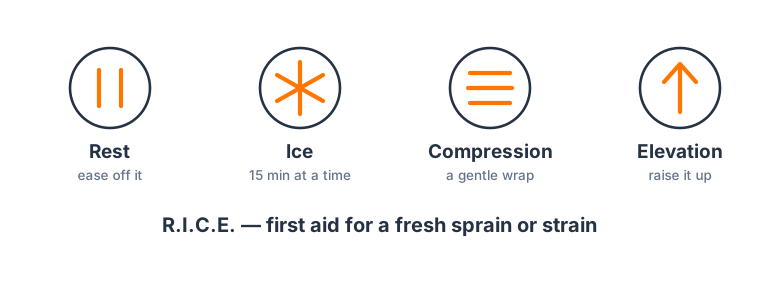
- Calm the swelling in the early days. Gentle compression, elevation, and ice in the first day or two can ease pain and manage swelling in an acutely inflamed injury.
- Keep the rest of you conditioned. An injured ankle doesn't mean an idle body — pain-free movement elsewhere maintains fitness and keeps you from deconditioning while the injury settles.
- Protect, don't freeze. Prolonged complete immobility stiffens the joint and weakens the surrounding muscle, which just lengthens the road back.
This phase is usually the shortest — often a matter of days for the sharpest pain to ease — but rushing straight past it into training is exactly how a manageable injury becomes a lingering one.
Phase 2: Restore Motion
Once the sharp pain and swelling begin to settle, the goal shifts from protection to restoring movement. Injured tissue and the joints around it tend to stiffen, and a guarded, protective muscle spasm often sets in — both of which have to be addressed before strengthening makes sense.
- Gentle, within-comfort movement keeps the joint mobile and helps the healing tissue organize itself. Easing a joint through its available range, short of pain, is the theme here.
- Soft-tissue work and massage help release the protective spasm and support the injured muscle and ligament, which often unlocks motion that guarding was holding back.
- Mobilization or gentle adjustment of stiff joints and spinal segments, once the acute flare allows, helps restore motion so the area doesn't stay locked up.
You'll know you're moving toward the next phase when the injured area moves comfortably through most of its normal range and the constant ache and guarding have faded.
Phase 3: Rebuild Strength
This is the phase athletes most often shortchange, and it's the one that decides whether the injury stays gone. After an injury and a period of reduced loading, the muscle around the injured area loses strength and the tissue itself needs to be progressively reloaded to regain its capacity. Skipping this leaves you with an area that feels fine day-to-day but isn't ready for the demands of sport.
- Progressive loading rebuilds the injured tissue's tolerance — starting light and gradually increasing, letting comfort set the pace.
- Restore strength to match the other side. The uninjured limb is your benchmark: the goal is strength on the injured side that's genuinely equal, not just "good enough."
- Rebuild control, not just raw strength. Balance, coordination, and the ability to control the joint through fast or loaded movement — often the piece that's quietly missing after an injury — are trained here too.
- Address the whole chain. A recurrent lower-limb injury may involve foot and hip mechanics as much as the injured spot itself, which is where a broader look at movement — including foot support with custom orthotics where relevant — earns its keep.
Rebuilding strength deliberately is unglamorous and easy to cut short once you feel better. It's also the difference between a clean return and a recurring overuse or re-injury cycle.
Phase 4: Return to Sport
The final phase is a graded return to your actual sport — and it's earned, not scheduled. The temptation to jump straight back to full competition the moment you feel healthy is understandable and, more often than not, how injuries come back.
- Progress in stages. Reintroduce sport-specific movement gradually — light and controlled before fast and full-intensity, straight-line before cutting and pivoting — advancing only when each stage stays symptom-free.
- Test the demands your sport makes. Before full return, you should be able to sprint, jump, cut, or throw — whatever your sport requires — without pain and with confidence in the injured area.
- Return by milestones, not the calendar. Full return is appropriate when you have pain-free full motion, strength restored to match the uninjured side, and the ability to perform your sport's movements without provoking symptoms.
Hitting those markers means you're not just healed but ready, which is the whole point of taking the phases in order.
How Long Does Recovery Take?
The honest answer is that it varies widely, and anyone who quotes you a single number without examining the injury is guessing. Recovery time depends on what's injured, how severe it is, and how well the healing phases are respected. As a rough, qualitative frame:
- A minor muscle strain or mild sprain often settles over roughly a couple of weeks, moving through the phases relatively quickly.
- A more significant strain or a moderate ligament sprain typically takes longer — the strength-rebuilding phase in particular can't be rushed without courting a setback.
- An injury that was played through frequently takes longer than one caught and managed early, because continued loading interrupts the calming phase.
Two things reliably lengthen recovery: skipping the strengthening phase, and returning before the readiness markers are met. Two things reliably help: respecting relative rest early, and progressing by milestones rather than dates. Dr. Rubinstein will map a realistic timeline to your specific injury after the exam — and update it as you progress, since recovery rarely runs perfectly to plan.
How Thrive Chiropractic Supports Your Recovery
At Thrive Chiropractic in Troy, MI, care for a sports injury is conservative and matched to the phase you're in — calming early, then restoring, then rebuilding toward a safe return. Chiropractic care for athletes often blends several pieces across the phases:
- Soft-tissue and massage therapy to calm an injured, guarded area and release the protective spasm — the cornerstone of the early calming and motion-restoring phases. Our sports massage and recovery guide goes deeper on what it does and doesn't do.
- Gentle adjustments or mobilization to restore motion to stiff joints and spinal segments once the acute flare allows.
- A staged strengthening and return-to-sport plan — the piece that rebuilds strength and control and tells you, by milestones, when you're ready.
- Attention to the whole movement chain, including foot mechanics with custom orthotics where a recurrent lower-limb injury calls for it.
Care is coordinated with your sports-medicine team, and if the exam suggests a fracture, a significant ligament tear, or a concussion, that's referred and co-managed rather than treated as a simple strain. You'll get a clear read on your phase, honest milestones, and a plan aimed at a return that lasts.
When to Seek Prompt or Emergency Care
The large majority of sports injuries are soft-tissue or joint injuries that recover well with conservative care and a respected phase progression. A smaller set of signs, though, points to something that needs prompt evaluation — these are not to be worked through.
Short of those, it's still worth being evaluated when a sports injury isn't improving on the expected timeline, keeps recurring, or leaves you unable to return to your sport with confidence. Getting the right care early — and taking the recovery phases in order — helps the injury heal cleanly and keeps it from becoming a season-after-season problem.
Frequently Asked Questions
Recovering from a sports injury raises practical questions — how long it takes, when it's safe to return, whether to rest or keep moving, why injuries recur, and whether a chiropractor can help. Those are answered in detail in the FAQ section on this page.
If you're working back from a sports injury and want a clear read on your phase and the fastest safe path to full play, schedule a visit with Dr. Rubinstein at Thrive Chiropractic in Troy, MI. You'll get a thorough exam, a check for anything that needs prompt attention, and a staged plan aimed at healing the injury and returning you to sport ready — not just pain-free. Explore the wider Sports Performance & Injury Recovery library for related guides.
Sports Injury & Performance Guide (PDF)A one-page take-home guide: R.I.C.E. and recovery basics, common sports injuries, and the red flags that need evaluation.PDFThis article is for general education and is not a substitute for professional medical advice, diagnosis, or treatment. Always consult a qualified healthcare provider about your specific situation.
Frequently Asked Questions
How long does it take to recover from a sports injury?
It depends entirely on what's injured and how severely. A minor muscle strain or mild sprain often settles over a couple of weeks, while a more significant strain, a moderate ligament sprain, or an injury that was played through can take considerably longer. Rather than a fixed number, think in phases — and know that healing that's rushed tends to take longer overall. Dr. Rubinstein will give you a timeline matched to your specific injury after the exam.
When can I return to my sport after an injury?
When you've earned it, not when the calendar says so. The honest markers are pain-free full range of motion, strength restored to match the uninjured side, and the ability to perform your sport's movements — cutting, jumping, sprinting, throwing — with confidence and no symptoms. Returning before you hit those milestones is the single most common reason an injury comes back. A staged progression tells you when you're truly ready.
Should I rest completely or keep moving after a sports injury?
Neither extreme. The first day or two after an acute injury calls for protecting it and calming the swelling, but prolonged complete rest stiffens the joint and weakens the muscle around it. The modern approach is relative rest — offloading the injured tissue while keeping the rest of you conditioned in pain-free ways — then progressively restoring motion and strength. Total shutdown slows you down as surely as pushing too hard does.
Why does my injury keep coming back?
Most re-injuries trace to returning too soon — before strength and motion were fully restored — or to never rebuilding the strength and control the tissue needs to handle sport. An injury can feel healed once the pain fades, but pain settling and tissue being ready for full load are two different milestones. Completing the rebuild-strength phase and returning in stages is what breaks the cycle.
Can a chiropractor help me recover from a sports injury?
Yes, for many musculoskeletal sports injuries. Conservative chiropractic care can calm an injured, guarded area with soft-tissue and massage work, restore motion to stiff joints and segments, and guide a staged strengthening and return-to-sport plan. Care is matched to your injury and co-managed with your sports-medicine team when a fracture, a significant ligament tear, or a concussion is in the picture.
Ready to get evaluated at Thrive Chiropractic?
Dr. Rubinstein will assess what’s really going on and build a care plan tailored to you. Reach out and we’ll get you scheduled.
2133 Crooks Road | Troy MI 48084