
Runner's Knee (Patellofemoral Pain): Causes, Relief & Recovery
Runner's knee — patellofemoral pain — is an aching around or behind the kneecap that flares with running, stairs, squatting, and long sitting. It's an overuse and tracking problem more than a damaged joint, and the drivers are usually upstream: weak or under-conditioned hips, foot mechanics, and a training load that outran the tissue. This guide explains what's happening, how to get relief, why activity modification matters, and how addressing hip strength and foot mechanics — including custom orthotics — helps, from Thrive Chiropractic in Troy, MI.
What Is Runner's Knee?
Runner's knee is the everyday name for patellofemoral pain — an aching around or behind the kneecap that flares with running, stairs, squatting, and long stretches of sitting. It's one of the most common complaints in runners and jumping athletes, and the reassuring headline is that it's usually an overuse and tracking problem, not a damaged joint. The kneecap normally glides in a groove at the end of the thigh bone as you bend and straighten. When that gliding is even slightly off, or when the joint is simply asked to absorb more running than it was ready for, the surface behind the kneecap gets irritated — and that's what hurts.
Because it's a load-and-tracking problem, runner's knee sits within the wider family of sports injuries and behaves like an overuse injury: it builds up gradually, flares with the activities that load the kneecap, and settles when the load and the mechanics behind it are addressed. The catch — and the reason so many people chase it for months — is that the pain is at the knee but the cause often isn't. It usually lives upstream in the hips and downstream in the feet.
Why the Kneecap Starts to Hurt
Picture the kneecap as a train and its groove as the track. Pain shows up when the train doesn't sit squarely on the track, or when the track is asked to carry too many trips. A few things push it there:
- Training overload — a jump in mileage, more hills, faster intervals, or new terrain before the joint has adapted. This is the single most common trigger, and it's why a sudden change in a running plan so often precedes runner's knee.
- Weak or under-conditioned hips. When the muscles that steady the hip and thigh can't hold the knee in line, the knee drifts inward on each stride and the kneecap tracks off to one side — concentrating stress on part of the joint surface.
- Foot mechanics. A foot that rolls inward excessively or an arch that collapses rotates the whole leg, which changes how the kneecap sits in its groove. The foot, the knee, and the hip are one chain.
- Muscle tightness and imbalance around the knee and thigh, which can tug the kneecap off its ideal path.
The important idea is that these stack. A runner with slightly weak hips and inward-rolling feet may be fine — until a training spike tips the joint from coping into complaining. That's why lasting relief comes from addressing the chain, not just icing the knee.
Common Symptoms
Patellofemoral pain has a recognizable pattern, and the pattern is a clue that it's a tracking-and-load problem rather than a structural injury:
- A dull ache around or behind the kneecap — often hard to pinpoint, more "around there" than one sharp spot
- Pain that worsens with running, especially downhill, and with jumping or squatting
- Pain on stairs, particularly going down, when the kneecap is loaded through a bend
- The "theater sign" — aching after sitting a long while with the knee bent, eased by standing and moving
- A grinding or catching sensation behind the kneecap as you bend and straighten
- Mild puffiness around the knee at times, without the dramatic swelling of a structural injury
A tracking problem tends to ache with these specific loaded positions and improve as the drivers are addressed. A knee that truly locks, gives way, or swells markedly right after a twist or a "pop" is a different story and worth getting checked rather than training through.
Who's Most at Risk?
Anyone active can develop runner's knee, but it's more likely when:
- You run or jump repetitively — distance runners top the list, along with basketball, volleyball, and other jumping athletes
- You've spiked your training load — a fast jump in mileage, hills, or speed, or a return to running without easing in
- Your hips are weak or under-conditioned — the muscles that keep the knee tracking in line can't keep up with the running volume
- Your foot mechanics change how load reaches the knee — excessive inward roll or a collapsing arch, the same mechanics that feed shin splints
- You're a young or growing athlete — a busy training schedule on a still-developing frame is a common setup, which is one reason knee complaints are common among teen athletes
- You've had knee trouble before — prior irritation and lingering weakness make a repeat more likely
Most overuse injuries happen where a demand meets a vulnerability — a jump in running meeting hips and feet that weren't ready. Each of those vulnerabilities is something you can train.
How Runner's Knee Is Evaluated
The evaluation exists to confirm this is patellofemoral pain rather than a structural knee injury, and — just as importantly — to find why the kneecap is mistracking. At Thrive Chiropractic, Dr. Rubinstein starts with your history — your training, any recent spike in mileage or intensity, exactly where and when it hurts, and the telltale patterns like stairs and the theater sign.
The physical exam typically includes:
- Palpation and kneecap assessment to locate the irritation and see how the kneecap tracks as the knee bends
- Hip and thigh strength testing, since weak hip control is one of the most common drivers to find
- A look at the whole chain — how the knee behaves on a single-leg squat, and how the foot and ankle move and load, since foot mechanics feed the problem
The exam confirms it's a patellofemoral problem, flags the few situations that need different care, and — by pinpointing the hip and foot drivers — maps a plan that actually fits it.
What to Expect at Thrive Chiropractic
At Thrive Chiropractic in Troy, MI, care for runner's knee is conservative and aimed at both ends of the problem: calming the irritated joint now, and fixing the mechanics behind it so it doesn't simply return. Care often includes:
- Soft-tissue and massage therapy to release the tight thigh and hip muscles that pull the kneecap off its track — part of the early relief
- Gentle mobilization where the knee, hip, or ankle is stiff, so the joint can move and load more evenly
- A hip- and thigh-focused strengthening plan — the core of lasting recovery, because it's what keeps the knee tracking in line under running load
- Foot-mechanics assessment and custom orthotics where the foot is rotating the leg and driving load through the kneecap
The plan is honest about the arc: patellofemoral pain usually responds well, but the strength work behind it takes consistency and time. You'll get a realistic timeline after the exam, and if anything suggests a structural injury rather than a tracking problem, Dr. Rubinstein will say so and coordinate the right next step.
The Role of Hip Strength & Foot Mechanics
This is the part that most often makes the difference, so it's worth its own section: with runner's knee, treating only the knee is treating the symptom. The kneecap tracks well when the chain above and below it is doing its job.
- Hips are the steering. The muscles around the hip and thigh keep the knee aligned over the foot on each stride. When they fatigue or are under-conditioned, the knee caves inward and the kneecap mistracks — so rebuilding hip and thigh strength is usually the single most effective piece of care.
- Feet are the foundation. A foot that rolls inward or an arch that collapses rotates the leg and shifts how the kneecap sits in its groove. Supporting the foot takes some of that aggravating load off the knee.
- The two work together. Orthotics steady the foundation while strengthening rebuilds the steering — neither alone is usually the whole answer, but together they change how load reaches the kneecap on every step.
Getting the chain working is what turns short-term relief into a knee that holds up to running again.
Activity Modification & Return to Running
For a runner, how you come back matters as much as the healing itself — and going straight back to full mileage is the most common way runner's knee turns into a recurring one. The principle is relative rest: reduce the aggravating load while the joint calms, keep your fitness up, then rebuild in steps.
- Offload the aggravating running first. Cut back the mileage, hills, and speed that provoke the pain, and swap in lower-impact cross-training — cycling or pool work — to keep your base without hammering the kneecap.
- Rebuild the drivers. As the joint calms, put the work into hip and thigh strength and address foot mechanics, so the knee is better supported when running load returns.
- Progress in stages. Reintroduce running gradually — shorter and flatter before longer and hillier, easy before fast — advancing only when each step stays comfortable.
- Return by milestones, not the calendar. Full return is earned when you can run your distance and terrain without the kneecap flaring, not simply because a set number of weeks passed.
Rebuilding strength, fixing foot mechanics, and easing back in is the phase that turns "calmed down" into "less likely to happen again."
Supporting Your Recovery at Home
What you do between visits has a real effect on how cleanly runner's knee settles.
- Modify, don't fully stop. Prolonged complete rest deconditions the very muscles you need — stay active in ways that don't load the kneecap while you rebuild.
- Use ice sensibly. Ice can calm the knee after activity if it's flared, but it treats the symptom — the strength and mechanics work is what changes the cause.
- Do the strength work consistently. The hip and thigh exercises in your plan are the engine of recovery; done regularly, they're what keeps the kneecap tracking.
- Mind your running mechanics and footwear. Worn-out shoes and a sudden surge in volume are two of the most avoidable triggers — and where the foot is part of it, wear the orthotics your plan prescribes.
If your knee isn't improving on the expected timeline, keeps recurring, or starts locking or giving way, treat that as a reason to be re-evaluated rather than to push through.
When to Seek Prompt or Emergency Care
The large majority of runner's knee is a tracking-and-overuse problem that recovers well with conservative care. A small set of warning signs, though, points to a structural knee injury that needs prompt evaluation — these are not symptoms to run through.
Short of those situations, it's still worth being evaluated when runner's knee isn't improving on the expected timeline, keeps recurring, or limits your running and daily life. Getting the right care early — care that addresses the hips and feet, not just the knee — helps it settle cleanly and keeps it from becoming a season-after-season problem.
Frequently Asked Questions
Runner's knee raises a lot of practical questions — whether you can keep running, why long sitting hurts, whether a chiropractor can help, whether orthotics make a difference, and how long it takes to get better. Those are answered in detail in the FAQ section on this page.
If your kneecap has been aching with running and you want a clear read on the injury and the fastest safe path back, schedule a visit with Dr. Rubinstein at Thrive Chiropractic in Troy, MI. You'll get a thorough exam that looks up the leg and down at the foot, a check for anything structural, and a conservative plan aimed at calming the knee and fixing the mechanics behind it.
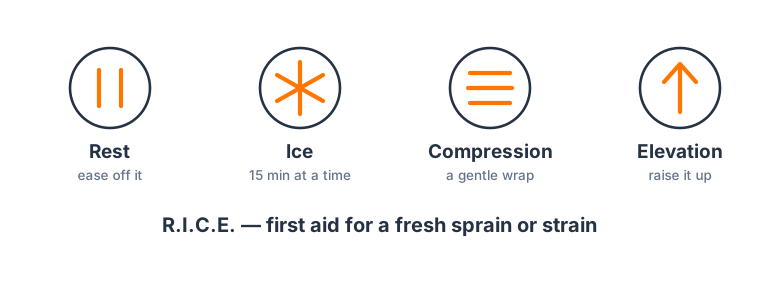
Sports Injury & Performance Guide (PDF)A one-page take-home guide: R.I.C.E. and recovery basics, common sports injuries, and the red flags that need evaluation.PDFThis article is for general education and is not a substitute for professional medical advice, diagnosis, or treatment. Always consult a qualified healthcare provider about your specific situation.
Frequently Asked Questions
Can I keep running with runner's knee?
Sometimes, at a reduced level — but not through sharp or worsening pain, and not with a limp. Running through patellofemoral pain that's escalating tends to keep the joint irritated and stalls recovery. The usual approach is relative rest: cut back the mileage, hills, and speed that provoke it, keep your fitness up with lower-impact activity, and rebuild the hip and thigh strength behind it. Dr. Rubinstein can help you find the level that lets the knee calm down without losing your base.
Why does my knee hurt when I sit for a long time?
That aching after a long drive, flight, or movie is so characteristic it has a nickname — the 'theater sign.' When the knee stays bent for a stretch, the kneecap sits under sustained pressure against the joint surface behind it, which an irritated patellofemoral joint doesn't like. It's a classic clue that the pain is coming from how the kneecap tracks and loads, not from a torn structure inside the knee.
Can a chiropractor help runner's knee?
Yes. Conservative care for patellofemoral pain lines up well with what a chiropractor addresses — calming the irritated joint with soft-tissue work, restoring motion where the knee, hip, or ankle is stiff, and, most importantly, rebuilding the hip and thigh strength and cleaning up the foot mechanics that let the kneecap mistrack. Where the foot is driving load through the knee, custom orthotics can be part of the plan. Care is matched to what the exam finds, and a structural injury is referred appropriately.
Do orthotics help runner's knee?
They can, when foot mechanics are part of the problem. If the foot rolls inward excessively or the arch collapses, it rotates the leg and changes how the kneecap tracks — so supporting the foot can take some of the aggravating load off the knee. Orthotics aren't a fix on their own; they work best alongside the hip and thigh strengthening that addresses the rest of the chain. Dr. Rubinstein assesses your foot mechanics and, where custom orthotics make sense, fits them as one piece of the plan.
How long does runner's knee take to get better?
Milder cases often settle over a few weeks once you offload the aggravating running and start addressing the drivers; more stubborn or long-standing cases take longer, because the hip and thigh strength behind them takes time to rebuild. The pace depends on how irritated the joint is and how consistently the strength work is done. Return to running is earned through a staged progression rather than the calendar — Dr. Rubinstein will map a timeline to your knee after the exam.
Ready to get evaluated at Thrive Chiropractic?
Dr. Rubinstein will assess what’s really going on and build a care plan tailored to you. Reach out and we’ll get you scheduled.
2133 Crooks Road | Troy MI 48084