
Rotator Cuff & Shoulder Injuries in Athletes: Causes & Recovery
Overhead athletes — swimmers, throwers, tennis and volleyball players, weightlifters — put enormous, repeated demand on the shoulder, and the rotator cuff tends to be where it shows up first. Most of that is a strain, tendinitis, or impingement that responds well to conservative care. This guide explains how the athletic shoulder gets injured, the symptoms to watch, how soft-tissue work, joint mobility, and rehab help, and when a full tear or an unstable joint needs an orthopedic referral — from Thrive Chiropractic in Troy, MI.
The Overhead Athlete's Shoulder
The shoulder is the most mobile joint in the body, and that mobility comes at a price: stability has to be actively managed by muscle rather than locked in by bone. The workhorses for that job are the rotator cuff — four small muscles that wrap the top of the arm bone and constantly steer and center it in the socket. When you throw a pitch, serve, swim a lap, or press a barbell overhead, the cuff is what keeps the joint tracking cleanly while the big muscles generate power. Ask it to do that thousands of times, and it's usually the cuff that complains first.
For an athlete, the reassuring news is that most shoulder trouble isn't a torn joint. The common injuries sit within the wider family of sports injuries and are irritation rather than rupture: a cuff strain, tendinitis (an inflamed, overworked tendon), or impingement (the cuff and its bursa getting pinched as the arm lifts). These respond well to conservative care. A smaller set — a full-thickness tear or an unstable joint that slips — behaves differently and needs an orthopedic opinion. Telling those apart is the whole point of a good evaluation, and it shapes everything that follows.
How the Rotator Cuff Gets Injured in Sport
It helps to picture the ways sport actually loads the shoulder, because each one tends to injure the cuff a little differently.
- Repetitive overhead motion — the throwing, serving, spiking, and swimming strokes done over and over. The same arc, thousands of times, gradually overloads the tendon and produces tendinitis. This is the classic overuse injury of the athletic shoulder.
- Impingement under load — as the arm rises, the space the cuff passes through narrows. With a tired or poorly controlled shoulder blade, the tendon and bursa get repeatedly pinched, which inflames them and makes the overhead arc painful.
- A single overload — a hard fall onto the arm or shoulder, an awkward catch, or a max lift that slips can strain the cuff in one moment, and a significant force can tear it.
- Training-load spikes — ramping throwing volume, swim yardage, or pressing weight too fast, or coming back from an off-season cold, fatigues the cuff until an ordinary rep finally overloads it.
Underneath many of these is mechanics and shoulder-blade control. When the shoulder blade doesn't rotate and set the way it should, the cuff is left doing a job it wasn't built for — which is why rehab looks beyond the sore tendon to how the whole shoulder moves.
Common Symptoms
An irritated rotator cuff shows up in a few recognizable patterns, and the pattern is a clue to what's going on:
- Pain with overhead motion — reaching up, throwing, serving, or the recovery phase of a swim stroke is the classic trigger
- A painful arc — discomfort through the middle of raising the arm that eases at the top, the hallmark of impingement
- Aching at rest or at night, especially lying on the affected side
- Stiffness and reduced motion, so the shoulder feels tight and hard to move through its full range
- Weakness or a sense the arm "gives" when you lift or reach — the symptom most worth taking seriously, since marked weakness can signal a tear rather than simple irritation
A strain, tendinitis, or impingement tends to hurt with motion yet still let you use the arm, and it steadily improves with the right care. Clear weakness — trouble raising the arm or holding it up — or a shoulder that feels loose or slips are the patterns most worth getting checked rather than training through.
Who's Most at Risk?
Any athlete can develop shoulder trouble, but it's more likely when:
- Your sport is overhead and repetitive — baseball and softball pitchers, tennis and volleyball players, swimmers, and CrossFit or Olympic lifters top the list
- You've spiked your training load — a fast jump in throwing volume, swim yardage, or pressing weight, or a return from the off-season without easing in
- Your shoulder-blade control or technique is off — a stroke or throwing motion that leaves the cuff overworked and the joint poorly centered
- Your cuff is under-conditioned — the small stabilizers haven't been trained to keep up with the power the big muscles produce
- You're a young, developing athlete — a growing thrower's shoulder is vulnerable to overuse, which is why arm-care and pitch limits matter for teen athletes
- You've hurt the shoulder before — a prior injury and lingering weakness make a repeat more likely
Most sports injuries happen where a demand meets a vulnerability — a repeated overhead load meeting a shoulder that wasn't ready. Each of those vulnerabilities is something you can train.
How a Shoulder Injury Is Evaluated
The evaluation exists to answer one question: is this the common, conservative kind of shoulder injury, or the kind that needs an orthopedic opinion? At Thrive Chiropractic, Dr. Rubinstein starts with your history — your sport and position, whether it built up over a season or followed a specific fall or catch, exactly where and when it hurts, and crucially which movements provoke it.
The physical exam typically includes:
- Palpation to pinpoint the irritated tendon and the tight tissue around the joint
- Motion testing — how the arm moves through its range and where in the overhead arc the pain appears
- Strength and cuff-specific tests to gauge whether the cuff is simply irritated or genuinely weak, and to check the stability of the joint
The exam confirms what's irritated, flags the few situations that need a surgical opinion, and maps the injury so the plan — and the return-to-sport timeline — actually fits it.
What to Expect at Thrive Chiropractic
At Thrive Chiropractic in Troy, MI, care for the common athletic shoulder injuries is conservative and paced to your healing and your sport. The early aim is to calm the irritated tendon and restore motion; the later aim is to rebuild the cuff and shoulder-blade control that get you safely back overhead. Care often includes:
- Soft-tissue and massage therapy to calm the irritated tendon and release the tight muscles around the shoulder and shoulder blade — usually the cornerstone of early relief
- Gentle mobilization of the shoulder and surrounding joints to restore a smooth, pain-free arc once the acute irritation settles, so the joint doesn't stay stiff
- A staged rehab plan — the piece that reconditions the rotator cuff and the muscles that steady the shoulder blade, then rebuilds toward your sport's overhead demands
- Attention to the whole chain, since the neck and upper back feed into shoulder mechanics; where the exam points there, care may draw on upper cervical care as part of the picture
If the exam suggests a full tear or an unstable joint rather than an irritated tendon, care is adjusted and the right orthopedic referral is coordinated. You'll get a realistic timeline after the exam, and an honest read on when it's safe to load the shoulder overhead again.
Load Management & Return to Sport
For an athlete, how you come back matters as much as the healing itself — and rushing overhead work is the most common way a shoulder injury turns into a recurring one. The principle is load management: reducing the aggravating load while the tissue calms, then rebuilding it in steps.
- Offload the aggravating motion first. Back off the throwing, serving, or overhead pressing that hurts while keeping the rest of your conditioning going in pain-free ways. This isn't total rest; it's targeted rest.
- Rebuild the cuff and shoulder-blade base. As the irritation settles, recondition the rotator cuff and the muscles that set the shoulder blade before adding sport-specific load, so the joint is well controlled when intensity returns.
- Progress in stages. Reintroduce overhead work gradually — light and controlled before fast and heavy, partial ranges before full — advancing only when each stage stays comfortable.
- Return by milestones, not the calendar. Full return is earned when you can meet your sport's overhead demands without provoking symptoms, not simply because a set number of weeks passed.
Rebuilding the cuff and easing back in is the phase that turns "calmed down" into "less likely to happen again."
Supporting Your Recovery at Home
What you do between visits has a real effect on how cleanly a shoulder injury settles.
- Keep the arm gently moving. A short break from the aggravating motion is fine, but letting the shoulder go completely still stiffens it — gentle, pain-free movement keeps the joint mobile while the tendon calms.
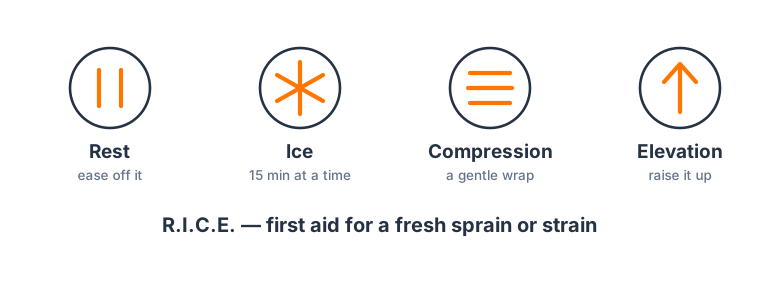
- Use ice or heat sensibly. Ice can settle a sharply irritated, painful shoulder after a hard session; heat helps loosen a stiff, aching shoulder before gentle movement.
- Respect the painful arc. While it's irritated, work below the overhead range that provokes it rather than pushing repeatedly into pain.
- Keep up the cuff work. Progress into the gentle strengthening your plan prescribes rather than jumping straight back to full overhead training.
If your shoulder isn't improving on the expected timeline, keeps recurring, or develops clear weakness, treat that as a reason to be re-evaluated rather than to push through.
When to Seek Prompt or Emergency Care
The large majority of athletic shoulder injuries are a strain, tendinitis, or impingement that recover well with conservative care. A small set of warning signs, though, points to something that needs prompt evaluation — these are not symptoms to play through.
Short of those situations, it's still worth being evaluated when a shoulder injury isn't improving on the expected timeline, keeps recurring, aches at night, or develops weakness. Getting the right care early helps the shoulder heal cleanly and keeps it from becoming a season-after-season problem. Chiropractic care is one conservative option among several for the athletic shoulder, and it's coordinated with medical care when a tear or instability is in the picture.
Frequently Asked Questions
Athletic shoulder injuries raise a lot of practical questions — whether to keep training, how to tell a tear from a strain, whether a chiropractor can help, how long until you can throw or swim again, and how to avoid a repeat. Those are answered in detail in the FAQ section on this page.
If you've hurt your shoulder in your sport and want a clear read on the injury and the fastest safe path back to play, schedule a visit with Dr. Rubinstein at Thrive Chiropractic in Troy, MI. You'll get a thorough exam, a check for anything that needs a surgical opinion, and a conservative plan aimed at calming the shoulder and building a cuff that holds up to your sport.
Sports Injury & Performance Guide (PDF)A one-page take-home guide: R.I.C.E. and recovery basics, common sports injuries, and the red flags that need evaluation.PDFThis article is for general education and is not a substitute for professional medical advice, diagnosis, or treatment. Always consult a qualified healthcare provider about your specific situation.
Frequently Asked Questions
Can I keep training through shoulder pain?
Not through sharp or worsening pain, and not through pain that's changing your mechanics. Pushing through an irritated rotator cuff tends to turn a manageable tendinitis into a longer problem, and swimming or throwing with a compensating stroke can spread the trouble to other tissues. The smarter move is to back off the aggravating motion, keep training the rest of your body in pain-free ways, and get the shoulder evaluated before you load it overhead again.
How do I know if my rotator cuff is torn or just strained?
You often can't tell for certain without an exam, but the pattern gives clues. A strain, tendinitis, or impingement usually hurts with overhead motion yet still lets you lift and use the arm. A significant tear more often brings weakness — trouble raising the arm or holding it up against gentle resistance — and sometimes follows a specific injury. Dr. Rubinstein tests the cuff on exam and, when the findings or your history suggest a full tear, arranges imaging or an orthopedic referral rather than treating it as a simple strain.
Can a chiropractor help a rotator cuff or shoulder injury?
Yes, for the common athletic shoulder problems — strain, tendinitis, and impingement. Soft-tissue and massage therapy calm the irritated tendon and release the tight tissue around the joint, gentle mobilization restores motion to a stiff shoulder, and a staged rehab plan rebuilds the rotator cuff and shoulder-blade control the sport demands. Care is matched to the injury, and if the exam points to a full tear or an unstable joint, that's referred for the right surgical opinion.
How long until I can throw or swim again?
It depends on what's irritated and how long it's been going on. A fresh, mild tendinitis can settle over a few weeks, while a stubborn impingement or a cuff that's been overloaded across a whole season takes longer and needs a careful, staged return to overhead work. Return is earned through a progression — light and controlled before fast and heavy, and only when each stage stays comfortable — so Dr. Rubinstein will map a timeline to your specific shoulder and sport after the exam.
How do I keep my shoulder from getting injured again?
Most repeat shoulder trouble in athletes traces back to load and mechanics — spiking training volume too fast, skipping the warm-up, a weak or under-conditioned cuff, and poor shoulder-blade control during the overhead motion. Building volume gradually, conditioning the rotator cuff and the muscles that steady the shoulder blade, and cleaning up technique all make a real difference. Dr. Rubinstein can help you build these habits so the injury doesn't keep recurring.
Ready to get evaluated at Thrive Chiropractic?
Dr. Rubinstein will assess what’s really going on and build a care plan tailored to you. Reach out and we’ll get you scheduled.
2133 Crooks Road | Troy MI 48084