
Chiropractic for Athletes: Mobility, Recovery & Injury Care
Chiropractic care can be a useful part of an athlete's support team — helping restore joint motion, work through tight or overworked soft tissue, keep movement well-aligned, and manage the everyday aches and injuries that come with training. It won't promise you a faster mile or a cure, but it can support how you move and recover. Here's an honest look at what chiropractic does for athletes, what a plan involves, and how care at Thrive Chiropractic in Troy, MI works alongside your coaches and sports-medicine team.
What Chiropractic Actually Offers an Athlete
If you train hard, your body takes a lot of repeated loading — and it's normal to look for anything that helps you move well and bounce back. Chiropractic care is one of those tools, and it's worth being clear-eyed about what it does. At its core, it's hands-on care focused on how your joints move and how your soft tissue is doing: restoring motion to stiff segments, easing tight or overworked muscle, and helping you move in a balanced, well-aligned way. Alongside that, it's a conservative way to manage the everyday aches and sports injuries that come with being active.
What it isn't is a shortcut or a cure. You'll sometimes see big claims that an adjustment will make you faster or stronger — that's not how we talk about it here. Chiropractic can support how you move and recover, which often helps training feel better, but it doesn't promise specific performance numbers and it doesn't magically erase an injury. Kept in that honest lane — as one useful part of your overall training and care — it earns its place. This guide walks through the pieces: mobility, soft-tissue work, recovery, injury care, and how all of it fits alongside your coaches and sports-medicine team.
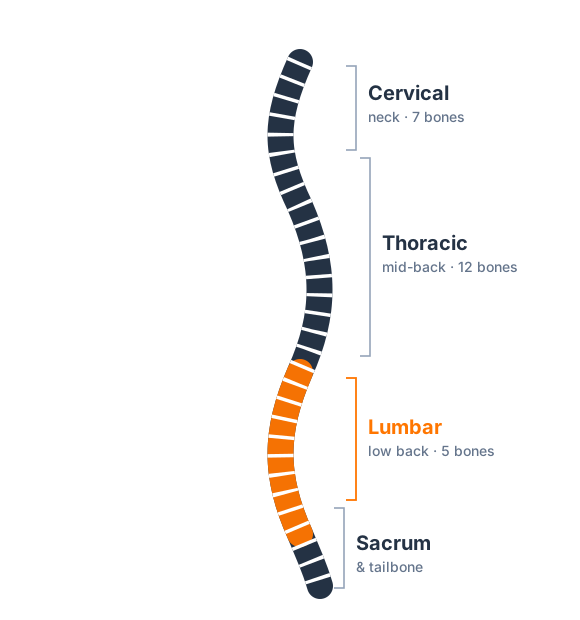
Mobility & Joint Function
A lot of athletic complaints trace back to a joint or a spinal segment that isn't moving the way it should. Maybe an ankle that's stiff from an old sprain, a mid-back that doesn't rotate freely for your golf or throwing motion, or hips that have tightened up from sitting between sessions. When one area is restricted, the movement has to come from somewhere — and neighboring joints often end up doing work they weren't built for, which is a common setup for nagging aches.
Restoring joint motion is where chiropractic care fits most naturally. Gentle adjustments or mobilization help a stiff, restricted segment move more freely again, so your body isn't forced to compensate around a locked-up area. That can make certain movements of your sport feel smoother and less guarded. It's not about "putting bones back in place" — nothing is out of place — it's about restoring the normal glide and range of a joint that had stopped moving well.
Soft-Tissue Work & Alignment
Hard training leaves its mark on muscle and connective tissue — they get tight, develop tender spots, and sometimes clamp down protectively around an area that's been overworked or tweaked. That guarding is useful in the short term but it can leave you feeling stiff, restricted, and slower to loosen up.
Soft-tissue and massage therapy address that side of things directly. Working through tight, overworked muscle helps release the protective spasm, eases the knotted areas, and can make a stiff region feel freer to move. Paired with joint work, it's a one-two approach: calm and release the muscle, restore motion to the joint. For recovery- focused athletes, our guide to sports massage and recovery goes deeper on how this fits a training week.
Alongside soft tissue, alignment in the everyday sense matters too — how you're loading and moving. When one side is doing more, or a joint is restricted and the rest of the chain compensates, movement gets lopsided and certain tissues take more strain. Care aimed at more balanced, well-aligned movement — plus attention to your foundation with custom orthotics for athletes when foot mechanics are part of the picture — helps spread load more evenly so no single area keeps getting overworked.
Supporting Recovery Between Sessions
Recovery is where a lot of athletic progress is actually made or lost — it's the window where tissue calms down and adapts after you've stressed it. Chiropractic care doesn't replace the fundamentals of recovery (sleep, fueling, hydration, and sensible load), but it can support the process so you feel less locked-up and move better between sessions.
- Releasing built-up tension. Soft-tissue work eases the tight, guarded muscle that lingers after hard training, so you're not carrying that stiffness into your next session.
- Restoring motion that's stiffened. Segments that have tightened up get moving again, which can help a region feel less restricted day to day.
- Guiding sensible load. A big part of recovery is not doing too much too soon — care includes helping you ease back into training in steps rather than jumping straight to full intensity, which our warm-up and injury prevention guide covers in practical detail.
Caring for Sports Injuries
Beyond mobility and recovery, chiropractic is a conservative option for many of the musculoskeletal injuries that come with sport — the strains, sprains, and overworked areas that don't need surgery but do need proper care to heal cleanly. Whether it's a tweaked lower back, a cranky shoulder, a runner's knee, or one of the classic overuse injuries, the general approach is the same: figure out what's injured, calm it down, then rebuild.
Care for an athletic injury is conservative and paced to your healing:
- Early on, the aim is to settle pain and protective spasm and protect the injured tissue — often with soft-tissue and massage work, and gentle mobilization once the acute flare allows.
- As it improves, care shifts to restoring full motion and rebuilding the strength and control the injury took away.
- Returning to sport happens in stages — easing the aggravating movement back in gradually rather than going straight back to full intensity — so the injury heals cleanly and is less likely to recur.
The sports injury recovery guide lays out how this staged progression typically works.
An Honest Word on Performance
It's worth saying plainly, because the internet is full of the opposite: chiropractic care does not promise you specific performance gains, and it doesn't cure injuries. No adjustment is going to reliably shave time off your sprint or add pounds to your max. What it can do is support the conditions for good performance — helping you move more freely, recover more comfortably, and manage the aches and injuries that would otherwise keep you sidelined or training around pain. When you move and recover better, you're in a better position to train and compete. That's a real, worthwhile benefit — it's just an honest one, not a miracle. If a provider is promising guaranteed results, that's a reason to be skeptical, not sold.
What to Expect at Thrive Chiropractic
At Thrive Chiropractic in Troy, MI, care for an athlete always starts with an exam, not a routine adjustment. Dr. Rubinstein asks about your sport, your training, what's bothering you or what you're hoping to move past, and then assesses how you actually move — which joints are restricted, where soft tissue is tight or guarded, and where you might need strength and control rather than more range.
From there, a typical plan is matched to what the exam finds, and may include:
- Chiropractic adjustments or mobilization to restore motion to genuinely stiff, restricted segments
- Soft-tissue and massage therapy to release tight, overworked muscle and protective spasm
- A staged strength and movement plan to rebuild what an injury took away and support balanced, well-controlled movement for your sport
- Attention to your foundation — foot mechanics with custom orthotics, and, where relevant, upper cervical care for neck-related issues
You'll get a straight answer about what care can and can't do for your situation, a realistic sense of timeline for an injury, and a clear note when something needs a referral rather than hands-on care.
Working With Your Coaches & Sports-Medicine Team
Good athletic care is a team effort, and chiropractic works best as one part of that team rather than a lone answer. Your coaches and trainers know your sport, your schedule, and your training load; your physician, physical therapist, or sports-medicine provider may be managing a diagnosis or guiding rehab. Chiropractic care fits alongside all of that — and Dr. Rubinstein is glad to coordinate rather than work in a vacuum.
That co-management matters most when there's a real injury. If your knee, shoulder, or back problem needs imaging, a specialist opinion, or a rehab program beyond hands-on care, the right move is to loop in the appropriate provider — not to keep treating it in isolation. Care that respects the rest of your team, and that refers on when it should, is care you can trust. If you're a younger athlete, that team approach matters even more — see our note on chiropractic for teens and the wider pediatric care library.
When to Seek Prompt or Emergency Care
Most athletic aches and injuries are exactly what they seem — soft-tissue strains and overworked areas that respond well to conservative care. A specific set of warning signs, though, points to something that needs urgent medical evaluation rather than an adjustment or a "walk it off."
Short of those emergencies, it's still worth being evaluated when an injury isn't improving on the timeline you'd expect, keeps recurring, or is holding back your training. Getting the right care early — and the right referral when it's needed — is what keeps a manageable issue from becoming a season-long one.
Frequently Asked Questions
Athletes ask fair, practical questions about chiropractic — whether it improves performance, whether it's safe, how it helps recovery, whether you need to be injured to come in, and whether you'll be told to stop playing. Those are answered in detail in the FAQ section on this page.
If you're an athlete dealing with stiffness, a nagging ache, or an injury and you want an honest read on whether chiropractic care can help, schedule a visit with Dr. Rubinstein at Thrive Chiropractic in Troy, MI. You'll get a thorough exam, a clear sense of what care can and can't do for you, and a plan built to work alongside your coaches and sports-medicine team. You can also explore the wider Sports Performance & Injury Recovery library, including warm-up and injury prevention and overuse injuries.
Sports Injury & Performance Guide (PDF)A one-page take-home guide: R.I.C.E. and recovery basics, common sports injuries, and the red flags that need evaluation.PDFThis article is for general education and is not a substitute for professional medical advice, diagnosis, or treatment. Always consult a qualified healthcare provider about your specific situation.
Frequently Asked Questions
Can a chiropractor improve my athletic performance?
Honestly, no one can promise you a faster time or a bigger lift from an adjustment. What chiropractic care can do is support the things that let you move and train well — restoring motion to stiff joints, easing tight or overworked muscle, and helping you move in a balanced, well-aligned way. When you move more freely and recover more comfortably between sessions, training tends to go better, but that's support, not a guaranteed performance boost. Anyone promising specific gains is overselling it.
Is chiropractic care safe for athletes?
For most healthy athletes, gentle, exam-guided chiropractic care is a well-established conservative approach. The key word is exam-guided — Dr. Rubinstein starts by checking what's actually going on, screens for anything that needs different care or a referral, and matches the technique to you and your sport. Safety comes from that careful assessment, from never forcing a painful joint, and from coordinating with the rest of your care team rather than working in isolation.
How does chiropractic help with sports recovery?
Recovery is really about tissue calming down and motion returning after hard training or an injury. Chiropractic care supports that by releasing protective muscle spasm with soft-tissue and massage work, restoring motion to segments that have stiffened up, and guiding a sensible return to load so you're not thrown straight back into full intensity. It doesn't replace the basics — sleep, fuel, and gradual load — but it can help you feel less locked-up and move better as you recover.
Do I need to be injured to see a chiropractor as an athlete?
Not necessarily. Some athletes come in for a specific injury; others come in for stiffness, restricted motion, or nagging aches that are getting in the way of training. Either way, the visit starts with an exam so care is matched to what you actually need rather than done routinely. If nothing needs treating, an honest provider will tell you that too.
Will a chiropractor tell me to stop playing my sport?
Only when it's genuinely the right call — and usually the goal is the opposite. For most athletic aches, care is aimed at keeping you moving in pain-free ways while the injured area settles, then rebuilding you back to full sport in stages. If something needs true rest, or if a red flag turns up, Dr. Rubinstein will tell you straight and coordinate with your team — but 'targeted rest, then a staged return' is far more common than 'stop everything.'
Ready to get evaluated at Thrive Chiropractic?
Dr. Rubinstein will assess what’s really going on and build a care plan tailored to you. Reach out and we’ll get you scheduled.
2133 Crooks Road | Troy MI 48084