
Ankle Sprains: Grades, Recovery & Preventing Re-Injury
An ankle sprain — a stretched or torn ligament from a roll, twist, or bad landing — is the single most common sports injury. Most heal well, but the piece that gets skipped is proper rehab, and skipping it is why so many ankles stay weak and keep re-spraining. Here's what the grades mean, how modern care favors early protected movement over prolonged rest, when an ankle needs imaging, and how conservative care at Thrive Chiropractic in Troy, MI helps you rebuild a stable ankle.
What Is an Ankle Sprain?
An ankle sprain is a stretched or torn ligament — one of the tough bands that hold the ankle bones together and keep the joint stable. It usually happens in an instant: the foot rolls, twists, or lands wrong, the ankle is forced past its normal range, and a ligament gets overstretched. By far the most common version is a roll inward (the sole turning under you), which strains the ligaments on the outside of the ankle.
Here's the headline that puts it in context: the ankle sprain is the single most common injury in sport, and the large majority heal well. It's a hallmark sports injury — the change of direction, the jump and landing, the uneven ground, the opponent's foot you land on. What separates an ankle that fully recovers from one that keeps giving out isn't usually the sprain itself; it's whether the ankle gets properly rehabbed afterward. That single factor runs through everything below.
What's Happening in Your Ankle
Your ankle is a hinge held together by ligaments on both sides. When the joint is forced past what those ligaments can give — most often the foot rolling inward — the fibers of a ligament are overstretched or torn. The body responds the way it does to any soft-tissue injury: inflammation rushes in to begin repair, which is what produces the fast swelling, bruising, warmth, and tenderness of a fresh sprain.
That swelling can be dramatic within the first hours, and it's a big part of why a sprained ankle feels so alarming — but the size of the swelling doesn't neatly match the severity of the injury. Alongside the ligament damage, the joint loses some of its normal motion and its position sense — the ankle's built-in awareness of where it is in space, which is what lets you adjust instantly on uneven ground. That lost position sense is easy to overlook and central to why an under-rehabbed ankle re-sprains: the ligament may heal, but if the strength, balance, and position sense aren't rebuilt, the joint stays a step behind and rolls again.
Grades of an Ankle Sprain
Ankle sprains are described in three grades by how much the ligament is damaged. The grade shapes the recovery timeline and how cautiously you return.
- Grade I (mild). The ligament is overstretched with only microscopic tearing. Mild pain and swelling, the ankle still feels reasonably stable, and you can usually bear weight with some discomfort. These recover fastest.
- Grade II (moderate). A partial tear of the ligament. More swelling, bruising, and pain, some looseness in the joint, and weight-bearing is genuinely uncomfortable. These need more time and more deliberate rehab.
- Grade III (severe). A complete tear of the ligament. Significant swelling and bruising, marked instability, and often an inability to bear weight. These take the longest, occasionally need specialist input, and are the most important to rehab thoroughly.
Grading isn't about a label — it's about matching the plan to the injury, so the timeline is realistic and the return is neither rushed nor dragged out.
Common Symptoms
An ankle sprain has a recognizable pattern. You might notice:
- Sudden pain at the moment the ankle rolls, twists, or lands wrong
- Swelling, often fast and sometimes considerable, around the joint
- Bruising that can appear over the following day or two
- Tenderness over the injured ligament, usually on the outside of the ankle
- Difficulty or pain bearing weight and walking normally
- A feeling of looseness or the ankle "giving way," more so with higher grades
For a straightforward sprain, the pain and swelling peak early and then steadily improve as the ligament heals. Two patterns are worth flagging rather than pushing through: being unable to put weight through the ankle at all, and sharp tenderness directly over the ankle bones — both of which raise the question of a fracture and are covered in the evaluation and red-flag sections below.
Who's Most at Risk?
Anyone can roll an ankle, but it's more likely when:
- You play a cutting, jumping, or uneven-surface sport — basketball, volleyball, soccer, trail running, and court sports top the list
- You've sprained that ankle before — a prior sprain is the single biggest risk factor for the next one, especially if it wasn't fully rehabbed
- Your ankle strength or balance is low, so the joint can't react fast enough when it's caught in a bad position
- You're returning to sport without easing in or on tired legs late in a game, when control slips
- Your footwear or the playing surface is poor — worn shoes or uneven ground make an awkward landing more likely
Most sprains happen where a demand meets a vulnerability — a bad landing meeting an ankle that wasn't ready. The most important of these to fix is a previous under-rehabbed sprain, because that's the one you can most directly change.
How an Ankle Sprain Is Evaluated
The evaluation has two jobs: confirm it's a ligament sprain and its grade, and rule out a fracture. At Thrive Chiropractic, Dr. Rubinstein starts with your history — exactly how it happened (which way the ankle rolled tells a lot), whether you could bear weight afterward, how fast it swelled, and whether this ankle has been sprained before.
The physical exam typically includes:
- Palpation to pinpoint the injured ligament and, importantly, to check for tenderness directly over the ankle bones
- Weight-bearing and movement testing to gauge how much motion and stability the injury has cost and which grade it fits
- Stability testing of the ligaments to distinguish a stretch from a partial or complete tear
The exam confirms it really is a sprain, catches the situations that need imaging or a different level of care, and maps the injury so the rehab plan fits it.
What to Expect at Thrive Chiropractic
At Thrive Chiropractic in Troy, MI, care for an ankle sprain is conservative and staged — calm the early swelling and pain, restore normal motion, and then rebuild the strength, balance, and stability that keep the ankle from re-spraining. Care often includes:
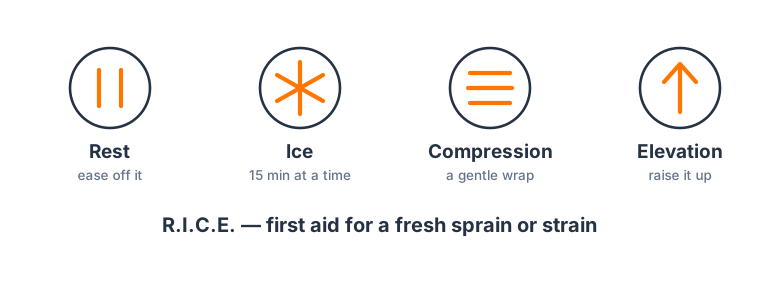
- Early swelling and pain control — the standard protect, ice, compression, and elevation in the first days, paired with early protected movement rather than weeks of doing nothing
- Soft-tissue and massage therapy around the ankle and calf to ease guarding and support the healing tissue
- Gentle joint mobilization to restore the normal ankle motion a sprain tends to stiffen, so the joint moves fully again
- A progressive rehab program — the most important piece — that rebuilds strength, balance, and position sense; where foot mechanics are a factor, custom orthotics can support the ankle and are covered in our custom orthotics for athletes guide
The plan is honest about the arc: most sprains follow a predictable recovery, and care is matched to the grade — settling things down first, then progressively rebuilding stability. If the exam suggests a fracture or a complete tear, Dr. Rubinstein says so and coordinates the right next step.
Your Recovery Timeline
One of the first questions with a sprained ankle is simply how long? — and the honest answer follows the grade, even though the exact pace varies person to person.
- First few days. Swelling and pain peak. Protect the ankle, control the swelling, and start gentle, pain-tolerable movement rather than fully resting it.
- First one to three weeks. For a mild (Grade I) sprain, pain and swelling settle and normal walking returns over this window. Moderate sprains are still improving but need more time.
- Several weeks to a couple of months. Moderate (Grade II) sprains heal substantially over this stretch as strength and balance are rebuilt; severe (Grade III) tears take longer still.
- Return to sport. Full return is earned when the ankle can meet your sport's demands — cutting, jumping, landing — without pain or giving way, not simply because a set number of weeks passed.
Staying gently and safely active throughout speeds this arc; prolonged immobilization slows it. The final phase — rebuilding strength and balance so the ankle is ready for sport again — is what turns "healed" into "less likely to happen again."
Why Rehab Prevents Chronic Instability
This is the part that gets skipped, so it's worth stating plainly. When an ankle sprain heals but the ankle is never properly rehabbed, the ligament may knit back together while the strength, balance, and position sense never fully return. The joint is left subtly unstable — a step behind when it's caught in a bad position — and it rolls again more easily. Repeat that a few times and you have chronic ankle instability: an ankle that keeps giving way and re-spraining, and that can lead to lingering pain and joint wear over the years.
The good news: this cycle is largely preventable. A proper, progressive rehab program after the first sprain is the most reliable way to keep it from becoming a recurring one — which is exactly why rehab, not just rest, sits at the center of care here and in our wider approach to chiropractic for athletes.
When to Seek Prompt or Emergency Care
The overwhelming majority of ankle sprains are not dangerous and heal with the conservative steps above. A small set of warning signs, though, points to something beyond a simple sprain that needs prompt evaluation — these are not symptoms to walk off.
Short of those, it's still worth being evaluated when a sprain isn't improving on the expected timeline, keeps giving way, or keeps re-spraining. Getting the right care — and the right rehab — early is what helps an ankle heal cleanly and stay stable.
Frequently Asked Questions
An ankle sprain raises a lot of practical questions — how long it takes to heal, whether to rest or move it, why an ankle keeps re-spraining, how to tell a sprain from a break, and whether a chiropractor can help. Those are answered in detail in the FAQ section on this page.
If you've rolled your ankle and want a clear read on the injury and a plan that actually rebuilds stability, schedule a visit with Dr. Rubinstein at Thrive Chiropractic in Troy, MI. You'll get a thorough exam, a check for anything that needs imaging or urgent attention, and a conservative plan aimed at healing the ligament and preventing the next sprain. You can also explore related injuries like shin splints and hamstring and groin strains in the wider sports injury library.
Sports Injury & Performance Guide (PDF)A one-page take-home guide: R.I.C.E. and recovery basics, common sports injuries, and the red flags that need evaluation.PDFThis article is for general education and is not a substitute for professional medical advice, diagnosis, or treatment. Always consult a qualified healthcare provider about your specific situation.
Frequently Asked Questions
How long does an ankle sprain take to heal?
It depends on the grade. A mild (Grade I) sprain often settles over one to three weeks, a moderate (Grade II) sprain typically takes several weeks to a couple of months, and a severe (Grade III) tear can take longer and sometimes needs more involved care. Staying gently and safely active speeds recovery more than resting it completely. Dr. Rubinstein will give you a timeline that fits your specific sprain after the exam.
Should I rest an ankle sprain or keep moving it?
Move it, within a protected and pain-tolerable range. The old advice to rest an ankle for weeks has shifted — prolonged immobilization stiffens the joint and weakens the muscles that stabilize it. Early protected movement, then progressive rehab, helps the ligament heal and rebuilds strength and balance. The first day or two of relative rest while swelling is sharp is reasonable; after that, gentle loading is the goal.
Why does my ankle keep spraining?
Usually because the first sprain never got properly rehabbed. When the ligament heals but strength, balance, and the ankle's position sense aren't rebuilt, the joint stays subtly unstable and rolls again more easily — a cycle called chronic ankle instability. The most reliable way to break it is a proper rehab program that restores strength and balance, which is a core part of what care here focuses on.
How do I know if my ankle is sprained or broken?
You can't always tell from the outside, since a bad sprain and a fracture can look similar. The warning signs that point toward a possible break are being unable to bear weight or take more than a couple of steps, and tenderness directly over the ankle bones rather than the soft tissue. When either is present, imaging is the right call — Dr. Rubinstein screens for exactly these signs and arranges an X-ray when it's warranted.
Can a chiropractor help an ankle sprain?
Yes. Conservative care for an ankle sprain includes controlling early swelling, soft-tissue work, gentle joint mobilization to restore normal motion, and — most importantly — a progressive rehab program that rebuilds strength, balance, and stability so the ankle doesn't keep re-spraining. If the exam suggests a fracture or a complete ligament tear, that's referred for the appropriate imaging or care.
Ready to get evaluated at Thrive Chiropractic?
Dr. Rubinstein will assess what’s really going on and build a care plan tailored to you. Reach out and we’ll get you scheduled.
2133 Crooks Road | Troy MI 48084