
Sleeping With Sciatica: Positions That Unload the Nerve
The right sleeping position can take real pressure off the sciatic nerve overnight — side-lying with a pillow between the knees, on your back with a pillow under the knees, or the reclined pillow-under-the-thigh trick. Here's how to set up your bed, get in and out without a jolt, the night-pain sign worth checking, and how chiropractic care at Thrive Chiropractic in Troy, MI helps.
Why Sciatica Acts Up at Night
Sciatica can be at its most stubborn at night. You finally lie down to rest, and the leg pain that was manageable all day settles in and won't let you drift off — or it wakes you when you roll over. There's a mechanical reason this is so common with sciatica, and the good news is that most of it responds to how you set up your bed.
The core issue is that asleep, you can't adjust your posture. Your spine holds whatever position your setup puts it in for hours, with no reflex to shift out of a bad angle the way you would while awake. If your mattress sags or your position lets the lower back round or twist, the irritated nerve spends the whole night stretched or crowded — and greets you sore. Rolling over in your sleep can also tug the leg into a position that catches the nerve, which is why a well-supported setup that keeps the lower back and pelvis neutral makes such a difference.
For the great majority of people, that's what nighttime sciatica comes down to: a fixable matter of position and support. But there's one nighttime pattern that isn't about your mattress and does warrant a closer look, and this guide flags it clearly further down so you know the difference.
The Positions That Unload the Sciatic Nerve
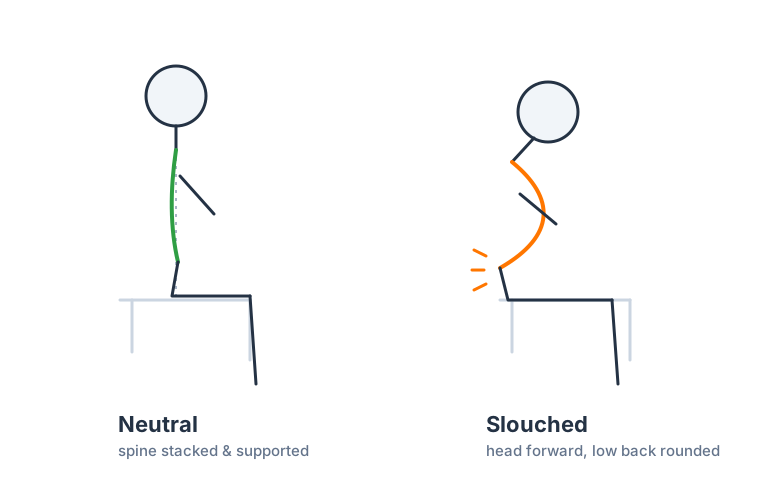
The aim of a good sleeping position is to keep your lower back and pelvis in a neutral line so the sciatic nerve isn't stretched or squeezed. Three setups do this best — it's worth trying each and letting your leg tell you which one helps.
- Side-lying with a pillow between the knees. Lie on your less-painful side with a firm pillow between your knees. This stops the top leg from dropping forward and twisting your pelvis and lower back, keeping everything square and the nerve unstretched. For many people with sciatica this is the most comfortable position.
- On your back with a pillow under the knees. Lying on your back with a pillow or two under your knees lets the knees bend slightly, which flattens the pull on the lower back and eases tension along the nerve's path down the leg. A small towel roll under the lower back can add support if you need it.
- The reclined, pillow-under-the-thigh trick. If flat positions don't settle the leg, try propping your upper body up a little and resting the back of the thigh over a pillow so the knee stays gently bent. Slackening the nerve's path this way eases the leg for some people — especially when a tight piriformis or a disc is involved.
One position to avoid: stomach sleeping is generally the hardest with sciatica, since it flattens the lower back's curve and forces the neck to turn. If you're a stomach sleeper, switching off it often helps the most.
Mattress Considerations
Because it all happens in bed, your mattress is worth a look too. A sagging mattress lets your hips and midsection sink so the spine bows out of neutral all night — which can stretch or crowd the nerve — while a mattress that's too firm can leave the natural curve of your lower back unsupported and press on the hip you're lying on. Signs the mattress is part of the problem: your leg is clearly worse on waking and eases once you're up, the bed is old or visibly dips, or you reliably sleep better somewhere else.
There's no single "best" firmness for everyone — a supportive mattress that keeps your spine in a neutral line, with the position aids above, matters more than any particular label. The same overnight-and-stillness picture shows up in ordinary back pain while sleeping, and that page covers the mattress-and-position side in more depth if you want it.
Getting In and Out of Bed
The transitions in and out of bed are often when sciatica jolts hardest — a sharp catch down the leg as you twist to lie down or push up to get out. The trick is to avoid twisting your spine, and the reliable way to do that is to log-roll: move your whole body as one unit instead of turning your top half against your bottom half.
- Getting in: sit on the edge of the bed close to the pillow, then lower yourself onto your side as you bring both knees up together, keeping them stacked. Once you're on your side, roll onto your back as a single unit if that's where you want to be — shoulders and hips turning together.
- Getting out: bend your knees, roll onto your side facing the edge with your knees together, then drop your lower legs off the edge and use your arms to push your upper body up sideways into sitting. Letting your legs swing down helps lever you up without rounding or twisting the lower back.
- Take a moment before standing. Sit on the edge for a second once you're up, then rise by hinging from the hips with your back in its natural curve rather than hauling up with a rounded back.
Night Pain That Never Eases
Here's the exception to the "it's probably your position" reassurance, and it's worth reading carefully.
Ordinary mechanical sciatica generally behaves like a mechanical problem: you can find a supported position that eases the leg, it tends to settle with rest, and it loosens once you get moving in the morning. That's the reassuring pattern the rest of this guide addresses, and position changes usually help.
Sciatica — or back pain — that behaves differently at night is the one to take seriously. Pain that is distinctly worse at night, that wakes you from sleep, or that is unrelenting no matter how you lie — where no position brings any relief at all — does not fit the ordinary mechanical picture. That kind of night pain is a recognized reason to have things evaluated rather than managed as a simple setup problem. It doesn't mean something is necessarily wrong, but it's exactly the pattern where a proper check is the right call.
What to Expect at Thrive Chiropractic
At Thrive Chiropractic in Troy, MI, care for sleep-related sciatica starts with sorting out which pattern you're in. Dr. Rubinstein will ask how your leg feels at night versus on waking versus later in the day, which positions give relief, how far down the leg the pain travels, and what your mattress and sleeping position are like — because the classic "eases with a supported position, better with movement" story points toward a mechanical cause, while the night-pain pattern above points toward a medical evaluation first.
When it's mechanical, care is conservative and typically combines gentle chiropractic adjustments to restore motion to stiff lumbar and pelvic joints, soft-tissue and massage therapy to release the tight piriformis and protective spasm that build up around an irritated nerve, and — when a disc is involved — spinal decompression to gently reduce pressure on the disc and the crowded nerve. You'll also get practical guidance on your position and mattress so the nights stop repeating. If your history matches the night-pain red flag or your exam turns up anything needing medical attention, Dr. Rubinstein will say so plainly and coordinate the right referral. This is management rather than a one-time cure, and you'll get a realistic sense of your timeline after the exam.
When to Seek Care
An occasional restless night with a flare is one thing. It's worth getting evaluated when sciatica keeps disturbing your sleep, doesn't ease within a couple of weeks, or starts wearing on your days as well as your nights. Getting ahead of it gives conservative care the best chance to keep a pattern from settling in, and new or worsening weakness in the leg is always worth a prompt look.
Book a check sooner — and think medical evaluation, not just hands-on care — if your sciatica is worse at night, wakes you, or never eases no matter how you lie, or if any of the red-flag symptoms above appear. When you're ready, you can schedule a visit with Dr. Rubinstein for a thorough exam and a plan aimed at calmer nights and a settled nerve. You can also read more about sitting with sciatica and how long sciatica lasts in the wider Sciatica library.
Sciatica Relief Guide (PDF)A one-page take-home guide: what helps sciatic nerve pain now, what's behind it, and the red flags that need urgent care.PDFThis article is for general education and is not a substitute for professional medical advice, diagnosis, or treatment. Always consult a qualified healthcare provider about your specific situation.
Frequently Asked Questions
What is the best sleeping position for sciatica?
There's no single answer, but the positions that unload the sciatic nerve most reliably are side-lying with a pillow between your knees, or on your back with a pillow under your knees. Both keep your lower back and pelvis in a neutral, supported line so the nerve isn't stretched or crowded overnight. The best choice is whichever one eases your leg — it's worth trying each and letting your symptoms guide you.
Should I sleep on the side that hurts or the side that doesn't?
Most people with sciatica are more comfortable lying on the pain-free side, with the affected leg on top and a pillow between the knees to stop it dropping forward and twisting the pelvis. That said, comfort varies, and some find a particular arrangement eases their leg better. Let comfort be the guide — the goal is a neutral spine and a leg that isn't being stretched or compressed.
Is it better to sleep on my back or side with sciatica?
Both can work well when you support the spine. On your back, a pillow under the knees keeps the lower back in a comfortable neutral and takes tension off the nerve. On your side, a pillow between the knees stops the top leg from twisting your pelvis. Stomach sleeping is generally the hardest with sciatica, since it flattens the lower back's curve — switching off it often helps the most.
What is the pillow-under-the-thigh trick for sciatica?
For some people — especially when a tight piriformis or a disc is involved — resting semi-reclined with a pillow supporting the back of the thigh takes tension off the sciatic nerve. Propping the upper body up a little and letting the knee bend over a pillow slackens the nerve's path down the leg. It's one option to try if flat positions don't settle the leg; comfort tells you whether it helps.
Why is my sciatica worse at night?
Often it's the setup: hours in one position with no chance to shift, on a mattress or in a position that lets your lower back bend out of neutral and stretch or crowd the nerve. Fixing the position and support usually helps. But sciatica that is distinctly worse at night, wakes you from sleep, and never eases no matter how you lie is a different pattern — one worth having evaluated rather than assuming it's just the mattress.
Can a chiropractor help with sciatica that's worse at night?
When the cause is mechanical — an irritated nerve from a disc or a tight piriformis — yes. Chiropractic care aims to take pressure off the nerve and restore comfortable motion, and position and mattress guidance helps stop the pain repeating night after night. If your history points to the night-pain pattern above, Dr. Rubinstein will steer you toward a medical evaluation first rather than treat it as a setup issue.
Ready to get evaluated at Thrive Chiropractic?
Dr. Rubinstein will assess what’s really going on and build a care plan tailored to you. Reach out and we’ll get you scheduled.
2133 Crooks Road | Troy MI 48084