
Sitting With Sciatica: Why It Flares & How to Sit Better
Sitting is the position that flares sciatica most, because it raises the pressure on your lumbar discs and presses the sciatic nerve where it runs beneath the buttock. Here's why sitting hurts, how to set up your chair and car seat to unload the nerve, and how conservative chiropractic care at Thrive Chiropractic in Troy, MI helps.
Why Sitting Flares Sciatica
If you have sciatica, you've probably noticed that sitting is often the position that sets it off. People who are perfectly comfortable walking around the block can't last through a meeting, a long drive, or an evening on the couch without the pain flaring down the leg. That "worse sitting, better standing" rhythm is one of the most common patterns there is — and there's a clear reason for it, actually two reasons stacked on top of each other.
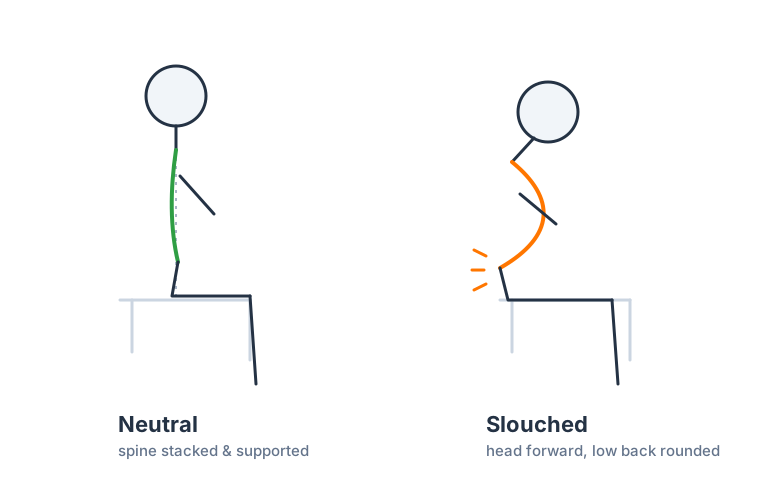
The first is about the discs. It's a common assumption that sitting rests your back, but for the lower spine the opposite is often true: sitting, especially slouched, puts more pressure on your lumbar discs than standing does. When the lower back rounds and its natural curve flattens, disc pressure climbs — so if a disc is already crowding a nerve root, as in a lumbar herniated disc, sitting pushes on it harder and the leg pain flares.
The second is about the buttock. The sciatic nerve runs from the lower back down through the buttock, where it passes right beneath the piriformis muscle. Sitting compresses that whole area, so if a tight or irritated piriformis is pressing on the nerve — the setup in piriformis syndrome — sitting squeezes the nerve even more. For many people both factors are at work at once, which is exactly why the chair is the hardest place to be.
The Best Sitting Setup for Sciatica
Because how you sit changes the load so much, a few setup changes make a real difference. The core idea is to keep your lower back's natural inward curve supported instead of letting it round, and to take pressure off the buttock where the nerve runs.
Alongside good posture, the key adjustments are:
- Hips above the knees. Set your seat so your hips are level with or slightly higher than your knees. That opens the hip angle, keeps the lower back in a better curve, and takes strain off the buttock. A too-low, deep seat that drops your knees up high tends to make sciatica worse.
- Support your lower back. Sit fully back into a chair that supports your lumbar curve, or add a small cushion or rolled towel behind your lower back so the curve doesn't collapse.
- Get the wallet out of your back pocket. A thick wallet under one side of your seat tilts your pelvis and presses directly on the sciatic nerve. Take it out before you sit — this one is easy to overlook and easy to fix.
- Keep your weight even. Avoid tucking a leg under you or leaning onto one hip, which loads the nerve unevenly. Both feet flat, weight shared across both sides.
Cushions and Standing Breaks
Even a good chair can't do the whole job, because the real enemy is time: any one position held for hours builds a flare. Two additions help most.
A supportive seat cushion softens the pressure on the buttock where the nerve runs, which many people find helps when a tight piriformis is part of the picture. A wedge cushion, thicker at the back and tapering forward, tips your hips slightly ahead of your knees and helps hold the lumbar curve — a simple way to get the "hips-above-knees" benefit in a seat that won't adjust.
But the single most effective change is to stop sitting still for long stretches.
For a fuller set of day-to-day measures, the sciatica relief at home guide pulls together safe, practical steps, and the sciatica exercises page covers gentle movement that many people find calming.
Sitting in the Car
Driving deserves its own mention, because it combines everything that flares sciatica: a low, often reclined seat, sustained vibration, and no chance to get up. Long drives are a classic trigger. A few things help:
- Bring your lumbar support along. A cushion or rolled towel behind your lower back keeps the curve supported over a long drive, since most car seats round the lower back.
- Raise and level the seat. If your seat adjusts, bring your hips up toward knee level rather than sinking low, and avoid reclining so far that you slump.
- Empty your back pockets first. The same wallet rule applies — arguably more so, since you're locked into the seat for the whole trip.
- Break the drive up. On a long haul, stop every hour or so to stand, stretch, and walk for a minute or two. It's the same principle as standing breaks at a desk.
Standing Up Without a Jolt
The moment of standing up after a long sit is often when sciatica bites hardest — a sharp catch or jolt down the leg as you rise. Rushing it, twisting, or hauling yourself up with a rounded back is what tends to trigger that. The gentler way:
- Slide forward first. Move to the front edge of the seat before you rise, so you're not levering up from deep in the chair.
- Lead with your hips, keep your back neutral. Hinge forward from the hips with your back in its natural curve — not rounded — and push up through your legs rather than pulling with your back.
- Use your hands. Press on the armrests, your thighs, or the desk to share the load off your lower back as you come up.
- Pause and let it settle. Stand for a second before you start walking, and take the first few steps gently rather than striding off cold.
Do it smoothly and unhurried, and you take the jolt out of the movement that most often provokes a flare.
What to Expect at Thrive Chiropractic
At Thrive Chiropractic in Troy, MI, care for sitting-related sciatica is conservative and built around your exam. Dr. Rubinstein will ask exactly when the leg pain flares, whether standing or walking relieves it, how far down the leg it travels, and what your workstation, car seat, and daily sitting look like — because that pattern helps point to whether a disc, a tight piriformis, or both are driving your symptoms.
Care often combines gentle chiropractic adjustments to restore motion to stiff lumbar and pelvic joints, soft-tissue and massage therapy to release the tight piriformis and the protective muscle spasm that build up around an irritated nerve, and — when a disc is the source — spinal decompression to gently reduce pressure on the disc and the crowded nerve root. You'll also get practical coaching on your sitting setup, since fixing the chair and car seat is often what keeps a flare from returning. Custom orthotics may factor in when foot mechanics are adding uneven load. This is management rather than a one-time cure — most improvement comes over a series of visits — and if your exam turns up something that needs medical attention, Dr. Rubinstein will say so plainly and coordinate the right referral.
When to Seek Care
Occasional leg pain after a marathon day in the chair is one thing. It's worth getting evaluated when sciatica keeps flaring with sitting, doesn't ease within a couple of weeks, or starts interfering with work, sleep, or the things you enjoy. Getting ahead of it gives conservative care the best chance to work before a pattern settles in, and new or worsening weakness in the leg is always worth a prompt look.
A small set of symptoms, though, are emergencies and should never be waited out.
Short of that, if your leg symptoms keep flaring every time you sit, you don't have to just live with it. When you're ready, you can schedule a visit with Dr. Rubinstein for a thorough exam and a conservative plan aimed at taking the pressure off the nerve. You can also read more about sleeping with sciatica and sciatica relief at home in the wider Sciatica library.
Sciatica Relief Guide (PDF)A one-page take-home guide: what helps sciatic nerve pain now, what's behind it, and the red flags that need urgent care.PDFThis article is for general education and is not a substitute for professional medical advice, diagnosis, or treatment. Always consult a qualified healthcare provider about your specific situation.
Frequently Asked Questions
Why does sitting make my sciatica worse?
Two things stack up when you sit. First, sitting — especially slouched — raises the pressure inside your lumbar discs above what it is when you stand, so a disc that's crowding a nerve gets pushed harder. Second, sitting compresses the buttock, where the sciatic nerve runs beneath the piriformis muscle, so a tight piriformis presses the nerve more. That's why so many people with sciatica are fine on their feet but can't get comfortable in a chair or a long drive.
What is the best sitting position for sciatica?
The best position keeps your hips level with or slightly above your knees, your lower back's natural curve supported rather than rounded, and your weight even across both sides. Sit fully back into the chair, add a small lumbar cushion if the seat doesn't support your low back, and keep your feet flat. Just as important, no position is meant to be held for hours — changing position and standing up regularly matters as much as the setup itself.
Should I sit on a cushion for sciatica?
A supportive seat cushion can help, especially if a tight piriformis is part of your sciatica, because it softens the pressure on the buttock where the nerve runs. A wedge cushion that tips your hips slightly forward can also keep your lower back in a better curve. Cushions are one useful piece rather than a cure — they work best combined with getting up regularly and care aimed at the underlying cause.
Does sitting on my wallet cause sciatica?
A thick wallet in your back pocket can absolutely aggravate sciatica. When you sit on it, it presses directly into the buttock where the sciatic nerve passes, tilting your pelvis and adding pressure right on the nerve. It's rarely the whole cause on its own, but taking the wallet out of your back pocket before you sit is a simple change that often takes the edge off.
How often should I stand up if sitting flares my sciatica?
A good rule of thumb is to change position and stand, stretch, or walk every 30 minutes or so. The exact number matters less than the principle: your discs and the nerve both do better with movement than with sustained pressure, and long unbroken sitting is what tends to build a flare. Even brief, frequent breaks add up over a workday.
Can a chiropractor help with sciatica that's worse when sitting?
Yes. Once the cause is identified, chiropractic care aims to take pressure off the irritated nerve — gentle adjustments to restore motion, soft-tissue work to release a tight piriformis, and spinal decompression when a disc is involved. Dr. Rubinstein also reviews your sitting setup, since that's usually part of what keeps a flare going. After an exam, you'll get a plan matched to what's actually driving your symptoms.
Ready to get evaluated at Thrive Chiropractic?
Dr. Rubinstein will assess what’s really going on and build a care plan tailored to you. Reach out and we’ll get you scheduled.
2133 Crooks Road | Troy MI 48084