
Sciatica vs. a Herniated Disc: What's the Difference?
Sciatica and a herniated disc are often talked about as if you have one or the other — but they're not an either/or. Sciatica is a symptom (nerve pain down the leg), and a herniated disc is one of the most common causes of it. Here's how the two actually relate, why the distinction matters for your care, and how conservative chiropractic care at Thrive Chiropractic in Troy, MI helps.
The Short Answer: Symptom vs. Cause
If you've been trying to figure out whether you have "sciatica or a herniated disc," here's the key that unlocks the whole question: it's not either/or. The two words describe different things. Sciatica is a symptom — nerve pain that radiates down the leg. A herniated disc is one of the most common causes of that symptom. So the honest answer to "sciatica or herniated disc?" is usually "a herniated disc causing sciatica," or "sciatica from some other cause." They sit at different points on the same chain of cause and effect.
This trips up a lot of people because the two terms get used almost interchangeably in everyday conversation. But keeping them straight actually makes things clearer, not more complicated — because once you see that sciatica is the effect and a herniated disc is one possible source of it, the real question comes into focus: what's irritating the nerve? That's the question your exam is built to answer, and it's the one that shapes your care.
What Sciatica Is
Sciatica describes pain that travels along the path of the sciatic nerve — the large nerve running from the lower back, through the buttock, and down the back of the leg. When something compresses or irritates that nerve, the nerve refers its distress along its length, sending pain, tingling, numbness, or weakness down the leg, often past the knee and usually on one side. That radiating, one-sided leg pain is the signature described in more detail in our sciatica symptoms article.
The crucial point is that sciatica isn't a diagnosis of a specific problem — it's a description of what the nerve is doing. Saying "I have sciatica" is a bit like saying "I have a cough": it tells you what you're experiencing, but not why. The "why" could be any of several things pressing on or irritating the nerve, and those different sources overlap with the broader family of nerve-related neuropathy. That's exactly why a good evaluation never stops at the word "sciatica" — it goes on to find the source.
What a Herniated Disc Is
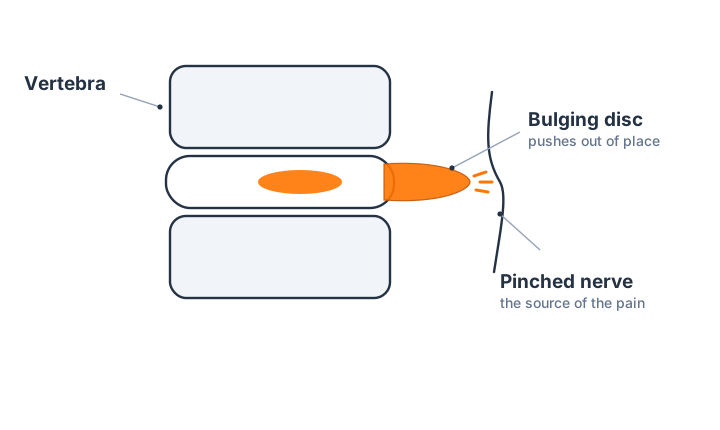
A herniated disc is a specific, physical problem in the spine. Between each of the vertebrae in your lower back sits a disc — a cushion with a tough outer ring and a softer, gel-like center. A herniation happens when some of that soft inner material pushes out through a weak spot or tear in the outer wall. It's part of the broader family of disc problems, which also includes a milder bulging disc and wear-related degenerative disc disease.
Here's the part that connects it to sciatica: a herniated disc only tends to cause leg symptoms when the displaced material presses on or inflames a nearby nerve root. When that happens in the lower back, the irritated nerve refers pain down the leg — which is sciatica. But a herniation that sits where it doesn't crowd a nerve often causes mostly local back pain, or no symptoms at all. In fact, disc herniations show up on the scans of plenty of people who have no pain whatsoever. So the disc is the structure; whether it produces sciatica depends on whether it reaches a nerve.
How the Two Relate
Putting the pieces together, the relationship looks like this:
- A herniated disc that presses on a nerve root → sciatica. This is the classic, common scenario — the disc is the cause, the leg pain is the effect.
- A herniated disc that doesn't reach a nerve → back pain, or nothing. The herniation exists, but there's no sciatica, because the nerve isn't being crowded.
- Sciatica from a cause other than a disc. The nerve is irritated by something else entirely — the disc is innocent, and the source is elsewhere.
So the two overlap in one common situation (a disc pressing on a nerve) but each can exist without the other. You can have a herniated disc with no sciatica, and sciatica with no herniated disc. That's why framing it as "which one do I have?" leads people astray — the more useful framing is "is there sciatica, and if so, what's causing it?" A careful exam answers both.
Other Causes of Sciatica Besides a Disc
Because a herniated disc is only one possible source, it's worth knowing the others the sciatic nerve can be irritated by — the full picture is in our what causes sciatica article:
- Spinal stenosis — a narrowing of the spaces in the spine that leaves less room for the nerves, a frequent cause in older adults
- Piriformis syndrome — a tight or irritated buttock muscle pressing on the sciatic nerve, producing sciatica that originates in the hip rather than the spine
- Spondylolisthesis — a vertebra slipping forward and narrowing the space where a nerve root exits
- Pregnancy — the postural and ligament changes of pregnancy crowding the nerve, often through a tightened piriformis, which our pregnancy care addresses
Frequently more than one factor is involved at once, and the leg pain from these can look very similar to disc-related sciatica — which is precisely why the source has to be identified by exam rather than assumed.
Why the Distinction Matters for Your Care
This isn't just semantics — getting the cause right genuinely changes the plan.
It also matters for expectations. The various causes of sciatica have somewhat different natural courses and respond at their own pace, so knowing the source helps set an honest timeline — the subject of our how long does sciatica last article. And it matters for safety: a few causes and symptom patterns need prompt medical attention, and identifying them early is part of what a proper evaluation is for.
What to Expect at Thrive Chiropractic
At Thrive Chiropractic in Troy, MI, the first job is to sort out whether you have sciatica and, if so, what's causing it. Dr. Rubinstein starts with a detailed history — where the pain starts, how far it travels, what eases or aggravates it, and whether it began after a lift or came on gradually. The physical exam typically includes back and hip motion testing, a neurological screen (reflexes, strength, and sensation) to see whether a nerve root is involved, and gentle nerve-tension checks that help localize the source.
From there, care is conservative and matched to the cause:
- Gentle chiropractic adjustments or mobilization to restore motion and reduce joint irritation in the lower back
- Spinal decompression when a disc is the source, to gently reduce pressure on the disc and the affected nerve
- Soft-tissue and massage therapy to release a tight piriformis or the protective spasm around an irritated nerve
- Posture, lifting, and activity coaching to reduce the load feeding the problem
- Custom orthotics where foot or gait imbalances add uneven load to the lower back
Imaging isn't automatic. Because disc changes show up on so many pain-free scans, imaging such as an MRI is reserved for specific reasons — symptoms that don't improve as expected, progressive weakness, or signs of serious nerve compression. If one of those applies, Dr. Rubinstein will arrange it or refer you appropriately rather than continue hands-on care alone.
When to Seek Prompt or Emergency Care
Most sciatica, and most herniated discs, are not dangerous and settle with conservative care. A small set of warning signs, though, points to serious pressure on the nerves at the base of the spine and is a genuine emergency.
Short of that emergency, it's still worth being evaluated when leg pain, tingling, or numbness lingers beyond a couple of weeks, when a leg or foot feels weak, or when symptoms interfere with sleep, work, or daily life.
Frequently Asked Questions
The relationship between sciatica and a herniated disc raises a lot of natural questions — whether they're the same thing, whether you can have one without the other, how to tell where your sciatica is coming from, and whether the treatment differs by cause. Those are answered in detail in the FAQ section on this page.
If pain is traveling down your leg and you want a clear picture of what's actually going on — sciatica, a disc, or something else — schedule a visit with Dr. Rubinstein at Thrive Chiropractic in Troy, MI. You'll get a thorough exam, an honest read on the cause, and a conservative plan aimed at relieving the pressure on the nerve.
Sciatica Relief Guide (PDF)A one-page take-home guide: what helps sciatic nerve pain now, what's behind it, and the red flags that need urgent care.PDFThis article is for general education and is not a substitute for professional medical advice, diagnosis, or treatment. Always consult a qualified healthcare provider about your specific situation.
Frequently Asked Questions
Is sciatica the same as a herniated disc?
No — they're related but not the same. Sciatica is a symptom: nerve pain that radiates down the leg from an irritated sciatic nerve. A herniated disc is one of the most common causes of that symptom, but it's not the only one. So you can think of it as cause and effect rather than two names for the same thing: a herniated disc is one thing that can produce sciatica.
Can you have a herniated disc without sciatica?
Yes, and it's common. A herniated disc only causes sciatica when it presses on or inflames a nearby nerve root. Plenty of disc herniations sit where they don't crowd a nerve and cause mostly local back pain, or no symptoms at all — herniations show up on the scans of many people with no leg pain whatsoever. What matters is whether the disc and your symptoms actually line up.
Can you have sciatica without a herniated disc?
Absolutely. A herniated disc is the most common cause, but the sciatic nerve can also be irritated by spinal stenosis, a tight piriformis muscle in the buttock, a slipped vertebra, or the changes of pregnancy. Because the leg pain can look similar regardless of the source, an exam is what sorts out which cause is actually behind your symptoms.
How do I know if my sciatica is from a disc or something else?
The exam looks at where the pain starts, how it travels, and what provokes it. Disc-related sciatica often ties to back movements, worsens with sitting or bending, and follows a clear nerve path down the leg; piriformis-related pain centers in the buttock and flares with pressure there. Dr. Rubinstein uses your history, a neurological screen, and nerve-tension checks to pin down the source.
Does the treatment differ depending on the cause?
It does, which is exactly why the distinction matters. Disc-related sciatica often responds well to spinal decompression that takes pressure off the disc and nerve, while piriformis-related sciatica leans more on soft-tissue work to release the muscle. The core approach is conservative in either case, but the emphasis shifts once Dr. Rubinstein identifies what's actually irritating the nerve.
Ready to get evaluated at Thrive Chiropractic?
Dr. Rubinstein will assess what’s really going on and build a care plan tailored to you. Reach out and we’ll get you scheduled.
2133 Crooks Road | Troy MI 48084