
Sciatica Exercises & Stretches: A Safe, Gentle Routine
The right movement can genuinely calm an irritated sciatic nerve — but only if it's gentle, done with good form, and stopped the moment pain travels further down the leg. Here's a plain-English routine of safe stretches, nerve glides, and gentle extensions, the one rule that keeps them safe (centralizing good, peripheralizing bad), and how care at Thrive Chiropractic in Troy, MI fits alongside it.
Why Movement Helps Sciatica
When pain is shooting down your leg, the instinct is to hold perfectly still. For the first bad day or two of a sciatica flare, taking it easy is fine. But held longer than that, stillness usually works against you. The joints of your lower back stiffen, the muscles around the nerve tighten and guard, and an irritated nerve that thrives on gentle motion gets less of it. For most sciatica, the right kind of movement is one of the most effective things you can do at home.
Gentle movement helps in a few concrete ways. It keeps the lower-back and hip joints gliding rather than locking up. It encourages blood flow to a nerve that's inflamed. It helps the sciatic nerve slide freely through the tissues it passes through, instead of getting stuck and tugged. And easing the tight piriformis and protective spasm in the buttock takes some of the direct pressure off the nerve. The routine below is built to do exactly that — safely, at home, without equipment.
The One Rule That Keeps You Safe
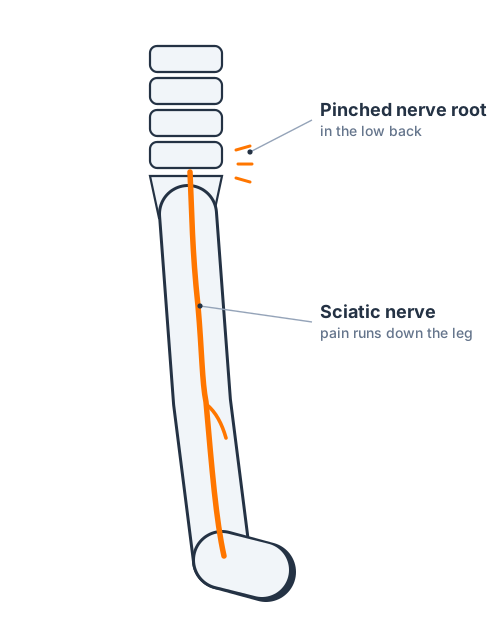
If you remember nothing else, remember this. As you move, pay attention to where your pain goes. Movement that draws the pain back up toward your spine — even if your back feels a bit more achy for it — is generally moving you in the right direction. This is called centralizing, and it's a good sign. Movement that sends the pain further down your leg — deeper into the calf or foot, or spreading where it wasn't before — is generally a sign to back off. This is peripheralizing, and it usually means the nerve is being irritated, not settled.
This rule overrides everything else in this article. A "good" stretch that peripheralizes your pain is not a good stretch for you right now — skip it. A movement that centralizes your symptoms, even if it's mildly uncomfortable in your back, is usually worth continuing gently. Your leg is giving you real-time feedback about whether you're helping the nerve or aggravating it. Listen to it.
Before You Start
Good exercise for sciatica is gentle, slow, and pain-aware. A few ground rules keep it helping rather than hurting:
- Follow the one rule above. Centralizing is your green light; peripheralizing is your red light. Let your leg symptoms steer every movement.
- Move within comfort, not into sharp pain. A mild stretch is fine; a sharp, catching, or worsening pain is a signal to ease off.
- Go slow and breathe. No bouncing, jerking, or forceful stretching — ease into each position and let it release. Never hold your breath and strain.
- Never self-manipulate. Do not twist, wrench, or try to "crack" your own back to force relief. It bypasses the very control that keeps movement safe and can irritate the nerve further. Leave any adjusting to a hands-on exam.
- Ease in. During a flare, start with just one or two of the gentle stretches and add more only as your leg tolerates it.
Crucially, some symptoms mean exercise should wait entirely until you've been evaluated.
Gentle Stretches to Ease the Nerve
Start here, especially if your buttock and leg feel tight and guarded. Each of these should feel like a mild, pleasant release — never a strain — and each is subject to the one rule: if it sends pain further down the leg, skip it.
- Single knee-to-chest. Lying on your back, gently draw one knee up toward your chest with your hands, feeling a light stretch in the lower back and buttock. Hold 20 to 30 seconds, then switch. Keep it easy — this shouldn't be a forceful pull, and it's often better tolerated than pulling both knees up at once.
- Piriformis / figure-4 stretch. Lying on your back with both knees bent, cross the ankle of the painful side over the opposite thigh so your legs make a "4." Reach through and gently draw the lower thigh toward you until you feel a stretch deep in the buttock of the crossed leg. Hold 20 to 30 seconds. Because a tight piriformis presses directly on the sciatic nerve for many people, this is one of the more useful stretches — but ease off if it shoots pain down the leg.
- Gentle supine twist. Lying on your back, let both bent knees fall slowly to one side while keeping your shoulders down, feeling a mild stretch through the low back and hip. Hold briefly and return. Keep the range small and controlled — this is a gentle mobility movement, not a wrench.
Do these smoothly and unhurried. Two or three gentle rounds through this group, once or twice a day, is plenty while things are irritated.
Nerve Glides (Flossing)
Nerve glides — sometimes called nerve "flossing" — are a little different from a stretch. Instead of holding tension, you gently slide the sciatic nerve back and forth through the tissues it runs through, which can help a nerve that's become stuck or sensitized move more freely. The key word is gentle: this is a small, soothing, rhythmic movement, never an aggressive stretch, and it must obey the one rule just like everything else.
A simple version: sit tall in a chair. Slowly straighten the knee of the painful leg out in front of you while gently tipping your head back; then, as you lower the leg back down, gently tip your head forward to look down. The two ends move in opposite time, which glides the nerve rather than tugging it taut at both ends. Move slowly through 8 to 10 easy repetitions.
Gentle Extensions and Pelvic Tilts
For many people whose sciatica comes from a disc, gently arching the lower back can help draw the symptoms back toward the spine — the centralizing direction. Two easy movements target this:
- Gentle press-up (McKenzie extension). Lying face down, place your hands under your shoulders and slowly press your upper body up, keeping your hips on the floor and letting your lower back extend gently. Ease up only as far as is comfortable and lower back down slowly. For many disc-related cases this centralizes leg pain beautifully — but if pressing up sends pain further down your leg, stop and leave this one out until you've been assessed, as it can aggravate other causes such as stenosis.
- Pelvic tilt. Lying on your back with knees bent, gently flatten your lower back into the floor by tightening your lower abdominal muscles, then release. Small, controlled, and repeated — a gentle way to switch on the deep core that supports your lower back without loading the nerve.
Keep both slow and modest. These aren't about range or reps; they're about finding the direction your nerve prefers and moving there comfortably.
Reading Your Symptoms: Centralizing vs. Peripheralizing
Because the one rule matters so much, it's worth picturing the two outcomes side by side. This is the single most useful skill you can bring to a home routine — and it's simpler than it sounds.
Over days, the goal is for the pain to steadily "climb back up" — from the foot to the calf, from the calf to the thigh, from the thigh to the buttock and back. That progression is a genuinely encouraging sign, and it tends to track with the nerve calming down. If instead the pain keeps spreading further down the leg despite easy movement, that's your cue to stop pushing and get evaluated.
When Exercise Isn't Enough
Exercise is powerful, but it isn't the whole answer for every case — and it's not a substitute for getting a persistent problem evaluated. If you've been moving gently and following the one rule for a couple of weeks and your leg pain isn't improving — or it's slowly getting worse or spreading — that's useful information. It may mean something like a herniated disc, spinal stenosis, or a stubborn piriformis syndrome needs a more specific approach than general exercise can provide.
That's where hands-on care fits alongside your routine. At Thrive Chiropractic in Troy, MI, Dr. Rubinstein can pinpoint what's actually irritating the nerve and pair targeted care — gentle adjustments, massage therapy to release a tight piriformis, and spinal decompression when a disc is involved — with an exercise plan built specifically for you and your centralizing direction. Hands-on care often creates the comfortable window in which exercise finally starts working, and the right exercises keep that window open. It's worth pairing this routine with sensible relief at home and smart sitting habits too. If your leg pain travels further down, a leg or foot feels weak, or things simply aren't budging, that's the moment to schedule a visit rather than keep grinding through a routine that isn't landing.
Frequently Asked Questions
Sciatica exercises raise a lot of fair questions — which ones are actually best, which to avoid, whether stretching can backfire, how often to do them, and whether walking helps. Those are answered in detail in the FAQ section on this page.
If pain is traveling down your leg and you'd like a routine built for your situation rather than a generic list, schedule a visit with Dr. Rubinstein at Thrive Chiropractic in Troy, MI. You'll get a thorough exam, an honest read on what's irritating the nerve, and a movement plan matched to it. You can also explore the wider Sciatica library, including sciatica relief at home.
Sciatica Relief Guide (PDF)A one-page take-home guide: what helps sciatic nerve pain now, what's behind it, and the red flags that need urgent care.PDFThis article is for general education and is not a substitute for professional medical advice, diagnosis, or treatment. Always consult a qualified healthcare provider about your specific situation.
Frequently Asked Questions
What are the best exercises for sciatica?
For most people, a mix of gentle nerve-calming stretches and easy nerve glides works best: knee-to-chest and a figure-4 piriformis stretch to ease tension in the buttock, nerve 'flossing' to help the sciatic nerve move freely, and gentle press-ups for many disc-related cases. The 'best' exercise, though, is the one that fits your cause — which is why an exam that identifies what's irritating the nerve lets Dr. Rubinstein match the routine to you rather than guessing.
Which exercises should I avoid with sciatica?
During a flare, it's usually wise to avoid heavy lifting, deep forward-bending with a rounded back, sit-ups and end-range crunches, and any bouncing or forceful stretching — and to never twist or 'crack' your own back to force relief. Most importantly, avoid any movement that sends pain further down your leg, even a 'good' stretch, because that direction tends to irritate the nerve rather than settle it.
Can stretching make sciatica worse?
It can, if you force it, bounce, or push into sharp pain — or if you keep doing a stretch that drives the pain further down your leg. Stretching for sciatica should feel like a mild release and, ideally, should pull the symptoms back up toward your spine over time. If a particular stretch consistently sends pain lower down the leg, stop that one and have it looked at, because it may be aggravating the nerve.
How often should I do sciatica exercises?
A little, often, beats a lot, occasionally. Gentle stretches and nerve glides can usually be done daily — even a few short sessions a day during a stiff spell — as long as they don't peripheralize your pain. Keep the numbers modest and the movements slow. Consistency over the weeks is what helps the nerve calm down, not intensity in any single session.
Is walking good for sciatica?
For many people, yes — gentle walking within comfort keeps the joints moving, encourages blood flow, and beats long stretches of sitting or bed rest. The key is to let your leg symptoms guide the distance and pace: if walking eases or doesn't worsen the leg pain, it's usually helpful; if it steadily drives the pain further down the leg, shorten it and mention it at your visit.
Ready to get evaluated at Thrive Chiropractic?
Dr. Rubinstein will assess what’s really going on and build a care plan tailored to you. Reach out and we’ll get you scheduled.
2133 Crooks Road | Troy MI 48084