
What Causes Sciatica: The Common Culprits Behind Leg Pain
Sciatica happens when the sciatic nerve gets compressed or irritated somewhere along its path — usually where the nerve roots leave the lower spine. The common causes are a lumbar herniated disc, spinal stenosis, piriformis syndrome, spondylolisthesis, and pregnancy. Here's what each one does to the nerve, how they're told apart, and how conservative chiropractic care at Thrive Chiropractic in Troy, MI helps.
What Sciatica Actually Is
Before the causes make sense, it helps to be clear about what sciatica is — and isn't. Sciatica is not really a diagnosis on its own; it's a description of a symptom. The word refers to pain that travels along the path of the sciatic nerve — the large nerve that runs from your lower back, through the buttock, and down the back of the leg. When people say they "have sciatica," what they mean is that something is compressing or irritating that nerve, and it's sending pain, tingling, or numbness down the leg as a result.
That distinction matters because it changes the question. Instead of asking "how do I treat sciatica," the more useful question is "what's irritating the sciatic nerve" — because the answer determines the whole plan. Two people with nearly identical leg pain can have entirely different causes, and the care that helps one may do little for the other. So the goal of a good evaluation is always to find the source, not just to name the symptom.
How the Sciatic Nerve Gets Irritated
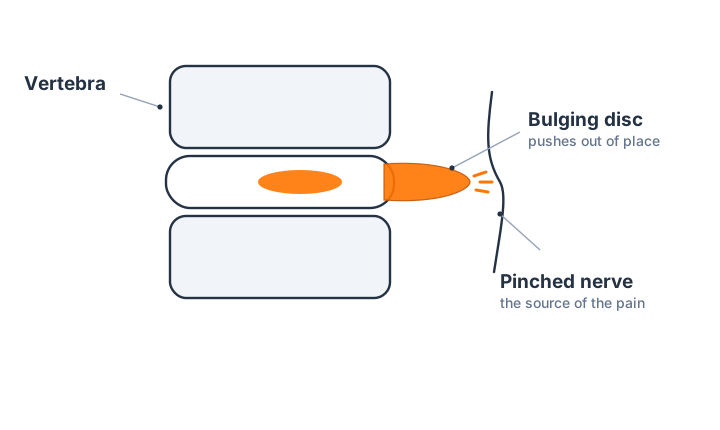
The sciatic nerve is the longest and thickest nerve in your body, and it starts as several nerve roots that branch off the lower spine, join together near the pelvis, and travel down the leg. Anywhere along that route, the nerve can be crowded, pinched, or inflamed — and wherever that happens, the nerve tends to "complain" by referring symptoms down its path into the buttock, thigh, calf, or foot.
Most often, the trouble starts right at the top, where the nerve roots exit the lower spine. This is the neighborhood of the lumbar spine and its discs, where the great majority of sciatica originates. But the nerve can also be irritated lower down, in the buttock itself, where it passes beneath a muscle. Because the irritated nerve sends signals along its whole length, the location of the problem isn't always where you feel the pain — you might feel it in the calf while the actual source sits in the lower back. That's part of why sorting out the cause takes a proper exam rather than a guess from the map of symptoms alone, and why sciatica overlaps so closely with nerve-related neuropathy.
The Common Causes of Sciatica
Several distinct problems can irritate the sciatic nerve. These are the ones seen most often:
- Lumbar herniated disc. The most common cause. When the soft inner material of a low-back disc pushes through its outer wall, it can press directly on a nearby nerve root — the classic setup for sciatica. A milder bulging disc can do the same when it crowds the nerve.
- Spinal stenosis. A narrowing of the spaces in the spine, usually from age-related changes, that leaves less room for the nerves. It's a frequent cause of sciatica in older adults, and the leg symptoms often come on with standing or walking and ease when you sit or lean forward.
- Piriformis syndrome. Here the problem is in the buttock, not the spine. A tight or irritated piriformis muscle presses on the sciatic nerve as it passes beneath, producing sciatica that starts in the buttock and often flares with prolonged sitting.
- Spondylolisthesis. When one vertebra slips forward on the one below it, it can narrow the space where a nerve root exits and irritate the nerve, sending symptoms down the leg.
- Pregnancy. The shifting weight, the changing curve of the lower back, and the loosening of pelvic ligaments during pregnancy can all crowd or irritate the sciatic nerve — often working through a tightened piriformis. Our pregnancy care addresses this gently.
Less commonly, an injury, a spasm of the surrounding back muscles, or wear-related degenerative disc disease plays a role. And frequently more than one factor is at work at once — a worn disc plus a tight buttock muscle, for instance — which is another reason the exam matters more than any single label.
Who's Most at Risk?
Sciatica can affect anyone, but some situations make it more likely:
- Adults roughly 30 to 60, when disc-related causes are most common
- Older adults, in whom spinal stenosis and wear-related narrowing become more frequent
- People whose work or hobbies involve heavy or repetitive lifting, bending, or twisting, which stress the lower-back discs
- Desk and office workers, since long hours of sitting raise disc pressure and compress the buttock — poor workplace ergonomics feed both the disc and piriformis routes
- Athletes in sports that load or torque the spine, where a sports injury can herniate a disc or aggravate the piriformis
- Pregnant women, from the postural and ligament changes described above
- People carrying extra body weight or with a weak core, both of which add load to the lower back
Often it's a combination that tips things over — a disc quietly worn by years of sitting finally irritates a nerve during an ordinary lift, or a tight piriformis gets pushed over the edge by a long drive.
How the Cause Is Pinpointed
Because the right care depends entirely on which cause is at work, a careful evaluation is the whole point. At Thrive Chiropractic, Dr. Rubinstein starts with a detailed history — where the pain starts, how far down the leg it travels, what eases or aggravates it, whether it began after a lift or came on gradually, and whether you're pregnant or have had prior back trouble.
The physical exam typically includes:
- Back and hip motion testing, noting which movements reproduce or relieve your leg symptoms — disc-related sciatica often ties to back movements, while piriformis-related pain flares with buttock pressure and certain hip positions
- A neurological screen — checking reflexes, testing leg and foot strength, and mapping altered sensation to see whether a nerve root is involved and which one
- Nerve-tension checks, gentle leg-raising maneuvers that help confirm nerve involvement and point toward the level or location
Imaging isn't automatic. Many cases of sciatica are managed on the history and exam alone, with a trial of conservative care first — and because disc changes show up on the scans of so many pain-free people, an early image can raise worry without changing the plan. Imaging such as an MRI is reserved for specific reasons: symptoms that don't improve over a reasonable stretch, progressive weakness, or any sign of serious nerve compression. If one of those situations applies, Dr. Rubinstein will arrange the imaging or referral rather than continue hands-on care alone.
What to Expect at Thrive Chiropractic
At Thrive Chiropractic in Troy, MI, care for sciatica is conservative and built around the cause your exam reveals — the goal is to take pressure off the irritated nerve using the least invasive approach that works for you. Care often includes:
- Gentle chiropractic adjustments or mobilization to restore motion and reduce joint irritation in the lower back, matched to what your spine tolerates
- Spinal decompression when a disc is involved, to gently reduce pressure on the disc and the affected nerve root — often a mainstay for disc-related sciatica, because it can create a little more room where the nerve is crowded
- Soft-tissue and massage therapy to release the tight piriformis and the protective muscle spasm that often accompanies an irritated nerve
- Posture, lifting, and activity coaching, plus targeted stretches, to reduce the load feeding the problem and lower the chance of recurrence
- Webster technique for pregnancy-related sciatica, a gentle approach suited to the changes of pregnancy
The plan is honest about what's realistic: most sciatica eases steadily with conservative care over weeks, and you'll get a specific sense of your timeline once the cause is clear. If your symptoms are worsening or your exam shows progressive weakness, that changes the plan — and Dr. Rubinstein will say so plainly and coordinate the right medical referral.
Easing Sciatica at Home
A few habits can help alongside professional care, whatever the underlying cause.
A few more that tend to help:
- Avoid positions that flare your leg symptoms, whether that's prolonged sitting, forward bending, or a specific stretch — the aggravators differ by cause.
- Soften your sitting surface and avoid sitting on a wallet if a tight piriformis seems involved.
- Support your sleep. A supportive mattress and a neutral position, often with a pillow between or under the knees, take pressure off the lower back overnight.
If your leg symptoms are getting stronger or spreading despite these steps, treat that as a signal to be re-evaluated promptly.
When to Seek Prompt or Emergency Care
Most sciatica, even when the leg pain is intense, is not dangerous and settles with conservative care. A small set of warning signs, though, points to serious pressure on the nerves at the base of the spine and is a genuine emergency — these are not symptoms to wait out.
Short of that emergency, it's still worth being evaluated when leg pain, tingling, or numbness lingers; when it doesn't ease within a couple of weeks or keeps recurring; when a leg or foot feels weak; or when symptoms interfere with sleep, work, or daily activities. Getting ahead of it gives conservative care the best chance to succeed.
Frequently Asked Questions
Understanding what causes sciatica raises a lot of natural questions — what the most common cause is, whether it can happen without a herniated disc, whether a chiropractor can help, whether sitting is to blame, and how pregnancy-related sciatica differs. Those are answered in detail in the FAQ section on this page.
If pain is traveling down your leg and you want to know what's actually driving it, schedule a visit with Dr. Rubinstein at Thrive Chiropractic in Troy, MI. You'll get a thorough exam, an honest read on the cause, and a conservative plan aimed at relieving the pressure on the nerve. You can also read more about sciatica symptoms and how long sciatica lasts in the wider Sciatica library.
Sciatica Relief Guide (PDF)A one-page take-home guide: what helps sciatic nerve pain now, what's behind it, and the red flags that need urgent care.PDFThis article is for general education and is not a substitute for professional medical advice, diagnosis, or treatment. Always consult a qualified healthcare provider about your specific situation.
Frequently Asked Questions
What is the most common cause of sciatica?
A lumbar herniated disc is the single most common cause. When the soft inner material of a low-back disc pushes out and presses on a nerve root, it sends the classic pain, tingling, or numbness down the leg. That said, spinal stenosis, piriformis syndrome, spondylolisthesis, and pregnancy all cause sciatica too, which is why an exam matters for identifying which one is driving your symptoms.
Can sciatica happen without a herniated disc?
Yes, quite often. A herniated disc is the most common cause, but the sciatic nerve can also be crowded by narrowing of the spinal canal, pinched by a tight piriformis muscle in the buttock, irritated by a slipped vertebra, or compressed by the changes of pregnancy. Because the leg pain can look similar regardless of the source, Dr. Rubinstein sorts out the actual cause through your history and exam.
Can a chiropractor help with sciatica?
Yes — sciatica is one of the most common reasons people see a chiropractor. Once the cause is identified, gentle adjustments, spinal decompression, and soft-tissue work aim to take pressure off the irritated nerve and restore comfortable motion. The plan is always matched to your exam findings, and if red-flag symptoms appear, Dr. Rubinstein arranges the right referral rather than continuing hands-on care.
Does sitting cause sciatica?
Sitting doesn't usually cause sciatica on its own, but it can trigger or worsen it. Prolonged sitting raises pressure on the lumbar discs and compresses the buttock, so it often aggravates a disc herniation or a tight piriformis that's already irritating the nerve. Breaking up long sitting and supporting your lower back tends to help, alongside care aimed at the underlying cause.
Is sciatica during pregnancy the same as disc sciatica?
The leg symptoms can feel similar, but the cause is different. In pregnancy, shifting weight, a changing posture, and the loosening of pelvic ligaments can crowd or irritate the sciatic nerve, and a tight piriformis is often involved rather than a disc. Gentle, pregnancy-appropriate chiropractic care can help — our Webster-technique and pregnancy-focused care address this directly.
Ready to get evaluated at Thrive Chiropractic?
Dr. Rubinstein will assess what’s really going on and build a care plan tailored to you. Reach out and we’ll get you scheduled.
2133 Crooks Road | Troy MI 48084