
How Long Does Sciatica Last? An Honest Look at Recovery
Most acute sciatica eases over a few weeks, and many cases that take longer still improve within a couple of months as the irritated nerve settles. Some becomes chronic or comes and goes. Here's an honest, qualitative look at the timeline, what speeds or slows recovery, when to be concerned, and how conservative chiropractic care at Thrive Chiropractic in Troy, MI helps.
The Honest Answer on Timing
When you're in the middle of it, the most pressing question about sciatica is usually the simplest: how long is this going to last? The honest answer is that it varies — but not unhelpfully so. For most people, acute sciatica eases over the first few weeks as the irritated nerve calms down. Cases that take longer often still improve within a couple of months. And a smaller number become chronic or come and go, usually when the underlying cause and contributing habits haven't been fully addressed.
That's a real range, and it's worth being upfront that anyone who promises a precise number is guessing. Recovery from sciatica tends to be gradual and a bit uneven — better days mixed with the occasional flare — rather than a clean, straight-line improvement. The encouraging part is that the overall direction, for the great majority of people, is toward getting better. What follows is an honest look at why the timeline varies, what the typical stages look like, and what you can do to help things along.
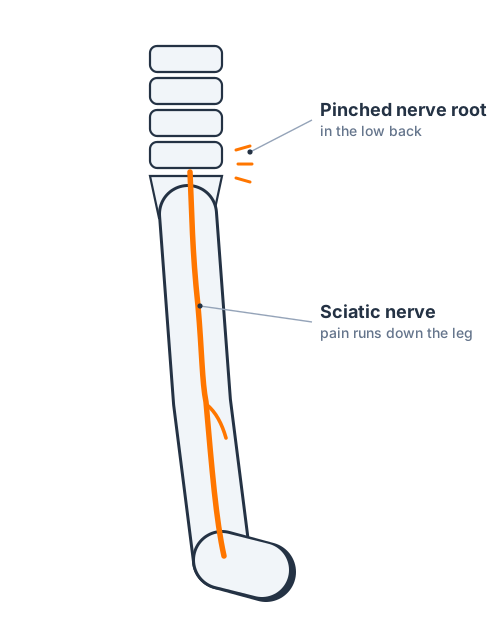
Why the Timeline Varies So Much
Sciatica isn't a single condition with a single course — it's a symptom that can come from several different causes, and each has its own natural rhythm. That's the main reason two people can have such different recoveries. A few factors shape how long it lasts:
- The cause. Sciatica from a herniated disc often eases as inflammation settles and the disc material is gradually reabsorbed; sciatica from a tight piriformis muscle may settle as the muscle releases; sciatica from spinal stenosis tends to be more persistent and position-dependent. Our what causes sciatica article walks through each.
- How severe the nerve irritation is. A mildly crowded nerve generally calms faster than one under significant pressure.
- How you respond in the early days. Staying gently active tends to speed things along; prolonged bed rest tends to slow them.
- Your overall picture. Age, general health, core strength, how much you sit, and whether contributing habits get addressed all play a part.
Because so much hinges on the cause, identifying it is what turns a vague range into a realistic, individual expectation — which is a big part of what an exam is for.
Acute Sciatica: The First Few Weeks
For many people, sciatica is at its most intense in the beginning and then starts to settle. Acute sciatica — a recent, first-time or flare-up episode — commonly begins to improve over the first few weeks. You might notice the sharpest, most shooting pain start to ease within the first week or two, even if some discomfort, tingling, or stiffness lingers longer.
It helps to expect gradual, uneven progress rather than a switch flipping off. A typical pattern is that the worst of the leg pain softens first, then the tingling and numbness fade more slowly, and the last bit of discomfort takes its time. Good and bad days are normal in that stretch, and an occasional flare after a long drive or a heavy day doesn't mean you've gone backward. What you're looking for is the overall trend heading in the right direction over the weeks. If it clearly is, that's exactly what you'd hope to see; if several weeks pass with no improvement at all, that's a reason to be re-evaluated.
When It Takes Longer: Weeks to a Couple of Months
Not all sciatica resolves in the first few weeks, and that on its own isn't cause for alarm. Plenty of cases take longer and still improve steadily over a couple of months as the nerve settles. In disc-related sciatica especially, time is often on your side: the body treats displaced disc material as something to clear away, and over weeks to months it's frequently reabsorbed while inflammation resolves. Interestingly, larger disc herniations sometimes shrink more readily than smaller ones — part of why so many disc-related cases improve without surgery even when the initial pain was severe.
During this longer stretch, the emphasis is on supporting that natural recovery: staying active within comfort, keeping pressure off the nerve, and addressing the habits and mechanics feeding the problem. Conservative care aims to make this phase smoother and more comfortable and to keep you progressing rather than stalling. The key marker is direction — as long as things are trending better, even slowly, that's usually a good sign. A plateau or a reversal is the cue to reassess the plan.
When Sciatica Becomes Chronic or Recurrent
Sometimes sciatica lasts longer than a couple of months, settles but keeps coming back, or lingers at a low level. When leg symptoms persist over the long term, it edges into the territory of nerve-related neuropathy and long-standing back trouble, and the approach shifts from "wait for this episode to pass" to "manage the underlying drivers over time."
Chronic or recurrent sciatica usually reflects a cause that hasn't been fully addressed or contributing habits that keep re-irritating the nerve — a worn disc, a persistently tight piriformis, hours of daily sitting, extra body weight, a weak core, or movement patterns that keep loading the lower back. The good news is that these are workable. A long-term, honest plan focuses on the drivers rather than just the current flare, and many people reach a point where sciatica no longer limits their daily life even if the underlying tendency is still there. As with any persistent problem, the realistic goal is to manage and meaningfully reduce it — not to promise it will never return.
What Speeds Recovery — and What Slows It
Some of what determines your timeline is out of your hands, but a good deal isn't.
On the other side, a few things tend to slow recovery: prolonged bed rest, pushing through activities that clearly worsen the leg symptoms, ignoring the contributing habits, and leaving the underlying cause unaddressed so the nerve keeps getting re-irritated. None of these are about willpower — they're just the levers that, adjusted the right way, help the natural recovery along. The everyday strategies in our back pain relief at home guide apply directly here.
What to Expect at Thrive Chiropractic
At Thrive Chiropractic in Troy, MI, the first step is identifying what's causing your sciatica, because that's what makes a realistic timeline possible. Dr. Rubinstein starts with a detailed history and a physical exam — including a neurological screen and gentle nerve-tension checks — to pin down the source and rule out anything that needs different care. From there, care is conservative and aimed at supporting your recovery:
- Gentle chiropractic adjustments or mobilization to restore motion and reduce joint irritation in the lower back
- Spinal decompression when a disc is involved, to gently reduce pressure on the disc and the affected nerve
- Soft-tissue and massage therapy to release tight muscles and the protective spasm around an irritated nerve
- Posture, activity, and movement coaching to address the habits feeding the problem and lower the chance of recurrence
- Custom orthotics where foot or gait imbalances add uneven load to the lower back
The plan is honest about what's realistic: care can't rush the body's natural healing, but it aims to make recovery smoother and more comfortable and to reduce the odds of the pain settling in or returning. You'll get a specific sense of your timeline once the cause is clear. If your symptoms are worsening or your exam shows progressive weakness, Dr. Rubinstein will say so plainly and coordinate the right medical referral.
When to Seek Prompt or Emergency Care
Most sciatica improves on the timelines above, but a few situations shouldn't be waited out. Sciatica that isn't improving as expected — several weeks with no change, or symptoms that are worsening — is a reason to be re-evaluated. And a small set of warning signs is a genuine emergency.
Short of those emergencies, don't just wait indefinitely if sciatica is dragging on without improvement, a leg or foot feels weak, or the symptoms keep interfering with sleep, work, or daily life. Getting it re-evaluated gives conservative care the best chance to change the trajectory.
Frequently Asked Questions
How long sciatica lasts raises a lot of understandable questions — the usual timeline, whether it goes away on its own, how soon the pain starts to improve, whether care speeds recovery, and why it sometimes keeps coming back. Those are answered in detail in the FAQ section on this page.
If your sciatica is dragging on, or you simply want a realistic sense of your own timeline, schedule a visit with Dr. Rubinstein at Thrive Chiropractic in Troy, MI. You'll get a thorough exam, an honest read on the cause and what to expect, and a conservative plan aimed at relieving the pressure and keeping the pain from settling in. You can also read more about what causes sciatica and the difference between sciatica and a herniated disc in the wider Sciatica library.
Sciatica Relief Guide (PDF)A one-page take-home guide: what helps sciatic nerve pain now, what's behind it, and the red flags that need urgent care.PDFThis article is for general education and is not a substitute for professional medical advice, diagnosis, or treatment. Always consult a qualified healthcare provider about your specific situation.
Frequently Asked Questions
How long does sciatica usually last?
For most people, acute sciatica eases meaningfully over the first few weeks as the irritated nerve calms down. Cases that take longer often still improve within a couple of months. A smaller number become chronic or recurrent, usually when the underlying cause and contributing habits haven't been addressed. Because the timeline depends heavily on the cause, an exam gives you a much more specific sense of what to expect than a general range.
Will my sciatica go away on its own?
Often, yes — a good deal of sciatica improves over weeks as the nerve settles and, in disc-related cases, as the body gradually reabsorbs the displaced material. Staying gently active rather than resting in bed tends to help that happen. Care can make the recovery faster and more comfortable, and an exam helps confirm the cause and catch the less common situations that need a different approach.
How long until sciatica pain starts to improve?
Many people notice the sharpest pain begin to ease within the first week or two, even if it isn't fully gone. Improvement is often gradual and a bit uneven — better days mixed with the occasional flare — rather than a straight line. If several weeks pass with no improvement at all, or symptoms are worsening, that's a signal to be re-evaluated rather than to keep waiting.
Can chiropractic care make sciatica heal faster?
Chiropractic care can't rush the body's natural healing, but by taking pressure off the irritated nerve, calming muscle spasm, and keeping you moving well, it aims to make recovery smoother and more comfortable and to reduce the chance of the pain settling in or returning. The honest goal is to relieve and manage sciatica and support recovery — not to promise an overnight cure.
Why does my sciatica keep coming back?
Recurrence usually reflects an underlying cause or contributing habits that weren't fully addressed — a worn disc, a tight piriformis, long hours of sitting, or movement patterns that keep loading the lower back. A plan that works on those drivers, not just the current flare, is what reduces how often sciatica returns. Dr. Rubinstein focuses on both relieving the episode and lowering the odds of the next one.
Ready to get evaluated at Thrive Chiropractic?
Dr. Rubinstein will assess what’s really going on and build a care plan tailored to you. Reach out and we’ll get you scheduled.
2133 Crooks Road | Troy MI 48084