
The Webster Technique Explained: Pelvic Balance in Pregnancy
The Webster Technique is a specific, gentle chiropractic analysis and adjustment of the sacrum and pelvis, aimed at balancing the pelvis and easing the tension and constraint that pregnancy posture creates. Here's what it actually is, what it's honestly for — and, just as importantly, what it is not — plus what a session feels like and how care at Thrive Chiropractic in Troy, MI works, always alongside your OB or midwife.
What Is the Webster Technique?
The Webster Technique is a specific chiropractic method developed for pregnancy. At its core, it combines two things: a careful analysis of how your sacrum and pelvis are moving, and a gentle adjustment — paired with soft-tissue work on the surrounding ligaments and muscles. The goal is to balance the pelvis and ease the tension and constraint that pregnancy posture tends to create.
It helps to think of it as a pelvis-focused approach rather than a whole-body one. As pregnancy loosens the ligaments and shifts your weight forward, the sacrum and pelvic joints can start to move stiffly and sit unevenly, and the muscles and ligaments around them can tighten. The Webster Technique is designed specifically to address that — gently, and always adapted to your stage of pregnancy. You'll often see it as a centerpiece of prenatal chiropractic care, and you can learn more on our Webster Technique page and across the wider Pregnancy Care library.
How It Works: Sacral and Pelvic Analysis
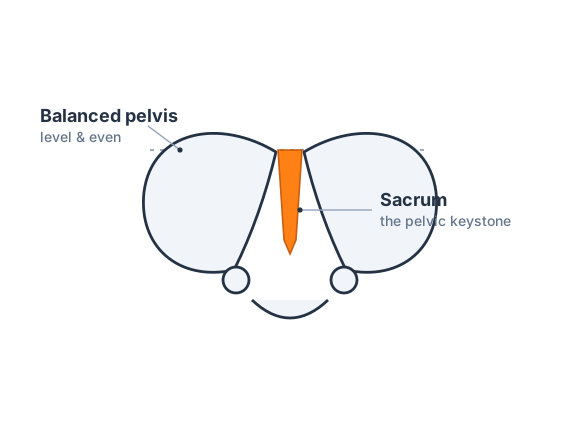
What makes the Webster Technique specific is the analysis behind it. Rather than a generic adjustment, it starts by looking closely at the sacrum — the triangular bone at the base of your spine that sits between the two halves of the pelvis — and at how the pelvis as a whole is moving.
In practice, that means Dr. Rubinstein checks how evenly your sacrum and pelvic joints move, and where the muscles and ligaments that support the pelvis are tight or pulling unevenly. From there, the technique uses a gentle, low-force adjustment aimed at the sacrum and pelvic joints to help them move more freely and sit more evenly, along with soft-tissue work to release the tension in the surrounding ligaments and muscles. The whole approach is light and comfortable — supportive positioning throughout, never deep force. The through-line is balance: helping the pelvis distribute load and move more evenly as pregnancy changes your body.
What the Webster Technique Is For
Stated plainly, the Webster Technique is for pelvic alignment, balance, and comfort. The pelvis takes on a lot during pregnancy — loosened ligaments, uneven loading, a forward-shifting center of gravity — and that can leave it moving stiffly and sitting unevenly, with tight, overworked muscles and ligaments around it. The technique aims to ease exactly that.
For many moms, the practical payoff is comfort:
- Easing pelvic, low-back, and hip strain that builds as the belly grows and ligaments loosen
- Supporting a more balanced, evenly moving pelvis as your weight shifts through pregnancy
- Relieving tension and constraint in the ligaments and muscles that support the pelvis
This is the honest scope of it — comfort and pelvic balance. That's a genuinely worthwhile thing when the strain of pregnancy is settling into your low back and hips, and it's the right reason to consider it. You can read more about the broader comfort benefits in our overview of prenatal chiropractic care.
What the Webster Technique Is Not
This is the part worth being especially clear and honest about, because the Webster Technique is often misunderstood.
It is not a maneuver that turns a breech baby. The Webster Technique does not physically turn a baby, and it does not guarantee that a baby will move into a head-down position. It optimizes pelvic alignment and balance and reduces tension and constraint around the pelvis — that is the whole of what it does. Any framing that promises to "flip" a breech baby oversteps what the technique actually is.
Your baby's position is something your OB or midwife assess and manage, along with any decisions about breech presentation and your birth plan. The Webster Technique is done alongside that care, focused on how your pelvis is moving and how your body feels — not on the baby's position. If breech presentation is on your mind, our guide to the breech baby and the Webster Technique walks through this honestly, and your prenatal team is the right place to bring those questions.
What a Session Feels Like
A Webster Technique session at Thrive Chiropractic in Troy, MI is gentle and unhurried. You're positioned comfortably — often side-lying or in modified positions, with supportive cushioning that takes pressure off your belly. Nothing about it asks you to lie in a way that feels like too much on your bump.
From there, Dr. Rubinstein assesses how your sacrum and pelvis are moving and where the surrounding muscles and ligaments feel tight, then uses a gentle, low-force adjustment along with soft-tissue and massage therapy-style work to ease that tension. There's no forceful twisting, and you stay comfortable throughout — if anything doesn't feel right, it's adjusted. As with all prenatal chiropractic care, the approach is tailored to how far along you are and how you're feeling that day.
How It Fits With Your Prenatal Care
The Webster Technique is one piece of a team approach. Your OB or midwife remain your primary guides through pregnancy — for your baby's position, your birth plan, and your overall care — and the Webster Technique is meant to complement that, never to replace it or work around it. Keeping your prenatal team informed that you're receiving it means everyone stays on the same page.
Coordination matters in both directions. If your exam at Thrive turns up anything that needs medical attention, Dr. Rubinstein will say so plainly and help point you toward the right care. And a few situations are worth clearing with your OB before starting — our guide on whether chiropractic is safe during pregnancy covers those honestly.
When to Consider the Webster Technique
The Webster Technique is worth considering when the pelvic and low-back strain of pregnancy is settling in — when you're feeling:
- Pelvic or low-back discomfort that builds as your belly grows and ligaments loosen
- A sense of uneven or stiff pelvic movement, or tightness low in the back and hips
- Hip strain that's affecting how you move, sit, or rest
It's supportive, comfort-focused care, and it fits naturally alongside the rest of your prenatal care. Some warning signs, though, are for your OB or midwife right away rather than a wait-and-see approach.
As always in pregnancy, checking in with your OB or midwife alongside chiropractic care keeps everyone working from the same page. When you're ready, you can schedule a visit and Dr. Rubinstein will tailor a gentle plan to where you are in your pregnancy. You can also read our overview of prenatal chiropractic care and whether chiropractic is safe during pregnancy.
Pregnancy Comfort Guide (PDF)A one-page take-home guide: gentle ways to ease pregnancy aches, why they happen, and when to call your OB.PDFThis article is for general education and is not a substitute for professional medical advice, diagnosis, or treatment. Always consult a qualified healthcare provider about your specific situation.
Frequently Asked Questions
What is the Webster Technique?
The Webster Technique is a specific chiropractic method for pregnancy that combines a careful analysis of the sacrum and pelvis with a gentle adjustment and soft-tissue work. Its aim is to balance the pelvis and ease the muscle and ligament tension that pregnancy posture creates. It's gentle and adapted to your stage of pregnancy, and at Thrive, Dr. Rubinstein uses it as part of care that works alongside your OB or midwife.
Does the Webster Technique turn a breech baby?
No — that's an important point to be honest about. The Webster Technique is not a maneuver that turns a baby, and it doesn't guarantee a baby will move into a head-down position. What it does is optimize pelvic alignment and balance and reduce tension and constraint around the pelvis. Your baby's position is something your OB or midwife assess and manage; the Webster Technique is about pelvic balance and comfort, done alongside that care.
Is the Webster Technique safe during pregnancy?
The Webster Technique is a gentle, pregnancy-adapted approach used throughout pregnancy, with supportive positioning and light contacts rather than force. At Thrive, Dr. Rubinstein tailors it to how far along you are and how you're feeling. As with any care during pregnancy, it's a good idea to keep your OB or midwife informed, and there are a few situations worth clearing with them first — our guide on whether chiropractic is safe during pregnancy covers those.
What does the Webster Technique help with?
It's aimed at pelvic balance and comfort. By helping the sacrum and pelvis move and sit more evenly and easing tension in the surrounding ligaments and muscles, it can take an edge off the low-back, hip, and pelvic strain that pregnancy posture creates. Many moms find that comfort valuable in itself. It's supportive care for how your body feels and moves, not a treatment aimed at your baby's position.
What happens during a Webster Technique session?
You're positioned comfortably, often side-lying or in modified positions with supportive cushioning. Dr. Rubinstein assesses how your sacrum and pelvis are moving and where the surrounding muscles and ligaments are tight, then uses a gentle, low-force adjustment along with soft-tissue work to ease that tension. Nothing is forceful, and it's tailored to your stage of pregnancy and your comfort throughout.
When during pregnancy is the Webster Technique used?
It can be used across pregnancy for pelvic balance and comfort, and some moms are referred or seek it out later in pregnancy. Whenever you start, your baby's position and your birth plan remain your OB or midwife's domain — the Webster Technique works alongside them. Let your prenatal team know you're receiving it, and mention anything they've asked you to keep an eye on.
Ready to get evaluated at Thrive Chiropractic?
Dr. Rubinstein will assess what’s really going on and build a care plan tailored to you. Reach out and we’ll get you scheduled.
2133 Crooks Road | Troy MI 48084