
Sleeping Comfortably During Pregnancy: A Practical Guide
As your belly grows, getting comfortable at night gets harder — but a few simple changes make a real difference. Here's a practical, reassuring guide to side-sleeping, where to place pillows for your knees, belly, and back, why lying flat on your back is discouraged later on, and how to ease hip and back pain at night, with gentle care at Thrive Chiropractic in Troy, MI — always alongside your OB or midwife.
Why Sleep Gets Harder in Pregnancy
Somewhere in the second trimester, most moms notice that the positions that used to send them straight to sleep just don't work anymore. Lying on your stomach becomes impossible as your belly grows, lying flat on your back starts to feel uncomfortable, and the hips and lower back that carry the day's extra load ache when you finally settle down. Add in more trips to the bathroom and a baby who seems to wake up the moment you do, and a good night's sleep can feel out of reach.
The good news is that a few simple, practical changes make a real difference — and none of them are complicated. It mostly comes down to settling into a comfortable side-lying position and letting a couple of well-placed pillows do the work of keeping your spine, hips, and pelvis supported. This guide walks through exactly how, and how it ties into easing the back pain and hip pain that so often show up at night.
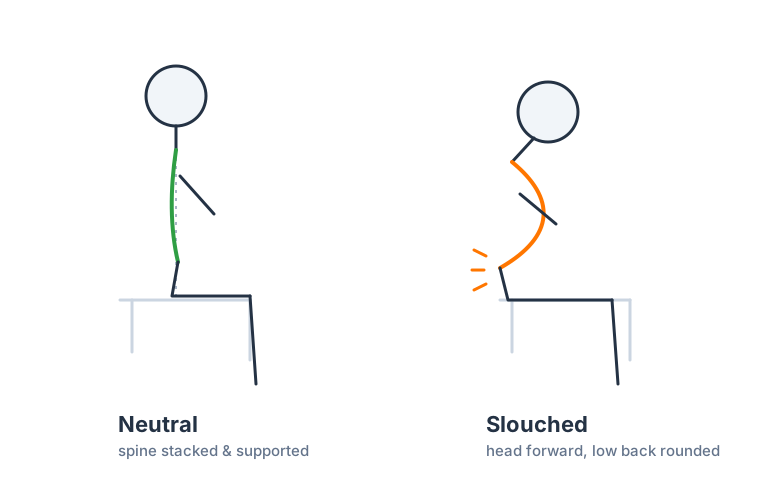
Side-Sleeping: The Position to Settle Into
For the second half of pregnancy, side-sleeping is the position most often recommended — and it's usually the one that ends up feeling best anyway as your belly grows. Lying on your side keeps your spine in a comfortable, neutral line and keeps the weight of the uterus off the large blood vessels that run along the back of your abdomen.
You'll often hear the left side singled out. The reasoning is that a major vein (the inferior vena cava) runs slightly to the right of your spine, so favoring the left side keeps the growing uterus from pressing on it and supports good blood flow back to your heart and to your baby. It's a sensible default to aim for.
That said, don't lose sleep over which side you're on. The side that's comfortable and actually lets you rest matters most. It's completely normal to switch sides through the night, and switching is actually helpful — it stops any one hip from bearing pressure for hours. If you drift onto your right side, that's fine; just settle back toward your left when it's easy. The goal is sleep, not a perfect posture held all night.
Where to Put Your Pillows
This is where comfort is really won or lost. A few pillows, placed well, turn side-lying from an achy compromise into genuine rest. You can use two or three separate pillows or a single full-length body or pregnancy pillow that combines the jobs — whichever you find easier to manage.
- Between your knees. This is the most important one. A firm pillow between your knees keeps your top leg from dropping across and twisting your pelvis, which keeps the sacroiliac joints and lower back in a neutral, level line. It's the single biggest comfort upgrade for most moms.
- Under or hugging your belly. As your belly grows, it tends to pull toward the mattress, dragging on your lower back. A pillow tucked under the belly — or a body pillow hugged along your front — supports that weight and takes the strain off.
- Behind your back. A pillow wedged along your back gives you something to lean into and, just as usefully, keeps you from rolling all the way flat onto your back during the night.
- Under your head, level with your spine. Keep your head pillow at a height that keeps your neck in line with the rest of your spine — not so high that it kinks your neck forward.
Why Lying Flat on Your Back Is Discouraged Later
From around the middle of pregnancy onward, lying flat on your back for long stretches is generally discouraged. The reason is simple mechanics: as your uterus grows heavier, it can press down on that same large vein (the inferior vena cava) that carries blood back to your heart. When the vein is compressed, blood return slows, which can leave you feeling lightheaded, short of breath, or a little queasy — a signal from your body to change position.
This is worth understanding, but it's genuinely not something to panic about. Your body usually nudges you off your back on its own, and brief moments on your back — propping yourself up to read, or a check-up on the exam table with a slight tilt — are not a problem. The practical takeaway is just this: if you wake up on your back, simply roll to your side and settle back in. The pillow behind your back does a lot of quiet work here, gently keeping you from rolling flat in the first place.
Easing Hip and Back Pain at Night
Even with good positioning, the hips and lower back can ache at night — it's one of the most common sleep disrupters of pregnancy. Hours on one side press on the outer hip and its small cushioning bursa, and the loosened, more mobile pelvic joints can grumble when they're held in one position or asked to move as you roll over.
A few habits help:
- Keep that pillow between your knees so the pelvis stays level and the outer hip isn't twisted.
- Add a little padding under your side if a tender outer hip is the problem — a softer mattress topper or a folded blanket can soften the pressure point.
- Switch sides when you wake rather than toughing it out on a sore hip.
- Warm up tight muscles before bed. A warm (not hot) shower or a warm compress on the low back and hips before you lie down can settle the muscles so they don't ache as you drift off.
- Move gently during the day. Slow walking and gentle movement keep the hips and pelvis from stiffening, which pays off at night.
If one hip or side of your back stays stubbornly sore despite good positioning, that's a sign it's worth having looked at — our guides to hip pain during pregnancy and pelvic girdle pain go into more detail, and gentle care can often settle it.
How Gentle Chiropractic Care Helps You Rest
When it's hip or back pain keeping you up, easing that pain is often the most direct route to better sleep. At Thrive Chiropractic in Troy, MI, Dr. Rubinstein provides gentle, pregnancy-adapted care aimed at exactly that. Much of the nighttime ache traces back to the pelvis being loaded unevenly and moving stiffly as ligaments loosen and weight shifts, so care often centers on the Webster Technique — a gentle, pregnancy-focused approach that supports pelvic balance and comfort.
By helping the pelvis move and sit more evenly, and by easing the tight hip, buttock, and low-back muscles with soft-tissue work and massage therapy, care can take the edge off the very discomfort that makes lying down difficult. Everything is positioned for your comfort and adapted to your stage of pregnancy — not a forceful adjustment. Dr. Rubinstein will also help you dial in your sleep setup, so the right pillows are doing the right jobs.
When to Check In
Restless nights and a bit of tossing to get comfortable are a normal part of pregnancy. It's worth having your sleep-related aches evaluated when hip or back pain keeps you up or wakes you, doesn't ease with better positioning and warmth, or is starting to leave you exhausted through the day. Gentle care and a better setup can usually turn that around.
Some symptoms, though, aren't about comfort and need prompt attention.
As always in pregnancy, checking in with your OB or midwife alongside chiropractic care keeps everyone working from the same page. When you're ready, you can schedule a visit and Dr. Rubinstein will help you get more comfortable at night. You can also explore more across our Pregnancy Care library.
Pregnancy Comfort Guide (PDF)A one-page take-home guide: gentle ways to ease pregnancy aches, why they happen, and when to call your OB.PDFThis article is for general education and is not a substitute for professional medical advice, diagnosis, or treatment. Always consult a qualified healthcare provider about your specific situation.
Frequently Asked Questions
What is the best sleeping position during pregnancy?
Side-sleeping is the position most often recommended in the second half of pregnancy, and many moms are advised to favor the left side, which keeps pressure off a large vein that runs along the right of the spine and supports good circulation. That said, the side that feels comfortable and actually lets you rest is what matters most — the goal is sleep, not a perfect posture. A pillow between the knees and one supporting the belly makes side-lying much more comfortable.
Is it bad to sleep on my back while pregnant?
Lying flat on your back for long stretches is generally discouraged from around the middle of pregnancy onward, because the weight of the growing uterus can press on a large vein and slow blood return, sometimes leaving you lightheaded. It's not something to panic about — if you wake up on your back, simply roll to your side. Propping a pillow behind your back helps keep you from rolling flat during the night.
Why do my hips and back hurt at night during pregnancy?
Hours of lying on one side put steady pressure on the outer hip, and the loosened, more mobile pelvic joints of pregnancy can ache when they're held in one position or asked to move as you roll over. A pillow between your knees keeps the pelvis level, a little padding under your side softens the pressure, and switching sides spreads the load. If one hip or side stays sore, gentle, pregnancy-adapted care can help settle it.
How many pillows do I need to sleep comfortably while pregnant?
Most moms do well with two or three well-placed pillows, or a single full-length body pillow that does the same job. The key spots are between the knees (to keep the pelvis level), under or hugging the belly (to take the pull off the lower back), and behind the back (to stop you rolling flat). A pregnancy or body pillow simply combines those into one shape, which many find easier than juggling separate pillows.
Is it safe to see a chiropractor for pregnancy sleep problems?
Chiropractic care is widely used throughout pregnancy, with everything gently adapted for your comfort and your changing body. When hip or back pain is what's keeping you up, gentle care that eases joint and muscle strain around the pelvis can make it easier to get comfortable at night. At Thrive, Dr. Rubinstein tailors each visit to how far along you are, and it's always a good idea to keep your OB or midwife in the loop.
When should I switch to sleeping on my side in pregnancy?
Many moms naturally move to side-sleeping as the belly grows and back- or stomach-sleeping stops feeling comfortable. As a general guide, favoring your side becomes worthwhile from around the middle of pregnancy onward. There's no need to force it earlier if you're comfortable — but building the pillow setup before you strictly need it makes the transition easier. Your OB or midwife can give guidance specific to your pregnancy.
Ready to get evaluated at Thrive Chiropractic?
Dr. Rubinstein will assess what’s really going on and build a care plan tailored to you. Reach out and we’ll get you scheduled.
2133 Crooks Road | Troy MI 48084