
Round Ligament Pain in Pregnancy: The Sharp Groin Pulls
Round ligament pain is the sharp, brief pull low on the belly or into the groin — often in the second trimester — when you move quickly, cough, or change position. Here's why it happens as the ligaments supporting your growing uterus stretch, what eases it, and how to tell it apart from pain that needs your OB. Gentle care at Thrive Chiropractic in Troy, MI works alongside your prenatal team.
What Is Round Ligament Pain?
Round ligament pain is one of the classic surprises of pregnancy: a sudden, sharp pull low on your belly or down into your groin, usually right as you move — and then, almost as quickly as it came, it's gone. If you've stood up fast, rolled over in bed, sneezed, or laughed and felt a startling stab low on one side, there's a good chance the round ligaments were the culprit.
The round ligaments are a pair of cord-like ligaments that help support your uterus. They run from the upper sides of the uterus, down and forward, and anchor into the groin on each side. Early in pregnancy they're short and relaxed, but as your uterus grows they have to stretch and thin out to accommodate it — and stretched-taut ligaments are sensitive to sudden movement. When you move quickly, they tug or spasm, producing that sharp, brief pull. It's a normal, mechanical part of pregnancy, most common in the second trimester when the uterus is growing fastest, and while it can be startling, it isn't a sign that anything is wrong. You can read more about the changes of each stage on our pregnancy care page.
Why It Happens in Pregnancy
The whole story comes down to ligaments doing a stretch they weren't originally sized for. As pregnancy progresses, several things line up:
- A growing uterus. Week by week your uterus expands, and the round ligaments supporting it have to lengthen and thin to keep up — going from short and slack to stretched and taut.
- Sudden movement. A taut ligament doesn't like being tugged sharply. Quick movements — standing up fast, rolling over, stepping off a curb — pull on the ligament abruptly, and it responds with a brief, sharp catch or spasm.
- A rise in pressure. Coughing, sneezing, and laughing suddenly raise the pressure in your belly and jolt the ligaments, which is why these so often trigger a pull.
- The pace of the second trimester. Because the uterus grows fastest in the middle months, round ligament pain tends to be most noticeable then, easing for many moms as things stabilize later on.
Think of it like a rubber band stretched nearly taut: a slow, gentle pull is fine, but a sudden yank produces a sharp snap of sensation. That's essentially what your round ligaments are doing when they complain.
What It Feels Like
Round ligament pain has a very characteristic feel, and knowing its signature is reassuring:
- A sharp, stabbing, or pulling pain — not a dull ache
- Located low on the belly, on one or both sides, often pulling down into the groin
- Brief — it typically lasts only seconds to a minute, then fades
- Triggered by movement — standing up quickly, rolling over in bed, coughing, sneezing, laughing, or a sudden change of position
- Eases when you slow down, rest, or gently change position
- More common on the right side for many moms, though it can happen on either or both
The defining features are that it's short-lived and tied to movement. It comes with the motion and goes when you settle. That pattern — sharp, brief, movement-related, quick to pass — is exactly what sets it apart from the kinds of pain that need a closer look, which is what the next section is about.
Telling It Apart From Something That Needs Your OB
This is the part that matters most, because while round ligament pain is harmless, some pregnancy pains are not — and the two need to be told apart. The good news is that round ligament pain has a distinctive, reassuring pattern, and pain that breaks that pattern is your cue to check in.
Round ligament pain is brief, sharp, tied to a specific movement, and passes within moments. It doesn't linger, it doesn't come with bleeding or fluid, and it settles when you rest.
Pain that is not round ligament pain — and that should prompt a call to your OB or midwife — includes:
- Pain that is persistent or severe, or that doesn't ease when you stop and rest
- Any belly or pelvic pain that comes with vaginal bleeding or fluid leaking
- Pain with regular contractions or tightening before your due date
- Pain with fever, chills, or feeling generally unwell
- Pain with burning when you urinate, or a noticeable change in your baby's movements
The rule of thumb: round ligament pain is a quick catch that comes and goes with movement. Anything that stays, builds, or travels with other symptoms is a reason to call — not to wait out.
What Eases Round Ligament Pain
Because round ligament pain is usually brief and self-limiting, the goal isn't to "treat" it so much as to trigger it less often and settle it quickly when it comes. A few gentle, pregnancy-friendly measures help:
- Slow down your movements. Rise, roll over, and change position gradually rather than suddenly — most round ligament pulls come from quick motion, so easing the pace prevents many of them.
- Change position when it strikes. When a pull hits, gently shifting or bending toward the pain, then resting a moment, usually lets it settle.
- Brace before a cough or sneeze, flexing gently toward the side that tends to pull.
- Use warmth. A warm compress or warm (not hot) shower on the achy area can soothe the ligament and the muscles around it — easy to keep comfortable during pregnancy.
- Try a supportive belly band. Gentle support under the belly can take some of the pull off the ligaments as you move; it's worth checking fit with your OB, midwife, or care provider.
- Rest when you can. The pain often eases with a change of pace, so a little rest after a busy stretch helps.
Because every pregnancy is different, always run new self-care by your OB, midwife, or care provider to make sure it fits your pregnancy.
How Chiropractic Care Fits In
It's worth being straightforward here: round ligament pain itself is a brief, self-limiting stretch of a ligament, so it isn't something that gets "adjusted" directly, and it usually needs nothing more than the gentle measures above. Where gentle, pregnancy-adapted chiropractic care fits in is the bigger picture around it.
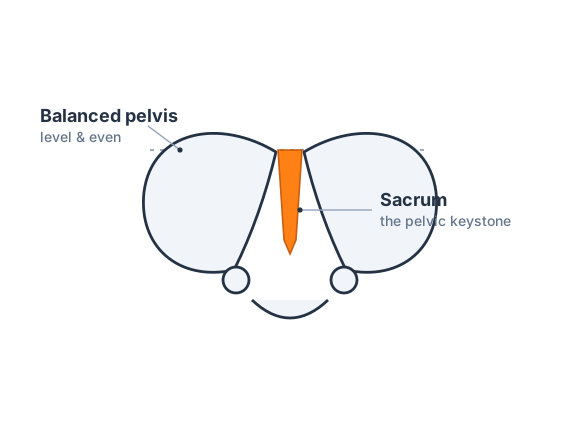
The second trimester, when round ligament pain peaks, is also when the postural aches of pregnancy tend to arrive — low-back stiffness and pelvic discomfort as your center of gravity shifts. Care at this stage supports overall pelvic balance and comfort as your body changes, using the gentle, pregnancy-focused Webster Technique and soft-tissue and massage therapy to ease the tight low-back, hip, and pelvic muscles that come with a growing belly. So while care doesn't target the round ligaments, keeping the pelvis balanced and the surrounding muscles at ease makes this stage of pregnancy more comfortable overall — and it's a natural time to address the back pain during pregnancy and pelvic girdle pain that often travel alongside it. As always, this complements, never replaces, the care your OB or midwife provides.
When to See a Chiropractor
Round ligament pain on its own usually doesn't need a visit — it's brief, harmless, and eases with the simple measures above. But the second and third trimesters often bring postural aches worth addressing, and it's worth getting evaluated when you notice:
- Low-back or pelvic pain that keeps coming back or is getting worse
- Stiffness that doesn't ease with rest, warmth, or gentle movement
- Pain that's affecting your sleep or your ability to turn in bed
- Pelvic discomfort that spreads into the buttock, hip, or groin and lingers
And some warning signs need urgent attention rather than a wait-and-see approach — in pregnancy these go straight to your OB or midwife.
As always in pregnancy, checking in with your OB or midwife alongside chiropractic care keeps everyone working from the same page. When you're ready, you can schedule a visit and Dr. Rubinstein will tailor a gentle plan to where you are in your pregnancy. You can also read more in pelvic girdle pain in pregnancy and chiropractic through each trimester.
Pregnancy Comfort Guide (PDF)A one-page take-home guide: gentle ways to ease pregnancy aches, why they happen, and when to call your OB.PDFThis article is for general education and is not a substitute for professional medical advice, diagnosis, or treatment. Always consult a qualified healthcare provider about your specific situation.
Frequently Asked Questions
What does round ligament pain feel like?
It's usually a sharp, brief, stabbing or pulling pain low on one or both sides of the belly, often into the groin, that comes on with a sudden movement — standing up quickly, rolling over, coughing, sneezing, or laughing — and passes within seconds to a minute. It can be startling, but it's short-lived and eases when you slow down or change position gently. It's most common in the second trimester.
Why do I get sharp groin pains when I move during pregnancy?
As your uterus grows, the round ligaments that support it — running from the uterus down into the groin — stretch and thin out. When you move quickly, those ligaments tug or spasm, producing a sharp, brief pull. It's a bit like a rubber band being pulled taut suddenly. It's a normal part of pregnancy and usually shows up most in the second trimester as the uterus is growing fastest.
How can I ease round ligament pain?
Slowing down is the main thing — move more gradually when you stand, roll over, or change position, and brace gently before a cough or sneeze by bending toward the pull. Changing position, resting, warmth on the area, and a supportive belly band can all help. The pain usually settles on its own within moments. Run any new self-care by your OB or midwife to make sure it fits your pregnancy.
How do I know if it's round ligament pain or something serious?
Round ligament pain is brief, sharp, tied to movement, and passes quickly. Pain that is persistent or severe, that doesn't ease when you rest, or that comes with vaginal bleeding, fluid leaking, fever, chills, regular contractions, or feeling generally unwell is not round ligament pain and should go straight to your OB or midwife. When you're unsure, it's always right to call them.
Can chiropractic care help with round ligament pain?
Round ligament pain itself is usually brief and self-limiting, so it's not something that's 'adjusted' directly. But gentle, pregnancy-adapted chiropractic care supports overall pelvic balance and comfort as your body changes, and eases the low-back and pelvic strain that often accompanies this stage of pregnancy. Dr. Rubinstein tailors care to where you are, always alongside your OB or midwife.
Ready to get evaluated at Thrive Chiropractic?
Dr. Rubinstein will assess what’s really going on and build a care plan tailored to you. Reach out and we’ll get you scheduled.
2133 Crooks Road | Troy MI 48084