
Prenatal Chiropractic Care: Comfort & Balance in Pregnancy
Prenatal chiropractic care is gentle, pregnancy-adapted care aimed at keeping you comfortable and your pelvis balanced as your body changes over nine months. Here's what it involves, the comfort it can offer for back, hip, and pelvic strain, how techniques and tables are adapted for pregnancy, what to expect at a visit, and how care at Thrive Chiropractic in Troy, MI works — always coordinated with your OB or midwife.
What Is Prenatal Chiropractic Care?
Prenatal chiropractic care is gentle, pregnancy-adapted chiropractic care with one simple goal: keeping you comfortable and your pelvis moving evenly as your body changes over nine months. It's the same underlying idea as any chiropractic care — helping stiff joints move more freely and easing the muscle tension that builds around them — but every part of it is modified for pregnancy, from how you're positioned to how light the contacts are.
It helps to say up front what prenatal care isn't. It isn't forceful, it isn't about "cracking" your back, and it isn't a treatment for pregnancy itself — pregnancy is not a condition to be fixed. Instead, it's supportive care for the very real aches and stiffness that come with a shifting center of gravity, loosened ligaments, and growing weight. Many moms find it helps them move, sit, and rest more comfortably through the parts of pregnancy when the strain is greatest. You can explore the wider picture on our pregnancy care page.
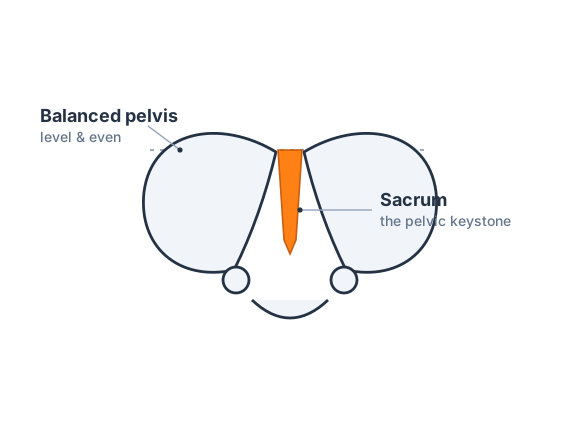
How Pregnancy Changes Your Spine and Pelvis
Understanding what prenatal care is for starts with what pregnancy asks of your body. Three normal changes stack up week by week:
- A shifting center of gravity. As your baby grows and your weight moves forward, the natural curve of your lower back tends to deepen to keep you balanced, and the muscles along your spine and pelvis work harder to hold you upright.
- Loosened ligaments. Rising pregnancy hormones loosen the joints and ligaments throughout your body — including the pelvis — to prepare for birth. That's helpful for delivery, but it can leave those joints feeling less stable and more easily strained along the way.
- Growing weight, out in front. The added load your spine and pelvis carry increases with each trimester, and much of it sits ahead of you, tugging on the lower back and pelvis.
Together, these are why so many moms feel back pain during pregnancy, hip discomfort, and pain over the back of the pelvis — even if their back was never a problem before. It's a mechanical, posture-driven kind of ache, which is exactly the kind that gentle care tends to help.
Benefits During Pregnancy
The heart of prenatal chiropractic care is comfort and pelvic balance. In practical terms, that tends to show up as:
- Easing back, hip, and pelvic strain — the low-back aching, hip discomfort, and pain over the sacroiliac joints that build as the belly grows and ligaments loosen
- Supporting pelvic balance — helping the pelvis move and sit more evenly, so it's loaded less unevenly as your weight shifts, which many moms find takes an edge off day-to-day discomfort
- Calming muscle tension — soothing the tight muscles of the low back, hips, and pelvis that pregnancy posture tends to overwork
- Helping you move and rest more comfortably — small gains in how freely stiff joints move can make turning in bed, getting up from a chair, and staying on your feet a little easier
A grounded, honest note on all of this: these are comfort- and function-oriented benefits. Prenatal care is about helping you feel and move better through pregnancy's normal changes, not about promising outcomes for your labor or your baby. When it's a good fit, that everyday comfort is genuinely worthwhile — and it's the right thing to expect from it.
How Care Is Adapted for Pregnancy
This is where prenatal care really differs from a standard visit. Nearly everything is modified for your comfort and your changing body:
- Tables and cushioning. Supportive cushioning takes pressure off your belly, so you're never lying in a way that feels like too much on your bump. Positioning is chosen for comfort first.
- Positioning. Rather than lying flat on your stomach, you're often positioned side-lying or in modified positions suited to your stage of pregnancy, so your spine and pelvis are supported throughout.
- Gentle, adapted technique. Contacts are light and comfortable — restoring motion to stiff lower-back and pelvic joints without deep force. The Webster Technique, a gentle approach designed specifically for pregnancy, is often a centerpiece; you can read a full explanation in our guide to the Webster Technique.
- Soft-tissue work. Gentle soft-tissue and massage therapy help ease the tight muscles of the low back, hips, and pelvis.
- A plan that changes with you. What fits in the second trimester isn't always what fits in the third, so the approach is adjusted as you move through pregnancy.
If you're wondering about safety specifically — what's modified and why — our article on whether chiropractic is safe during pregnancy walks through it in plain terms.
What to Expect at Your Visit
At Thrive Chiropractic in Troy, MI, a prenatal visit starts with a conversation. Dr. Rubinstein talks through how far along you are, where the aches sit, how you're sleeping, whether pain sits more in the low back or over the pelvis, and anything your OB or midwife has asked you to watch. That picture shapes everything that follows.
The hands-on exam is gentle and positioned for your comfort, checking how your lower back and pelvis move, which joints feel stiff or irritated, and where the surrounding muscles are tight — while taking your changing body fully into account. From there, care is tailored to your stage and comfort, often combining gentle adjustments modified for pregnancy, the Webster Technique for pelvic balance, soft-tissue work, and simple guidance you can use at home. Nothing is forceful, and you're an active part of the plan — if something doesn't feel comfortable, it's adjusted.
Gentle Self-Care Between Visits
A few simple, pregnancy-friendly habits support the comfort you get from care:
- Support your back and pelvis when you sleep. Side-lying with a full-length body pillow — hugged along your front and tucked between your knees — keeps your spine and pelvis in a neutral, supported line. Our guide to sleeping during pregnancy has more.
- Take frequent posture breaks if you sit or stand for long stretches, and avoid staying in one position too long.
- Move gently and often. Slow, comfortable walking and gentle range-of-motion movement help keep the low back and pelvis from stiffening up.
- Ease off heavy lifting, and when you do lift, bend at the hips and keep the load close rather than rounding and reaching.
- Use warmth on tight low-back and hip muscles for soothing relief.
Because every pregnancy is different, always run new exercises or self-care by your OB, midwife, or care provider first to make sure they fit your pregnancy.
Coordinating With Your OB or Midwife
Prenatal chiropractic care works best as one part of a team. Your OB or midwife is your primary guide through pregnancy, and gentle chiropractic care is meant to complement that — never to replace it or work around it. Keeping them informed about new aches and any care you're considering means everyone stays on the same page about what's normal for you and what deserves a closer look.
That coordination runs both ways. If your exam at Thrive turns up anything that needs medical attention, Dr. Rubinstein will say so plainly and help point you toward the right care. And there are a few situations — certain pregnancy complications among them — that are worth clearing with your OB before starting or continuing chiropractic care; our is chiropractic safe during pregnancy guide covers those honestly.
When to See a Chiropractor
Mild, come-and-go aching is a normal part of many pregnancies. It's worth getting evaluated when you notice:
- Back, hip, or pelvic pain that keeps coming back or is getting worse
- Stiffness that doesn't ease with rest, warmth, or gentle movement
- Pain that's affecting your sleep, your ability to turn in bed, or your day-to-day comfort
- Pain that begins spreading into the buttock, hip, or leg
Some warning signs, though, are for your OB or midwife right away rather than a wait-and-see approach.
As always in pregnancy, checking in with your OB or midwife alongside chiropractic care keeps everyone working from the same page. When you're ready, you can schedule a visit and Dr. Rubinstein will tailor a gentle plan to where you are in your pregnancy. You can also read more about the Webster Technique and browse the wider Pregnancy Care library.
Pregnancy Comfort Guide (PDF)A one-page take-home guide: gentle ways to ease pregnancy aches, why they happen, and when to call your OB.PDFThis article is for general education and is not a substitute for professional medical advice, diagnosis, or treatment. Always consult a qualified healthcare provider about your specific situation.
Frequently Asked Questions
What is prenatal chiropractic care?
Prenatal chiropractic care is gentle, pregnancy-adapted chiropractic care aimed at keeping you comfortable and your pelvis moving evenly as your body changes. It focuses on the back, hips, and pelvis, using light, comfortable techniques and supportive positioning rather than deep force. At Thrive, Dr. Rubinstein tailors every visit to how far along you are, and it's meant to work alongside the care your OB or midwife provides.
Is chiropractic care safe during pregnancy?
Chiropractic care is widely used throughout pregnancy, with everything gently adapted for your comfort and your changing body. At Thrive, Dr. Rubinstein positions you comfortably and modifies technique for your stage of pregnancy. As with any care during pregnancy, it's a good idea to keep your OB or midwife in the loop, and there are a few situations worth clearing with them first — you can read more in our guide to whether chiropractic is safe during pregnancy.
What can prenatal chiropractic care help with?
Many moms come in for the back, hip, and pelvic aches that build as the belly grows and ligaments loosen — low-back stiffness, pain over the back of the pelvis, and hip discomfort. The goal is comfort and pelvic balance: helping stiff joints move more freely and calming the muscle tension that pregnancy posture creates. It's supportive care, not a cure for pregnancy itself, and it complements your prenatal care.
How is a chiropractic visit different when you're pregnant?
Quite a bit is adapted. Tables use supportive cushioning to take pressure off your belly, you're often positioned side-lying or in modified positions, and contacts are light and comfortable rather than forceful. Dr. Rubinstein also spends time on how you're sleeping, sitting, and moving, and adjusts the plan as you move through each trimester so it always fits where you are.
When during pregnancy can I start chiropractic care?
Many moms receive gentle chiropractic care throughout pregnancy, from early on through the final weeks, with the approach adapted as your body changes. Some start because of a specific ache, others for general comfort and pelvic balance. Whenever you start, it's a good idea to let your OB or midwife know, and to mention anything about your pregnancy that they've asked you to keep an eye on.
Ready to get evaluated at Thrive Chiropractic?
Dr. Rubinstein will assess what’s really going on and build a care plan tailored to you. Reach out and we’ll get you scheduled.
2133 Crooks Road | Troy MI 48084