
Postpartum Recovery & Chiropractic: The Body After Birth
Your body spends months adapting for pregnancy and birth — and recovery afterward takes time, too. Here's an honest look at what happens after birth, from lingering ligament laxity to the posture shifts of feeding and carrying, core and pelvic-floor considerations, and how gentle chiropractic care at Thrive Chiropractic in Troy, MI can support your recovery alongside your doctor.
Recovery After Birth Takes Time
Your body spent roughly nine months adapting for pregnancy and birth. It makes sense, then, that recovering afterward isn't something that happens overnight — or even in the six weeks that the classic postpartum checkup can make it sound like. Recovery is real, ongoing work, and it deserves the same patience and support that pregnancy did.
The early weeks bring the most visible healing, but underneath, your body is still very much in transition. The changes that pregnancy set in motion — loosened joints, a shifted posture, a stretched and softened core — don't reverse the moment your baby arrives. They ease back gradually, on a timeline that's often longer than expected and different for every mom. Knowing that up front takes some of the pressure off. You're not "behind" if you still feel different weeks or months later; you're recovering, which is exactly what your body should be doing.
Why Your Body Still Feels Different
Two big changes explain a lot of how your body feels in the postpartum weeks.
The first is lingering ligament laxity. During pregnancy, hormones loosen the joints and ligaments throughout your body — especially the pelvis — to prepare for birth. That looseness doesn't switch off with delivery. It eases gradually over weeks to months, and it can persist longer while you're breastfeeding. During that window, the pelvis and low back can feel a little less stable and more easily strained, which is completely normal even though it can be unsettling.
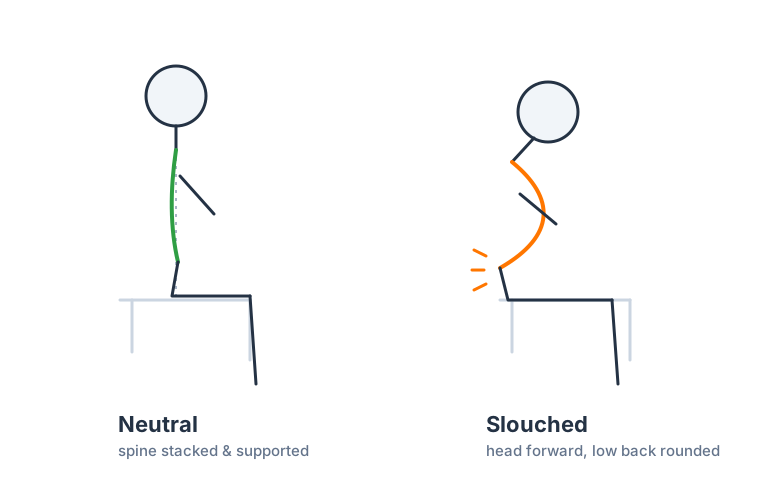
The second is a shifting posture built around your baby. New-parent days are full of postures your body isn't used to: rounding forward for hours of feeding, hunching over the changing table, hoisting and carrying a rapidly growing little one, and rocking on the same hip again and again. On top of a body that's still recovering, these repeated positions load the neck, upper back, low back, and pelvis in new ways. It's less any single moment and more the accumulation — day after day, often on very little sleep. Together, the lingering laxity and the new postural demands are why so much of your body can feel different well after birth. You can read more on our pregnancy care page.
Core and Pelvic-Floor Considerations
Two areas deserve special mention because they do so much quiet work and are so affected by pregnancy and birth: your core and your pelvic floor.
Your deep core muscles were stretched and softened over months of pregnancy, and the abdominal wall in particular may take real time to regain its strength and coordination. Your pelvic floor — the sling of muscles supporting your bladder, bowel, and uterus from below — did enormous work during pregnancy and birth and recovers over months as well. These aren't areas to rush or to "push through," and they're not fully addressed by rest alone.
This is where a pelvic-floor physical therapist is often the right partner. Pelvic-floor PT focuses specifically on rebuilding pelvic-floor strength and coordination and is especially helpful if you notice leaking, a feeling of heaviness or pressure, or other pelvic-floor concerns. It complements gentle chiropractic care nicely — the PT works on the pelvic-floor muscles themselves, while chiropractic focuses on the joints and muscles of the low back and pelvis and the posture strain of new-parent life. At Thrive, Dr. Rubinstein is glad to refer you to a pelvic-floor PT when that's the right fit for what you're experiencing.
A Realistic Recovery Timeline
It helps to have a realistic picture rather than an idealized one. Broadly:
- The first few weeks are for the most immediate healing and a lot of rest. This is not the time for demanding activity, and your doctor guides what's appropriate for your birth.
- The following weeks to months are when the lingering ligament laxity gradually eases and your core and pelvic floor slowly rebuild. Comfort and stability usually improve steadily through this stretch.
- Longer still — especially while breastfeeding — some of the looseness can persist, and that's normal. Recovery is a gradual return, not a switch that flips at any one appointment.
Every mom's timeline is her own, shaped by her birth, her sleep, whether she's feeding around the clock, and much else. The goal isn't to hit a deadline; it's to support your body kindly as it finds its way back. Rushing tends to backfire — patient, gentle care generally serves you far better.
How Gentle Chiropractic Supports Recovery
Within that picture, gentle, postpartum-adapted chiropractic care has a supportive role to play. It won't rush your recovery — nothing does — but it can make the weeks more comfortable and help your body move better as it heals.
Gentle care can help by restoring motion to stiff lower-back and pelvic joints, easing the muscle tension that new-parent posture builds up, and helping the pelvis move more evenly during the window when the ligaments are still loosening. Many moms find that feels supportive when their body is carrying, feeding, and rocking a newborn all day. The Webster Technique and related gentle approaches that focus on pelvic balance and comfort during pregnancy can carry over into this postpartum period too. As always, this is one supportive piece that works alongside your doctor and, where relevant, your pelvic-floor PT — not a replacement for either.
What to Expect at Thrive Chiropractic
At Thrive Chiropractic in Troy, MI, postpartum care is gentle, unhurried, and paced to how you're recovering. Timing matters, so Dr. Rubinstein starts by understanding your birth, how you're healing, what your doctor has advised, and where you're feeling stiff or strained. Care is kept gentle and often combines:
- Gentle chiropractic adjustments adapted for the postpartum body, restoring motion to stiff lower-back and pelvic joints while respecting that the ligaments are still loosening
- Soft-tissue and massage therapy to ease tight muscles across the neck, upper back, low back, and hips that new-parent posture builds up
- Posture, lifting, and feeding-setup guidance you can use at home to protect your recovering body
- A referral to a pelvic-floor physical therapist when pelvic-floor concerns are part of the picture
The whole focus is gentle support that fits where you are in recovery — designed to complement, never replace, the care your doctor and pelvic-floor PT provide.
Gentle Self-Care for the Early Weeks
A few simple habits can support your recovery between visits and protect your body through long new-parent days.
A few more that tend to help:
- Rest when you genuinely can, and let go of the pressure to "bounce back" on any schedule.
- Protect your back when you lift, especially the car seat — bend at the hips, keep the load close, and let your legs do the work rather than rounding your back.
- Set up a comfortable feeding station with back support and pillows so your posture isn't slumped for long stretches.
- Move gently as your doctor allows — easy, comfortable movement helps far more than staying still.
Because every recovery is different, always run new activity or self-care by your doctor first, especially in the early weeks and after a cesarean birth.
When to Seek Care Right Away
Most of the postpartum period is a gradual, uneventful return to feeling like yourself. But some symptoms are true warning signs — and importantly, several of them can appear weeks after birth, not just in the first days. These go straight to your doctor or to emergency care.
Postpartum mental health matters just as much as physical recovery. If you're struggling emotionally, please reach out to your doctor — support is available, and asking for it is a sign of strength, not weakness. When you're ready for gentle physical support, you can schedule a visit and Dr. Rubinstein will tailor a gentle plan to where you are in recovery. Our guide to postpartum back pain digs deeper into the new-parent aches so many moms feel.
Pregnancy Comfort Guide (PDF)A one-page take-home guide: gentle ways to ease pregnancy aches, why they happen, and when to call your OB.PDFThis article is for general education and is not a substitute for professional medical advice, diagnosis, or treatment. Always consult a qualified healthcare provider about your specific situation.
Frequently Asked Questions
How long does it take to recover after giving birth?
Longer than the six-week checkup implies, honestly. The early weeks bring the most obvious healing, but the ligament laxity of pregnancy eases only gradually, and your core and pelvic floor recover over months, not days. Everyone's timeline is different, and factors like your birth and whether you're feeding around the clock all play a part. Gentle, patient care tends to serve you better than rushing back to everything at once.
When can I start chiropractic care after having a baby?
It varies with your birth and how you're healing, so the timing is best decided with your doctor. Once they're comfortable with you resuming activity, gentle, postpartum-adapted chiropractic care can help with the stiffness and posture strain that come with feeding and carrying a newborn. At Thrive, Dr. Rubinstein keeps early postpartum care gentle and paced to how you're recovering.
Why does my body still feel loose or unstable after birth?
Pregnancy hormones loosen the joints and ligaments across your body — especially the pelvis — to prepare for birth, and that laxity doesn't switch off the moment your baby arrives. It eases gradually over weeks to months, and it can persist longer while you're breastfeeding. Feeling a bit less stable through the pelvis and low back during that window is common, and gentle care can help you feel more supported.
Should I see a chiropractor or a pelvic-floor physical therapist?
Often both have a role, and they address different things. A pelvic-floor physical therapist focuses specifically on the pelvic-floor muscles — a key part of postpartum recovery, especially if you notice leaking, heaviness, or related concerns. Gentle chiropractic care focuses on the joints and muscles of the low back and pelvis and the posture strain of new-parent life. Dr. Rubinstein is glad to refer you to a pelvic-floor PT when that's the right fit.
Is it normal to have back pain after giving birth?
Very much so — new-parent back pain is extremely common, driven by lingering ligament laxity plus long hours of feeding, lifting, and carrying. It's common enough that we've written a whole guide to it; see [postpartum back pain](/conditions/pregnancy-care/postpartum-back-pain/) for causes, relief, and ergonomics. Gentle care and better setups at home usually make a real difference.
Ready to get evaluated at Thrive Chiropractic?
Dr. Rubinstein will assess what’s really going on and build a care plan tailored to you. Reach out and we’ll get you scheduled.
2133 Crooks Road | Troy MI 48084