
Postpartum Back Pain: Causes, Relief & New-Parent Ergonomics
Back pain is one of the most common complaints of new-parent life — driven by lifting the car seat, hours of feeding posture, and carrying a growing baby, all on a body still recovering from pregnancy. Here's what causes it, how to find relief, the ergonomic setups that help, and how gentle chiropractic care at Thrive Chiropractic in Troy, MI supports you alongside your doctor.
What Is Postpartum Back Pain?
Postpartum back pain is the aching, stiffness, and strain across the lower back, and often the upper back and shoulders, that so many new parents feel in the weeks and months after birth. If your back has been sore since the baby arrived, you're in very good company — it's one of the most common complaints of new-parent life, and for good reason.
Here's the reassuring part: this is almost always a mechanical ache, not a sign that something is wrong. Your body spent months adapting for pregnancy and is still recovering, and now it's being asked to lift, hunch, carry, and rock all day and much of the night. That's a lot of load on a back that's still finding its footing. Because the cause is mechanical — posture and strain rather than anything sinister — it also tends to respond well to relief, better body mechanics, and gentle care. You can read more about the wider recovery picture in our guide to postpartum recovery.
What Causes Postpartum Back Pain?
Postpartum back pain usually comes from several new-parent strains stacking up on a recovering body rather than any single injury. The most common contributors are:
- Lingering ligament laxity — the pregnancy hormones that loosened your joints and ligaments, especially around the pelvis, ease off only gradually after birth, leaving the low back and pelvis a little less stable and more easily strained for a while
- Lifting the car seat — heavy, awkward, and lifted at an angle out of a low car, it's one of the single most common triggers, especially when lifted with a rounded back or a twist
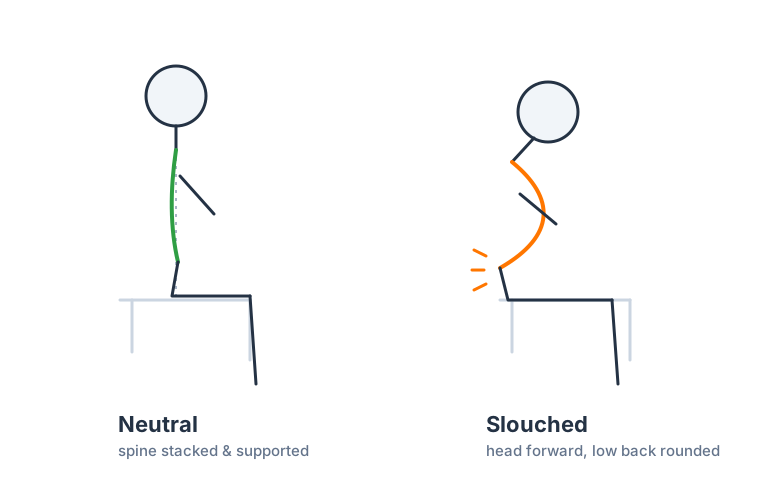
- Feeding posture — hunching forward over the baby for long stretches, many times a day, rounds the upper back and loads the neck, shoulders, and low back
- Carrying and hip-rocking — hoisting and carrying a baby who only gets heavier, often propped on the same hip and rocked for hours, pulls the pelvis and low back unevenly
- Poor sleep and constant demand — recovering on very little rest, with no real break from the lifting and carrying, gives strained muscles little chance to settle
Often it's the combination that does it: a recovering back, still a bit loose through the pelvis, meets the relentless daily lifting and hunching of caring for a newborn.
Common Symptoms
Postpartum back pain tends to show up in familiar ways:
- Aching and stiffness across the lower back, often worse after feeding sessions or a day of carrying
- Upper-back and shoulder tension, from the forward-hunched posture of feeding and looking down at the baby
- Pain over the back of the pelvis, which can spread into the buttock or hip when the pelvic joints are taking uneven load
- A tired, heavy feeling in the low back and pelvis that builds through the day
- Occasional spasm or a catch with a sudden lift or twist, classically while getting the car seat in or out
Most of this is uncomfortable but mechanical and manageable, and it responds well to gentle care and better setups. Pain that travels down the leg past the knee, or comes with numbness, tingling, or weakness in the leg, points toward nerve involvement and is worth mentioning so it can be assessed. Our guide to lower back pain covers that wider picture.
New-Parent Ergonomics That Help
A lot of postpartum back pain comes down to setups you can actually change. Small adjustments to how you lift, feed, and carry take a surprising amount of strain off your back.
A few more setups worth dialing in:
- Feeding station. Sit with real back support and bring the baby up to breast or bottle height with a pillow, rather than curling down over your lap for every feed.
- Changing table. Set it at a height where you're standing tall, not stooping — repeated over a day, that stoop adds up fast.
- Carrying. Alternate sides, keep the baby close and centered rather than slung out on one hip, and use a well-fitted carrier that spreads the load across your torso.
- The car seat. Treat every load and unload as a real lift — hips and knees, load close, no twisting.
How Gentle Chiropractic Helps
Alongside better ergonomics, gentle chiropractic care can bring real relief from postpartum back pain by addressing the strained joints and muscles directly. It won't undo a sleepless night, but it can make your back far more comfortable to live and parent in.
Gentle care can help by restoring motion to stiff lower-back and pelvic joints, releasing the protective muscle tension that feeding and carrying build up across the low back, upper back, and shoulders, and helping the pelvis move more evenly during the window when the ligaments are still loosening. Because the pelvis is so central to postpartum recovery, approaches focused on pelvic balance and comfort — like the Webster Technique — can carry over usefully into this period. As always, this works alongside your doctor's care, and the timing for starting is best decided together based on your birth. You can learn more on our pregnancy care page.
What to Expect at Thrive Chiropractic
At Thrive Chiropractic in Troy, MI, care for postpartum back pain is gentle and paced to your recovery. Dr. Rubinstein starts by understanding your birth, how you're healing, what your doctor has advised, and exactly where and when the pain shows up — after feeds, while lifting, or as the day wears on. Care is kept gentle and often combines:
- Gentle chiropractic adjustments adapted for the postpartum body, restoring motion to stiff lower-back and pelvic joints while respecting that the ligaments are still loosening
- Soft-tissue and massage therapy to release the tight muscles of the low back, upper back, shoulders, and hips that new-parent posture builds up
- Ergonomic and lifting coaching tailored to feeding, changing, carrying, and the car seat, so relief actually holds between visits
- A referral to your doctor or a pelvic-floor physical therapist if your exam turns up something that needs their attention
The plan is honest about what's realistic: gentle care relieves postpartum back pain and helps you move more comfortably, and paired with better setups at home it tends to hold. If your symptoms are worsening or your exam turns up something that needs medical attention, Dr. Rubinstein will say so plainly and coordinate the right referral.
Gentle Self-Care at Home
Beyond the ergonomic setups above, a few simple habits can ease postpartum back pain between visits.
- Move gently and often as your doctor allows — easy, comfortable movement keeps the low back and pelvis from stiffening far better than staying still.
- Use warmth on tight low-back and upper-back muscles for soothing relief — a warm compress or shower.
- Take micro-breaks to stand tall, roll your shoulders back, and undo the forward-hunched feeding posture through the day.
- Protect your back on every lift, not just the car seat — hinge at the hips, keep the load close, and let your legs do the work.
- Accept help and rest when you can, since a rested, less strained body recovers more comfortably.
Because every recovery is different, always run new activity or self-care by your doctor first, especially in the early weeks and after a cesarean birth.
When to Seek Care Right Away
Most postpartum back pain is mechanical and eases with relief and better setups. But some symptoms are true warning signs — and several can appear weeks after birth, not just in the first days — that go straight to your doctor or emergency care rather than being waited out.
Short of those, back pain that keeps coming back, doesn't ease, disrupts your sleep, or starts spreading into the buttock, hip, or leg is a good reason to be seen. When you're ready, you can schedule a visit and Dr. Rubinstein will tailor a gentle plan to where you are in recovery. Our guides to postpartum recovery and the broader Back Pain library — including lower back pain — cover related ground.
Pregnancy Comfort Guide (PDF)A one-page take-home guide: gentle ways to ease pregnancy aches, why they happen, and when to call your OB.PDFThis article is for general education and is not a substitute for professional medical advice, diagnosis, or treatment. Always consult a qualified healthcare provider about your specific situation.
Frequently Asked Questions
Why does my back hurt so much after having a baby?
Because new-parent life asks a lot of a body that's still recovering. The ligament laxity of pregnancy lingers for a while, and on top of that you're lifting the car seat, hunching for hours of feeding, and carrying and rocking a baby who only gets heavier. That combination loads the low back and pelvis day after day, usually on little sleep — which is exactly why postpartum back pain is so common. It's mechanical, and it responds well to relief and better setups.
How long does postpartum back pain last?
It varies. Much of it eases over the early months as the ligament laxity settles and your body adjusts, especially once you improve how you lift, feed, and carry. But the daily demands of caring for a baby don't stop, so pain can linger if the same strains keep repeating. Gentle care plus better ergonomics usually makes a real difference, and an exam helps rule out the less common causes.
Is it safe to see a chiropractor for back pain after birth?
For most new parents, gentle chiropractic care is a comfortable, welcome relief for postpartum back pain. The timing depends on your birth and how you're healing, so it's best decided with your doctor. Once they're comfortable with you resuming activity, Dr. Rubinstein keeps early postpartum care gentle and paced to your recovery. It works alongside your medical care, never in place of it.
What's the best way to lift the car seat without hurting my back?
Get close before you lift, bend at your hips and knees rather than rounding your back, keep the car seat as close to your body as you can, and let your legs do the work as you stand. Avoid twisting while you're loaded — turn your whole body with your feet instead. The car seat is one of the most common triggers for postpartum back pain precisely because it's heavy, awkward, and lifted at an angle, so it's worth being deliberate about.
Is postpartum back pain the same as regular lower back pain?
It overlaps a lot. Postpartum back pain is essentially lower back pain with new-parent drivers layered on — lingering ligament laxity plus the repeated lifting, feeding, and carrying. The mechanics are similar, which is why the same principles help. Our general guide to [lower back pain](/conditions/back-pain/lower-back-pain/) covers the wider picture, and the ergonomics here are tailored to life with a newborn.
Ready to get evaluated at Thrive Chiropractic?
Dr. Rubinstein will assess what’s really going on and build a care plan tailored to you. Reach out and we’ll get you scheduled.
2133 Crooks Road | Troy MI 48084