
Is Chiropractic Safe During Pregnancy? An Honest Guide
Chiropractic care is widely used through pregnancy when it's provided by a trained provider using gentle, pregnancy-adapted methods. Here's an honest, reassuring look at what makes it safe, exactly what's modified for pregnancy, the situations worth clearing with your OB first, and how gentle care at Thrive Chiropractic in Troy, MI works — always coordinated with your OB or midwife.
The Short Answer
Yes — chiropractic care is widely used throughout pregnancy, and it's generally considered safe when it's provided by a trained provider using gentle, pregnancy-adapted methods. That last part is the whole point: pregnancy chiropractic isn't the same as a standard adjustment. The techniques, positioning, and pressure are all modified for your comfort and your changing body.
It's worth being honest rather than absolute about this. "Safe" here means care that's gentle, appropriately adapted, and coordinated with your prenatal team — not a blanket promise that applies identically to every situation. For the great majority of pregnancies, gentle chiropractic care fits comfortably alongside prenatal care and can help with the back, hip, and pelvic strain pregnancy brings. And there are a few situations worth checking on first, which is exactly why keeping your OB or midwife in the loop matters. You can explore the bigger picture on our pregnancy care page.
What Makes Chiropractic Safe in Pregnancy
Safety in pregnancy chiropractic isn't a single thing — it comes from a handful of choices that, together, keep care gentle and appropriate:
- A trained provider. Care is provided by a chiropractor experienced in pregnancy-adapted methods, who tailors technique and positioning to your stage of pregnancy.
- Gentle, low-force technique. Contacts are light and comfortable — restoring motion to stiff lower-back and pelvic joints without deep force or forceful twisting.
- Supportive positioning. You're positioned for comfort, with cushioning that takes pressure off your belly, rather than lying flat on your stomach.
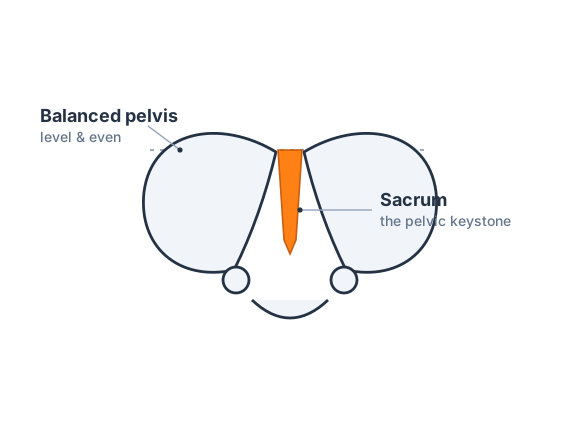
- A focus on your back, hips, and pelvis. Care is directed at the joints and muscles taking on strain — not at your baby.
- Coordination with your prenatal team. Care stays connected to your OB or midwife, so everyone shares the same picture of your pregnancy.
None of these is dramatic on its own, but together they're what let gentle chiropractic care fit so comfortably into so many pregnancies.
What's Modified for Pregnancy
If you've had chiropractic care before pregnancy, the differences are noticeable. Nearly every part is adapted:
- Tables and cushioning. Supportive cushioning takes pressure off your belly, so positioning never feels like too much on your bump.
- Positioning. Rather than lying face-down, you're often positioned side-lying or in modified positions suited to your stage of pregnancy, so your spine and pelvis stay supported.
- Pressure and technique. Contacts are lighter and gentler, restoring motion without force. Approaches like the Webster Technique are designed specifically for pregnancy and focus on pelvic balance and comfort; our Webster Technique explained guide walks through it.
- Soft-tissue work. Gentle soft-tissue and massage therapy ease the tight muscles of the low back, hips, and pelvis.
- A plan that changes with you. What fits in the second trimester isn't always what fits in the third, so the approach is adjusted as you go — our guide to chiropractic through each trimester has more.
For a fuller picture of how a visit is structured, see our overview of prenatal chiropractic care.
When to Clear It With Your OB First
Here's the honest, non-absolute part. Gentle chiropractic care suits most pregnancies — but a few situations are genuinely worth clearing with your OB or midwife before starting or continuing, so your care fits your specific pregnancy. Think of it as coordinating, not avoiding.
Situations worth a conversation with your prenatal team first include:
- Vaginal bleeding, or fluid leaking (possible signs your water has broken)
- Severe abdominal or pelvic pain
- Signs of preeclampsia — such as a severe headache with vision changes, or sudden swelling of the face or hands
- A pregnancy your team is managing as higher-risk, or complications they're actively watching
- Any specific concern your OB or midwife has already asked you to check on before starting new care
This isn't a reason to steer clear of chiropractic — it's a reason to loop your prenatal team in, so gentle care is a good fit for where you are. If any of these are present, start with your OB or midwife.
What to Expect at Thrive Chiropractic
At Thrive Chiropractic in Troy, MI, a pregnancy visit is built around comfort and coordination. Dr. Rubinstein starts with a conversation — how far along you are, where the aches sit, how you're sleeping, and anything your OB or midwife has asked you to watch. That shapes everything that follows.
The hands-on exam is gentle and positioned for your comfort, checking how your lower back and pelvis move and where the surrounding muscles are tight, while taking your changing body fully into account. Care is then tailored to your stage and comfort — often combining gentle adjustments modified for pregnancy, the Webster Technique for pelvic balance, soft-tissue work, and simple guidance you can use at home. Nothing is forceful. And if your exam turns up anything that needs medical attention, Dr. Rubinstein will say so plainly and help coordinate the right care with your OB or midwife.
Gentle Self-Care Between Visits
A few simple, pregnancy-friendly habits support the comfort you get from care:
- Support your back and pelvis when you sleep. Side-lying with a full-length body pillow — hugged along your front and tucked between your knees — keeps your spine and pelvis neutral and supported. See our guide to sleeping during pregnancy.
- Take frequent posture breaks if you sit or stand for long stretches.
- Move gently and often. Slow, comfortable walking and gentle range-of-motion movement help keep the low back and pelvis from stiffening up.
- Ease off heavy lifting, and when you do lift, bend at the hips and keep the load close.
- Use warmth on tight low-back and hip muscles for soothing relief.
Because every pregnancy is different, always run new exercises or self-care by your OB, midwife, or care provider first to make sure they fit your pregnancy.
When to See a Chiropractor — and When to Seek Care Right Away
Mild, come-and-go aching is a normal part of many pregnancies. It's worth getting evaluated when back, hip, or pelvic pain keeps coming back or is getting worse, doesn't ease with rest, warmth, or gentle movement, is affecting your sleep or your ability to turn in bed, or starts spreading into the buttock, hip, or leg.
Some warning signs, though, are for your OB or midwife right away rather than a wait-and-see approach.
As always in pregnancy, checking in with your OB or midwife alongside chiropractic care keeps everyone working from the same page. When you're ready, you can schedule a visit and Dr. Rubinstein will tailor a gentle plan to where you are in your pregnancy. You can also read our overview of prenatal chiropractic care and the Webster Technique explained.
Pregnancy Comfort Guide (PDF)A one-page take-home guide: gentle ways to ease pregnancy aches, why they happen, and when to call your OB.PDFThis article is for general education and is not a substitute for professional medical advice, diagnosis, or treatment. Always consult a qualified healthcare provider about your specific situation.
Frequently Asked Questions
Is chiropractic care safe during pregnancy?
Chiropractic care is widely used throughout pregnancy and is generally considered safe when it's provided by a trained provider using gentle, pregnancy-adapted methods. The techniques, positioning, and pressure are all modified for your comfort and your changing body. At Thrive, Dr. Rubinstein tailors every visit to your stage of pregnancy, and as with any care during pregnancy, it's a good idea to keep your OB or midwife informed.
What makes chiropractic safe during pregnancy?
It comes down to how care is adapted. Supportive cushioning takes pressure off your belly, you're positioned comfortably rather than lying flat on your stomach, and contacts are light and comfortable instead of forceful. Care is also matched to where you are in pregnancy and adjusted as you move through each trimester. And it's coordinated with your OB or midwife, so everyone stays on the same page.
Are there times I should check with my OB before chiropractic care?
Yes. A few situations are worth clearing with your OB or midwife first — things like vaginal bleeding, fluid leaking, severe abdominal or pelvic pain, signs of preeclampsia such as a severe headache with vision changes or sudden swelling, or a pregnancy your team is managing as higher-risk. This isn't a reason to avoid care; it's a reason to coordinate, so your care fits your specific pregnancy.
Can chiropractic care hurt the baby?
Gentle, pregnancy-adapted chiropractic care is focused on your back, hips, and pelvis, using supportive positioning and light contacts rather than force — it's not directed at your baby. That's a big part of why it's so widely used in pregnancy. Keeping your OB or midwife informed adds another layer of coordination, and any obstetric warning signs always go straight to them.
How does the chiropractor adapt care while I'm pregnant?
Tables use supportive cushioning, you're often positioned side-lying or in modified positions, and technique is gentle and low-force. Approaches like the Webster Technique are designed specifically for pregnancy. Dr. Rubinstein also spends time on how you're sleeping, sitting, and moving, and adjusts the plan trimester by trimester so it always fits where you are.
Ready to get evaluated at Thrive Chiropractic?
Dr. Rubinstein will assess what’s really going on and build a care plan tailored to you. Reach out and we’ll get you scheduled.
2133 Crooks Road | Troy MI 48084