
Chiropractic for Teens: Support for Sports, Posture & Growth
The teen years pile on sports, heavy backpacks, hours of screens, and rapid growth spurts — and the neck, back, and posture often feel it. Here's how gentle chiropractic care supports active teenagers' comfort and posture, what a visit looks like, and how care at Thrive Chiropractic in Troy, MI works — always alongside your teen's pediatrician.
What Is Chiropractic Care for Teens?
The teenage years are a lot to put a body through. Between sports practices and games, backpacks that weigh a ton, hours bent over phones and laptops, and growth spurts that seem to happen overnight, a teen's neck, back, and posture take on real, everyday strain. Chiropractic care for teens is gentle, hands-on support for exactly that — helping an active, fast-growing teen move and feel comfortable.
The scope is musculoskeletal: easing neck and back stiffness, supporting healthy posture, and helping active teens recover from the ordinary strain of training and sitting. It is not a treatment for illness of any kind — that stays with your teen's pediatrician. What gentle care offers is comfort, movement, and better posture habits, and it slots into the wider picture you can explore on our Pediatric Care page.
What the Teen Years Ask of a Growing Spine
Adolescence stacks several demands on the spine at once, which is why so many teens end up with a stiff neck or an aching upper back. The usual suspects:
- Sports and training. Repetitive movements, contact, awkward landings, and long practices all load the neck, back, and shoulders — and a busy teen often plays through the small aches.
- Heavy backpacks. A book bag slung on one shoulder, or crammed and worn low, pulls the growing spine out of balance day after day.
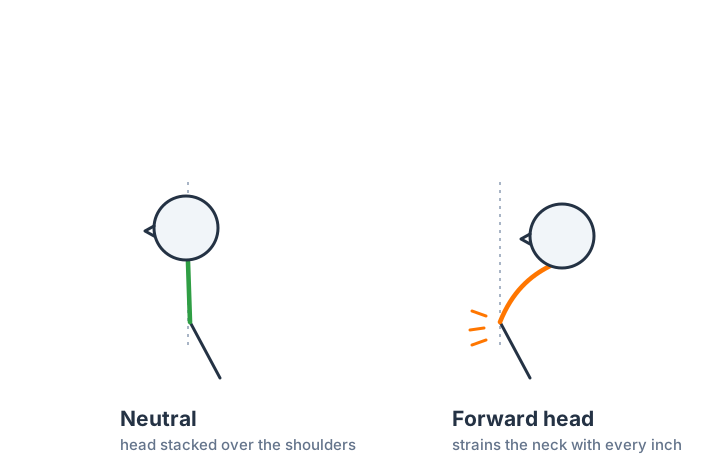
- Screens and phones. Hours spent looking down at a phone or laptop drive the forward-head strain known as tech neck — now one of the most common reasons teens develop neck pain.
- Growth spurts. During rapid growth, bones can outpace the muscles and tendons keeping up with them, leaving a teen feeling tight, gangly, and prone to strain as their coordination catches up.
Put those together and you get the familiar teen picture: rounded shoulders, a head that drifts forward, an achy neck and upper back, and posture that a parent can't help but nag about. Most of it is mechanical, posture-driven strain — exactly the kind that responds well to gentle care and better daily habits.
How Gentle Care Supports Active Teens
For a teen, gentle chiropractic care tends to help in a few practical, musculoskeletal ways:
- Easing neck and back strain. Restoring comfortable motion to stiff joints and calming the tight muscles that sports, backpacks, and screens leave behind — often alongside soft-tissue and massage therapy for the tight spots.
- Supporting posture as they grow. Helping counter the forward-head, rounded posture that builds from phones and study, and coaching the habits that keep it from settling in. For neck strain rooted up near the base of the skull, that work overlaps with our upper cervical care.
- Supporting active and sporty teens. Helping a teen athlete move comfortably and recover from the ordinary strain of training. For teens whose sport is hard on the feet and lower body, custom orthotics sometimes play a supporting role too. Broader athletic aches fit our sports injuries care.
An honest note: these are comfort-, movement-, and posture-oriented benefits. Gentle care helps a teen feel and move better and build healthier habits — it isn't a treatment for illness, and it isn't a shortcut around a genuine injury, which should always be properly evaluated. Within that scope, though, the payoff for an active teen is real and worthwhile.
What a Teen Visit Looks Like
A teen visit is straightforward and respectful of your teen — old enough to be part of the conversation about their own body. At Thrive Chiropractic in Troy, MI, Dr. Rubinstein starts by hearing how things feel: which sports they play, how they're carrying their bag, how much screen time fills their day, where the aches sit, and whether a recent growth spurt has left them feeling tight.
From there, the hands-on assessment usually includes:
- A posture check — noting how far the head sits forward, how the shoulders and upper back are carried, and how it all lines up
- Range-of-motion testing — watching how freely and comfortably the neck, back, and shoulders move
- Joint-by-joint palpation — finding the specific segments that have stiffened or the muscles that are tight and tender
- A quick screen for anything more — checking for signs that point beyond simple posture strain, especially if there's been a sports knock
Care then follows what the exam finds, tailored to your teen's stage of growth and comfort — typically some combination of adjustments adapted for a growing body, soft-tissue work for tight muscles, and practical posture and ergonomic coaching. Dr. Rubinstein is also watching for anything that isn't musculoskeletal; if something suggests a medical concern or a real injury, he'll say so plainly and point toward the right care.
Working Alongside Your Pediatrician
Gentle chiropractic care for a teen works best as one part of a team, with your teen's pediatrician firmly at the center. Their pediatrician tracks growth and development, handles illness and injury, and provides vaccines — none of which chiropractic care touches or replaces. Gentle care stays in its lane: musculoskeletal comfort and posture.
Keeping the pediatrician informed about anything you're doing, chiropractic included, keeps everyone working from the same picture of your teen — which matters especially for a competitive athlete. And it runs both ways: if a gentle exam turns up something that belongs in medical hands, that's a cue to loop the pediatrician in, not to push through it.
Everyday Habits That Help
A lot of what keeps a teen's neck and back comfortable comes down to daily habits they can actually own:
- Raise the screen. Prop up laptops, lift the monitor, and hold the phone higher instead of dropping the head — the biggest single win for teen neck strain.
- Wear the backpack right. Both shoulder straps, snug against the back, and packed light — heaviest items closest to the spine, and cleared out regularly so it never becomes a boulder.
- Take movement breaks. During long study or gaming sessions, a 30-second reset every half hour — look up, roll the shoulders back, gently draw the chin in — keeps strain from stacking up.
- Warm up and cool down for sport. Easing into and out of training helps a fast-growing body handle the load and recover more comfortably.
- Prioritize sleep. Growing bodies genuinely need it, and rest is when muscles recover from the day's demands.
Because every teen is different — and growth stages vary — it's always a good idea to run new exercise or training changes past their pediatrician, especially if there's a health consideration or a nagging injury.
When to See a Chiropractor
If your teen has neck or back stiffness that keeps coming back, posture that's visibly slumping, aches tied to sport, backpacks, or screens, or tightness that's cropped up during a growth spurt, a gentle evaluation is reasonable — and a good moment to mention it to their pediatrician too.
Some things, though, are never a "walk it off" and never a chiropractic matter. They call for a pediatrician, urgent care, or 911 right away.
When gentle, musculoskeletal support for comfort and posture is what your teen needs — and their pediatrician is in the loop — you're welcome to schedule a visit, and Dr. Rubinstein will tailor care to their stage of growth and activity. You can also read more about teens, kids, and tech neck and browse the wider Pediatric Care library.
Kids & Chiropractic: A Parent's Guide (PDF)A one-page parent's guide: how gentle pediatric care works alongside your pediatrician, and the signs to get your child checked.PDFThis article is for general education and is not a substitute for professional medical advice, diagnosis, or treatment. Always consult a qualified healthcare provider about your specific situation.
Frequently Asked Questions
Is chiropractic care safe for teenagers?
Yes, chiropractic care is well suited to teens, with technique adapted for a still-growing body. At Thrive, Dr. Rubinstein tailors care to your teen's stage of growth, activity level, and comfort. It focuses on musculoskeletal comfort and posture and works alongside your teen's pediatrician, who stays their primary medical provider.
Can chiropractic care help my teen athlete?
It can support the musculoskeletal side of an active teen's life — easing the neck, back, and muscle stiffness that come with training and helping them move comfortably. It supports sports participation and recovery from the everyday strain of being active; it isn't a cure-all, and a specific sports injury should always be evaluated properly. You can read more on our sports injuries page.
My teen has terrible posture from their phone — can this help?
Screens and phones drive a lot of teen neck and upper-back strain, often called tech neck. Gentle chiropractic care can ease that strain and restore comfortable motion, and just as importantly it comes with practical coaching on screen height, backpacks, and desk setup so the posture habits improve too.
Does the adjustment hurt, and is it different for a teen?
Care is adapted to your teen's size and stage of growth, and most teens find it comfortable. Techniques are chosen for a still-developing body, and Dr. Rubinstein explains each step so your teen knows what to expect. If your teen prefers lighter techniques, that's easily accommodated.
Should my teen's pediatrician be involved?
Yes, it's a good idea to keep them informed. Your teen's pediatrician is their primary medical provider, and looping them in on anything you're doing — gentle chiropractic care included — keeps everyone on the same page. Gentle care complements medical care; it never replaces it or any recommended treatment or vaccines.
Ready to get evaluated at Thrive Chiropractic?
Dr. Rubinstein will assess what’s really going on and build a care plan tailored to you. Reach out and we’ll get you scheduled.
2133 Crooks Road | Troy MI 48084