
Posture & Backpack Safety for Kids: A Parent's Guide
A heavy or badly worn backpack and long hours hunched over homework can leave a growing child with neck, shoulder, and back stiffness. Here's how to get backpack weight and fit right, set up homework and desk posture that supports a growing spine, and how gentle, supportive chiropractic care at Thrive Chiropractic in Troy, MI helps with the comfort and posture side — always alongside your pediatrician.
Why Posture and Backpacks Matter for a Growing Spine
Between a backpack loaded with books and long hours bent over homework and screens, a school-age child's spine carries a lot of daily posture demands. None of it is usually dramatic — but it adds up, and because kids are still growing, the postures they repeat most are the ones their bodies get used to.
A backpack is the clearest example. When it's the right weight and worn on both shoulders, snug against the back, the load sits close to the body and the spine carries it efficiently. Sling that same pack over one shoulder, or stuff it too full, and your child's body compensates — leaning, hiking one shoulder, or jutting the head forward to stay balanced. Hold those compensations day after day and they become the posture your child defaults to, which is a common source of neck, shoulder, and upper back pain and stiffness.
The reassuring part is that almost all of this is about habits and setup, not about anything being wrong with your child's spine. Get the backpack and the homework station right, and you remove most of the strain at the source. You can see how this fits into the bigger picture of children's spinal health on our pediatric care page.
Getting Backpack Weight and Fit Right
Backpacks are where small changes pay off the most, and none of them are complicated:
- Watch the weight. A common guideline is to keep a loaded pack to roughly 10–15% of your child's body weight. If your child leans forward to walk, struggles to get the pack on, or complains after carrying it, lighten the load and clear out what isn't needed that day.
- Use both straps, snug. Both shoulder straps, tightened so the pack sits high and close to the back — not sagging down by the hips — spread the load evenly. A chest or waist strap, if the pack has one, helps even more.
- Pack heaviest items closest to the back. Books and the laptop go against the spine; lighter things go toward the outside. That keeps the weight from pulling your child backward.
- Pick the right size pack. The backpack itself shouldn't be wider than your child's torso or hang far below the waist — an oversized pack invites overpacking and sits poorly.
- Consider lightening the daily load. Leaving unneeded books at home or in a locker, or using a rolling bag for especially heavy days, takes pressure off entirely.
Desk and Homework Posture
Homework and screen time ask a growing spine to hold still, and how your child is set up makes a real difference. The goal isn't a rigid, ramrod posture — it's a supported, comfortable one that's easy to maintain:
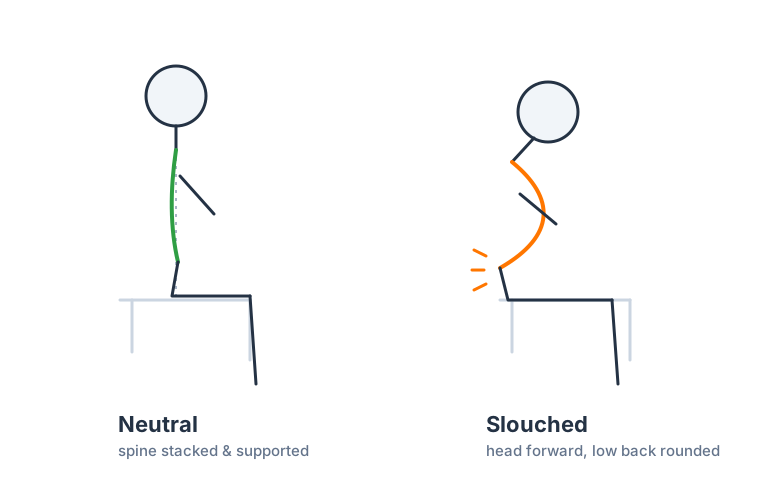
- Feet flat, back supported. A chair that lets the feet rest flat on the floor (a footrest or box works if they dangle) with the hips pushed back in the seat keeps the low back supported instead of slumped.
- Work and screens near eye level. Propping a tablet or laptop on a stand, or raising a book, keeps your child from dropping the head down — the same head-forward strain we cover in kids and tech neck.
- Elbows and forearms supported at the desk, rather than reaching, eases shoulder tension.
- Movement beats any single position. No posture is meant to be held for an hour. A stretch-and-move break every 20–30 minutes resets the muscles and does more good than chasing a "perfect" position.
Building Good Posture Habits While Kids Grow
Why put this effort in during childhood? Because growing bodies settle into the positions they spend the most time in, so the habits your child builds now tend to travel with them. A child who learns to carry a balanced load, sit supported, and move often is practicing posture that serves them well — while a daily uneven-load or deep-slouch pattern gets reinforced hundreds of times.
That doesn't mean hovering or nagging. A few light-touch approaches work better than lectures:
- Model it yourself. Kids copy what they see, so your own screen and sitting posture teaches more than reminders do.
- Make it a cue, not a criticism. A quick, friendly "stack up" or a posture check-in lands better than "sit up straight" repeated all evening.
- Keep them moving. Active play, sports, and simply getting up regularly do more for a healthy spine than any single posture rule — general movement is one of the best things going for a growing back.
- Set up their spaces once, well. A good chair, a screen at the right height, and a well-fitted backpack make good posture the easy default instead of something to remember.
Where foot mechanics or a leg-length difference are throwing off how a child stands and carries a load, custom orthotics can sometimes help even things out as part of the bigger posture picture.
How Gentle Chiropractic Care Helps
When posture strain has already settled into stiffness or muscle tension — or when you'd simply like a professional look at how your child is carrying themselves — gentle chiropractic care can help with the musculoskeletal side. To be clear about what that means: care here is aimed at posture, muscle tension, comfort, and motion, not at treating any illness, and it works alongside your pediatrician. For children, everything is gentle and scaled to their size.
At Thrive Chiropractic in Troy, MI, care for a child with posture-related complaints is built around the exam and typically includes:
- A posture and movement assessment — how the shoulders, upper back, and neck are carrying, whether one side is loaded more than the other, and how freely the spine moves
- Gentle, low-force techniques to ease stiff, restricted areas and restore comfortable motion — nothing forceful, always scaled to a child
- Soft-tissue and light massage therapy to release the tight shoulder, neck, and upper-back muscles that an uneven load or a lot of slouching overworks
- Practical posture and backpack coaching for the whole family — the weight, fit, and setup habits above, tailored to your child's routine
Throughout, the aim is honest and modest: a more comfortable, better-moving back and posture habits that support your child as they grow — complementing your pediatrician's care, not replacing it. If you're weighing whether care is right for your child, our guide to whether chiropractic is safe for children walks through it, and older kids have their own considerations in chiropractic for teens.
When to See a Chiropractor
Occasional stiffness after a heavy school day is normal. It's worth getting your child evaluated when you notice neck, shoulder, or back stiffness that keeps coming back, a posture that seems to be leaning or rounding more over time, or complaints that travel with a heavy backpack or long homework sessions.
A visit is also a good idea if you'd simply like guidance — a professional look at your child's posture, backpack, and setup, plus a few tailored habits, can head off bigger issues as they grow. When you're ready, you can schedule a visit and Dr. Rubinstein will keep everything gentle and age-appropriate. If you've noticed any asymmetry in your child's back or shoulders, our guide to scoliosis screening in children and teens covers what that can and can't mean.
When to Seek Care Right Away
Posture and backpack strain is a comfort issue, not an emergency. But some symptoms in a child point to something that needs prompt medical attention, and those go to your pediatrician or emergency care rather than a wait-and-see approach.
Short of those warning signs, the aches that come with backpacks and homework posture are very manageable. A well-fitted pack, a supportive homework setup, regular movement, and gentle, supportive care — alongside your pediatrician — go a long way. You can also explore the wider Pediatric Care library and our Back Pain guides for related reading.
Kids & Chiropractic: A Parent's Guide (PDF)A one-page parent's guide: how gentle pediatric care works alongside your pediatrician, and the signs to get your child checked.PDFThis article is for general education and is not a substitute for professional medical advice, diagnosis, or treatment. Always consult a qualified healthcare provider about your specific situation.
Frequently Asked Questions
How heavy should my child's backpack be?
A widely used rule of thumb is to keep a loaded backpack to somewhere around 10 to 15 percent of your child's body weight — so a 60-pound child would carry no more than roughly 6 to 9 pounds. Beyond weight, how it's worn matters just as much: both shoulder straps, snug against the back, with the heaviest items packed closest to the spine. If your child leans forward to walk under the load or struggles to get the pack on, it's too heavy, and it's worth clearing out what isn't needed that day.
Is it bad for kids to wear a backpack on one shoulder?
It's not great as a habit. Slinging a pack over one shoulder loads that side unevenly, which pulls the posture off balance and makes the muscles on one side work harder — a common source of shoulder and neck tightness. It won't cause lasting harm from an occasional day, but for daily use, both straps snug against the back spread the load evenly and are much easier on a growing spine.
Can a heavy backpack cause my child lasting back problems?
For most kids, a heavy or badly worn pack causes temporary aches and posture strain rather than lasting structural problems — and those aches ease once the weight and fit are sorted out. The reason to take it seriously anyway is that posture habits set young tend to stick, and a child carrying an uneven load every day is repeating that pattern hundreds of times. If your child has back pain that's persistent, severe, or comes with numbness, tingling, or weakness, have your pediatrician evaluate it rather than assuming it's just the backpack.
What's the best homework posture for a child?
The simple version: a chair that lets the feet rest flat on the floor, the back supported rather than slumped, the work or screen up near eye level, and the hips pushed back in the seat rather than perched on the edge. Just as important is movement — no posture is meant to be held for an hour straight, so a stretch-and-move break every 20 to 30 minutes does more good than any single 'perfect' position.
How does chiropractic care fit in with backpacks and posture?
Gentle chiropractic care can help with the musculoskeletal side of posture strain — easing the neck, shoulder, and back stiffness and muscle tension that an uneven load or a lot of slouching creates, and supporting better posture habits. At Thrive, it's kept gentle and age-appropriate for children, and it's aimed at comfort and posture, not at treating any illness. It works alongside your pediatrician, who remains your first stop for your child's overall health.
Ready to get evaluated at Thrive Chiropractic?
Dr. Rubinstein will assess what’s really going on and build a care plan tailored to you. Reach out and we’ll get you scheduled.
2133 Crooks Road | Troy MI 48084