
Neck Pain From Desk Work: Causes, Symptoms & How to Fix It
If your neck aches by the end of a workday at your desk, your posture and workstation are usually the cause — not a sudden injury. Here's what drives desk-related neck pain, how it's evaluated, how chiropractic care at Thrive Chiropractic in Troy, MI helps, and the ergonomic changes that keep it from coming back.
What Is Neck Pain From Desk Work?
Neck pain from desk work is the stiffness and aching that builds up over a workday spent at a computer. It usually feels fine in the morning and worsens as the hours pass, because your neck spends that whole time holding a posture it was never designed to sustain. By mid-afternoon the muscles that have been quietly straining all day finally start to complain — and the pain often lingers into the evening.
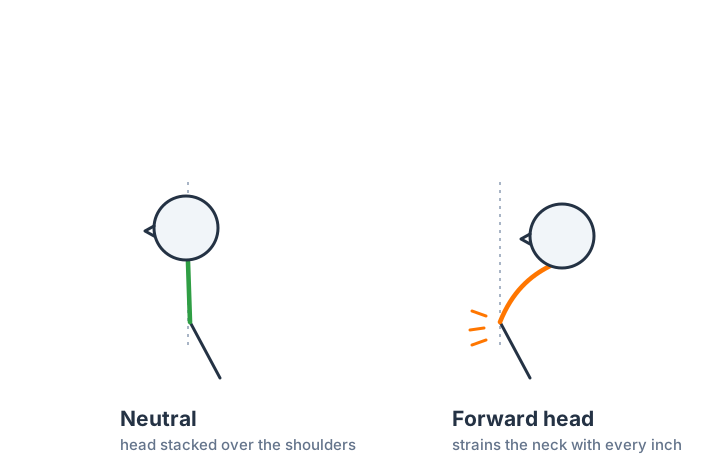
The mechanics are simple. When you sit at a desk, it's easy to drift into a head-forward, shoulders-rounded position — leaning toward the screen, chin poking out. Balanced squarely over your shoulders, your head is a manageable load your neck handles effortlessly. But it's a lever: the farther forward it drifts, the harder the muscles down the back of your neck and across your upper back have to pull just to keep it from dropping. Hold that off-balance position for eight hours a day, five days a week, and the low-grade strain compounds into persistent neck pain.
This is closely related to two patterns Dr. Rubinstein sees constantly: tech neck, the strain from looking down at devices, and forward head posture, the structural habit your body settles into once that posture becomes your default. Desk work is often where all three take root together.
What Causes Desk-Related Neck Pain?
Desk-related neck pain rarely traces back to a single moment. It builds from holding the same seated position all day at a workstation that isn't set up for your body. The most common contributors are:
- A monitor that's too low, pulling your head and chin forward and down all day — the single most common culprit.
- A chair without support, so you slump and round your upper back instead of sitting tall.
- A keyboard or mouse placed too far away, making you reach and hunch your shoulders forward.
- Long stretches without breaks, so your neck muscles never get a chance to reset and recover.
- Laptop-only setups, which force a compromise: either the screen is too low or your hands are too high — you can't fix both at once without add-ons.
It also feeds on itself. Sit hunched and head-forward for enough hours and the muscles and joints of your neck gradually adapt to that pattern, until good posture takes conscious effort and slouching feels like the default. That's how a setup problem quietly becomes a posture problem.
Common Symptoms
Neck pain from desk work tends to show up in familiar ways:
- Aching or stiffness in the neck and between the shoulder blades, worst late in the day
- Tight, tender upper shoulders and traps that feel like knots
- Reduced range of motion — harder to turn or tilt your head fully
- Tension headaches that start at the base of the skull and creep up
- A visible forward-head or rounded posture that others may notice
The tell-tale rhythm is that it tracks your workday: better in the morning, worse by evening, and often easier on weekends. Over months and years, that repeated daily load can contribute to nerve irritation and premature wear in the joints of the neck — which is why it's worth addressing the pattern rather than just riding it out. The tension headaches, in particular, can become cervicogenic headaches — head pain that actually originates from the strained joints at the top of the neck.
Who's Most at Risk?
Anyone who works at a computer can develop it, but it's most common in:
- Office and remote workers on screens most of the day
- People with poorly set-up or improvised home workstations (kitchen tables, couches, and laptops on laps are frequent offenders)
- Anyone who works long hours without movement breaks
- People who already have neck stiffness or a prior neck injury
- Those who also spend off-hours looking down at phones and tablets, giving the neck no real break from the forward-head position
How Desk-Related Neck Pain Is Evaluated
Because "neck pain from desk work" describes a pattern rather than a single diagnosis, a good evaluation is about pinpointing exactly where the strain is landing and ruling out anything more involved. At Thrive Chiropractic, Dr. Rubinstein starts by listening: when the pain shows up, how it tracks with your workday, what your workstation looks like, and whether it ever radiates or comes with headaches.
From there, a hands-on exam checks how your neck moves, which segments are stiff or restricted, and where the surrounding muscles are tight or tender. He also looks at your standing and seated posture — how far your head sits forward, how your shoulders carry — since that's usually the engine behind the symptoms. If anything in your history points to nerve involvement, such as numbness or arm symptoms, he screens for it directly and can order or refer for imaging when it's warranted. The goal is a clear picture of why your neck hurts, so the plan targets the cause rather than chasing the ache.
What to Expect at Thrive Chiropractic
Once Dr. Rubinstein understands what your workday is doing to your neck, care is tailored to you. For desk-related neck pain it often combines:
- Chiropractic adjustments to restore motion to restricted neck joints and relieve the built-up tension
- Work to help rebuild the neck's natural curve and gradually correct the forward-head posture behind the pain
- Soft-tissue and massage therapy to release the tight upper-back and shoulder muscles that carry the day's load
- Upper cervical care when the top of the neck is involved and headaches come along with the stiffness
- Posture and ergonomic coaching so the strain doesn't rebuild every afternoon
When desk strain has been layered on top of an existing disc or nerve issue, spinal decompression may be part of the conversation too. The goal isn't just to quiet the ache — it's to correct the posture and workstation habits driving it, so relief actually holds.
How to Set Up Your Desk to Prevent Neck Pain
A few workstation changes can dramatically reduce desk-related neck pain — and they're the difference between short-term relief and a fix that lasts.
Aim for these:
- Raise your monitor to eye level so the top of the screen is at or just below your eyes and you're looking straight ahead, not down. A stack of books or a monitor riser works fine.
- Sit back into your chair with your low back supported and shoulders relaxed, not hunched toward the screen.
- Keep your keyboard and mouse close so your elbows stay near your sides and your forearms rest roughly level, instead of reaching forward.
- Add an external monitor or keyboard if you work on a laptop, so the screen and your hands can both sit where they belong.
When to See a Chiropractor
A little end-of-day stiffness that clears overnight is normal. It's worth getting evaluated when you notice:
- Neck pain or headaches that keep coming back through the workweek
- Stiffness that doesn't ease with rest or stretching
- Pain that's starting to affect your sleep or concentration
- Posture changes that friends, family, or coworkers have pointed out
If your workstation is behind the pain, the fixes above will help — but once the strain has built into stiff joints and altered posture, self-care alone usually isn't enough to fully undo it. That's where hands-on care makes the difference. When you're ready, you can schedule a visit and Dr. Rubinstein will build a plan around your specific workday.
Neck Pain Relief Guide (PDF)A one-page take-home guide: simple steps that ease neck pain, what's usually behind it, and the warning signs that need a doctor.PDFThis article is for general education and is not a substitute for professional medical advice, diagnosis, or treatment. Always consult a qualified healthcare provider about your specific situation.
Frequently Asked Questions
Why does my neck hurt after sitting at a desk all day?
Long hours at a desk usually pull your head forward and round your shoulders. Your neck muscles have to hold that off-balance posture the entire day, and by afternoon they're fatigued and tight — which you feel as aching and stiffness.
How can I stop neck pain at work?
Raise your monitor to eye level, sit back in your chair with support, and take a short movement break every 30 minutes to reset your posture. Those changes remove the strain that builds up over a workday. Chiropractic care helps by restoring motion the strain has already taken away.
Can a chiropractor help with neck pain from computer work?
Yes. Chiropractic care restores normal motion to stiff neck joints, relieves the muscle tension desk work creates, and addresses the forward-head posture behind it. Paired with ergonomic coaching, it treats both the symptoms and the cause. Dr. Rubinstein will build a plan around your specific workday.
How long does it take for desk-related neck pain to improve?
It depends on how long the pattern has been building and how quickly your workstation changes. Many people feel looser after the first few visits, but lasting relief comes from combining care with the ergonomic fixes — because if your desk keeps pulling your head forward, the strain simply rebuilds each day. Dr. Rubinstein will give you a realistic timeline after your exam.
Is it bad to work through neck pain at my desk?
Mild end-of-day stiffness that clears overnight is common and not a cause for alarm. But pain that keeps returning, doesn't ease with rest, or comes with numbness, tingling, or pain spreading into an arm is your body asking for attention. Those signs are worth an evaluation rather than pushing through.
Ready to get evaluated at Thrive Chiropractic?
Dr. Rubinstein will assess what’s really going on and build a care plan tailored to you. Reach out and we’ll get you scheduled.
2133 Crooks Road | Troy MI 48084