
Neck Arthritis: Causes, Symptoms & How Chiropractic Helps
Neck arthritis is the gradual wear of the joints and discs in your neck that leads to stiffness, aching, and reduced motion as you age. Here's what's happening in the spine, how it's diagnosed, when it warrants imaging or referral, and how conservative chiropractic care at Thrive Chiropractic in Troy, MI helps you stay mobile.
What Is Neck Arthritis?
Neck arthritis — often called cervical spondylosis — is the gradual, age-related wear of the joints and discs in your neck. Over the years, the cushioning discs between your vertebrae lose some of their height and water content, and the small joints that let your neck turn and tilt can become roughened. In response, the body sometimes forms small bony ridges called bone spurs. This is a natural part of getting older, and it's one of the most common findings on neck imaging in adults.
The most important thing to understand up front is that arthritis showing up on an X-ray doesn't automatically mean you'll have pain. A great many people have age-related changes in their neck and feel perfectly fine. When neck pain does show up, it's usually because the worn joints have become stiff, inflamed, or have started to crowd the space that nearby nerves pass through. In other words, arthritis is best thought of as a description of wear, not a diagnosis of doom — and the goal of care is to keep that wear from limiting how you live.
What's Happening in Your Neck
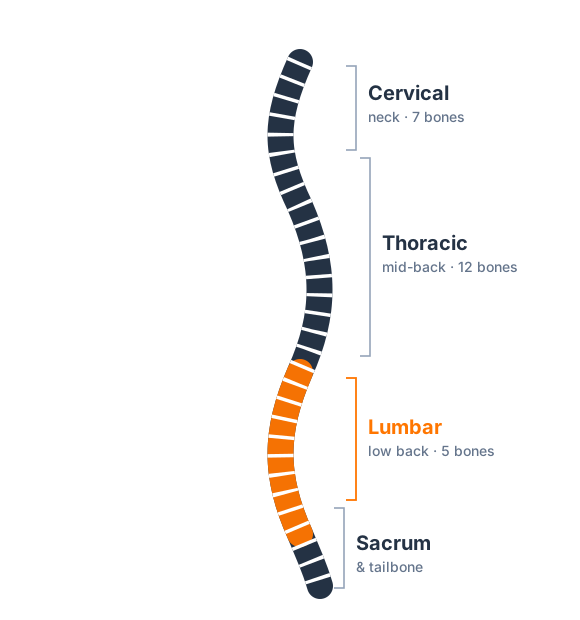
To understand why an arthritic neck feels the way it does, it helps to picture how the neck is built. Seven vertebrae stack to form the cervical spine, each separated by a shock-absorbing disc. At the back of each level, two small facet joints guide and limit motion so your head can turn, nod, and tilt smoothly. Threaded through it all, the spinal cord runs down a central canal, and at every level a pair of nerve roots branch off and exit through small side openings on their way to the shoulders, arms, and hands.
Over decades of ordinary use, several changes tend to happen together:
- The discs flatten. As they lose water and height, the vertebrae sit a little closer together, and the joints and ligaments have to take up the slack.
- The facet joints wear. Smooth cartilage roughens, much like it does in an arthritic knee or hip, which is what produces stiffness and that grinding or clicking sensation.
- Bone spurs form. The body lays down extra bone at the edges of worn joints and discs. These spurs are usually harmless, but if they grow into the side openings, they can narrow the space a nerve root needs.
- Ligaments thicken. The soft tissues supporting the spine can stiffen and bulk up over time, which occasionally reduces the room in the central canal.
Most of the time these changes cause nothing more than stiffness and aching. Pain tends to appear when a worn joint becomes inflamed, when muscles tighten to guard a stiff segment, or when a spur or bulging disc starts to crowd a nearby nerve — the same mechanism behind a pinched nerve in the neck. Occasionally the narrowing reaches the spinal cord itself; that less-common situation is what the red-flag warnings further down address.
Common Symptoms
Neck arthritis tends to come and go, with flare-ups that settle down again. You might notice:
- Stiffness and aching in the neck, often worse in the morning or after sitting still for a while
- Reduced range of motion — turning to check a blind spot or look over your shoulder feels harder than it used to
- A grinding, clicking, or crackling sensation when you move your neck
- Headaches that start at the base of the skull, a pattern shared with cervicogenic headaches
- Tingling, numbness, or radiating pain into the shoulders or arms if a worn joint or spur is crowding a nerve
Symptoms often ease with gentle movement through the day and worsen after long periods of holding your neck in one position. Many people find their neck is stiffest first thing in the morning and loosens up once they get going.
Who's Most at Risk?
Age-related neck changes are nearly universal given enough time, but symptoms are more common in:
- Older adults, since wear naturally accumulates over decades
- People with a history of neck trauma, such as a prior whiplash injury, which can speed up wear at the affected levels
- Desk and office workers whose posture loads the neck for hours at a time — the same forward-head strain behind tech neck
- People whose work or hobbies involve repetitive neck strain or heavy overhead activity
- Anyone with a family history of early arthritis, since some people simply inherit joints and discs that wear a little faster
None of these guarantee neck pain — they just make it more likely that the ordinary wear of aging will eventually announce itself.
How Neck Arthritis Is Evaluated
A good evaluation is about matching the story your neck tells to what an exam and, when needed, imaging actually show. At Thrive Chiropractic, Dr. Rubinstein starts with a careful history — when the stiffness started, what eases or aggravates it, whether it radiates, and whether you've had any injuries or prior neck problems.
The physical exam typically includes:
- Watching how your neck moves — which directions are limited, and which reproduce your symptoms
- Checking the muscles and joints by hand for tenderness, guarding, and restricted segments
- A neurological screen when there's any arm involvement — testing reflexes, grip and arm strength, and sensation to see whether a nerve root is irritated and, if so, which one
Imaging isn't automatic. For straightforward, gradual neck stiffness, the exam is often enough to guide care. X-rays can confirm and stage arthritic changes when the picture is unclear. Advanced imaging such as an MRI is reserved for specific reasons — persistent or progressive nerve symptoms, signs that the spinal cord may be involved, or pain that isn't behaving the way simple arthritis should. If those signs appear, Dr. Rubinstein will coordinate the appropriate imaging or a referral rather than pressing on with hands-on care alone. Knowing when not to treat conservatively is as important as knowing how.
What to Expect at Thrive Chiropractic
At Thrive Chiropractic in Troy, MI, care for neck arthritis is conservative, gentle, and matched to what your joints can comfortably handle. Because arthritis means the joints are more sensitive, the approach is never one-size-fits-all — it starts with the exam findings and adapts to how you respond. It typically combines:
- Gentle chiropractic adjustments or mobilization to restore motion to stiff segments, using techniques scaled to what your neck tolerates. For necks that do better with a lighter touch, low-force and instrument-assisted methods — including upper cervical care — are an option.
- Soft-tissue and massage therapy to ease the muscle tension and guarding that build up around stiff joints
- Posture and movement coaching to take load off the worn areas and reduce day-to-day strain
- Home stretches and activity guidance to keep the neck mobile between visits
Where worn joints or spurs are crowding a nerve, gentle spinal decompression may be used to reduce the load on the irritated nerve root. Throughout, the aim is honest and specific: a neck that moves more freely and feels more comfortable — not a promise to erase changes that took years to develop. If your case turns out to need medical or surgical input, you'll be told plainly and pointed in the right direction.
Caring for Your Neck at Home
Neck arthritis is something you manage rather than cure, and small daily habits make a real difference between visits.
A few more habits worth building in:
- Mind your posture. Raise screens to eye level and avoid long stretches with your head dropped forward. If you work at a desk, the ergonomic fixes in our guide to neck pain from desk work apply directly here.
- Use supportive sleep positions. A pillow that keeps your neck neutral — neither propped too high nor left too flat — can noticeably reduce morning stiffness. Our notes on neck pain while sleeping go into detail.
- Warmth before movement. A warm shower or heat pack before stretching can loosen a stiff neck and make gentle motion more comfortable.
- Stay consistent with care. Periodic adjustments and soft-tissue work help keep flare-ups from taking hold in the first place.
When to Seek Prompt or Emergency Care
Most neck arthritis is a slow, manageable condition — but a small set of warning signs suggests the worn structures may be pressing on a nerve root or the spinal cord itself (a situation called cervical myelopathy). These are not symptoms to wait out.
Short of those emergencies, it's also worth being evaluated — sooner rather than later — when neck stiffness keeps returning or lingers for weeks, when reduced motion starts to affect driving or daily tasks, when numbness or tingling appears in an arm or hand, or when pain is disrupting your sleep. Catching nerve involvement early gives conservative care the best chance to work.
When Surgery Is Considered
For the large majority of people with neck arthritis, surgery never enters the picture — the condition is managed with the kind of conservative care described above. Surgery becomes a consideration in a narrower set of situations, generally when worn discs, thickened ligaments, or bone spurs are meaningfully compressing a nerve root or the spinal cord and causing:
- Progressive weakness or muscle wasting in an arm or hand
- Signs of spinal-cord compression (the myelopathy red flags above), which can worsen over time if the pressure isn't relieved
- Severe, persistent nerve pain that hasn't responded to a fair course of conservative and medical care
Even then, surgery is a decision made carefully with a spine specialist, weighing how much the symptoms are affecting your life against what a procedure can realistically offer. If your case ever heads in that direction, Dr. Rubinstein will help you understand why and coordinate the right referral. Starting with conservative care loses you nothing — most people improve without ever needing that conversation.
Frequently Asked Questions
Neck arthritis raises a lot of understandable questions. A few of the ones we hear most — is it serious, can chiropractic help, will staying active make it worse, does the X-ray predict pain, and will you eventually need surgery — are answered in detail in the FAQ section on this page. If your question isn't covered there, the best next step is a conversation.
If you're dealing with a stiff, achy, or grinding neck and want a clear picture of what's going on, schedule a visit with Dr. Rubinstein at Thrive Chiropractic in Troy, MI. You'll get a careful evaluation, an honest explanation of what your neck needs, and a plan built around keeping you moving comfortably for years to come.
Neck Pain Relief Guide (PDF)A one-page take-home guide: simple steps that ease neck pain, what's usually behind it, and the warning signs that need a doctor.PDFThis article is for general education and is not a substitute for professional medical advice, diagnosis, or treatment. Always consult a qualified healthcare provider about your specific situation.
Frequently Asked Questions
Is neck arthritis serious?
For most people it's a manageable, gradual condition rather than a dangerous one. It's worth having it evaluated so care can be tailored to you, and so any nerve involvement — like tingling, arm weakness, or changes in hand coordination — is caught early.
Can chiropractic help arthritis in the neck?
Chiropractic care can't reverse existing wear, but gentle adjustments and soft-tissue work help restore motion to stiff joints, ease muscle tension, and keep the neck mobile. Dr. Rubinstein tailors the approach to what your joints can comfortably tolerate.
Will staying active make neck arthritis worse?
Usually the opposite. Gentle, regular movement helps arthritic joints stay lubricated and mobile, while prolonged stiffness tends to make them feel worse. Your chiropractor can guide you on which activities and stretches are safe for you.
Does arthritis on my X-ray mean I'll have neck pain?
Not necessarily. Age-related changes show up on the imaging of many people who feel perfectly fine, so the picture alone doesn't determine whether you'll hurt. What matters is how your symptoms, your exam, and any imaging line up together.
Will I eventually need surgery for neck arthritis?
Most people never do. The great majority of cervical spondylosis is managed well with conservative care. Surgery is generally reserved for the minority of cases where worn structures are compressing a nerve root or the spinal cord and causing progressive weakness or coordination problems that don't respond to non-surgical care.
Ready to get evaluated at Thrive Chiropractic?
Dr. Rubinstein will assess what’s really going on and build a care plan tailored to you. Reach out and we’ll get you scheduled.
2133 Crooks Road | Troy MI 48084