
Herniated Cervical Disc: Causes, Symptoms & How Chiropractic Helps
A herniated cervical disc is a neck disc whose soft inner material pushes out through its outer wall, sometimes pressing on a nearby nerve and causing pain, tingling, or numbness down the arm. Here's what's happening in the spine, how it's diagnosed, when imaging or surgery is warranted, and how conservative chiropractic care at Thrive Chiropractic in Troy, MI helps.
What Is a Herniated Cervical Disc?
Between each of the vertebrae in your neck sits a small disc — a cushion with a tough outer ring and a softer, gel-like center. A herniated cervical disc happens when some of that soft inner material pushes out through a weak spot or tear in the outer wall. You may also hear it called a "slipped" or "ruptured" disc, though the disc doesn't actually slip out of place — the term is a bit of a misnomer.
A herniation only tends to cause trouble when the displaced material presses on or inflames a nearby nerve root or, less commonly, crowds the spinal cord. It's worth knowing that disc bulges and herniations quite often show up on the imaging of people who have no pain at all — so what matters is how your disc, your nerves, and your symptoms line up, not the picture alone. Because it frequently overlaps with other neck pain conditions and with the broader family of disc problems, a careful exam helps sort out exactly what's driving your symptoms.
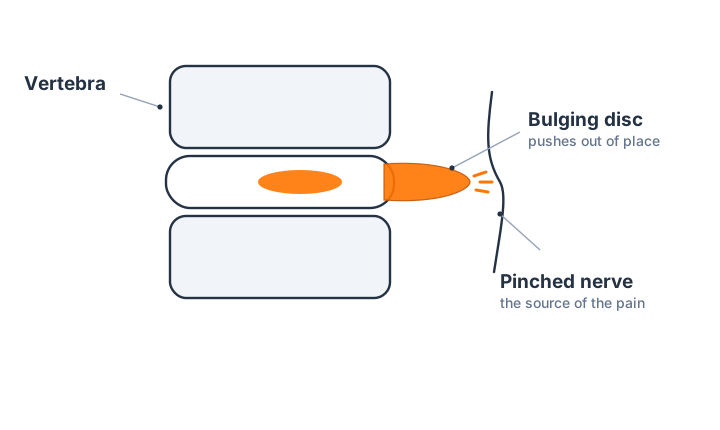
What's Happening in Your Neck
To understand a herniation, picture how the disc is built. Its tough outer ring — the annulus — is made of layered fibers, like the plies of a tire, and it contains a soft, pressurized core called the nucleus. Together they let the disc absorb load and let your neck bend and rotate. As the years pass, the outer ring can develop small tears, and the core loses some of its water content and resilience.
A herniation is what happens when the core pushes into or through a weakened spot in that outer ring. Depending on how far it goes, you'll hear different terms — from a mild bulge, to a protrusion, to a full extrusion where material breaks through the wall. What actually determines your symptoms is where it presses:
- Onto a nerve root. Most symptomatic cervical herniations press sideways onto a nerve root as it exits toward the arm — the same mechanism behind a pinched nerve in the neck. This is what sends pain, tingling, or numbness down a specific path in the arm.
- Into local tissue only. Some herniations irritate the disc and surrounding structures without reaching a nerve, producing mostly neck pain and spasm.
- Toward the spinal cord. Less commonly, a large central herniation crowds the cord itself. That's the situation the red-flag warnings below address.
Here's the reassuring part: a herniation isn't a static, permanent dent. The body treats the displaced material as something to clear away, and over weeks to months it's often gradually reabsorbed while the inflammation settles — which is why so many herniations improve without surgery.
Common Symptoms
Symptoms depend a great deal on whether the herniation is irritating a nerve. You might experience:
- Neck pain and stiffness, sometimes with muscle spasm
- Radiating pain that travels from the neck into the shoulder, arm, or hand
- Tingling or "pins and needles" in specific fingers
- Numbness in part of the arm or hand
- Weakness in the arm, or a weaker grip
- Symptoms that change with neck position — certain angles ease or worsen them
Some herniations cause mostly local neck pain, while others produce arm symptoms that are far more bothersome than the neck itself. Because the cervical nerves each serve a predictable map of the arm and hand, the pattern of which fingers tingle or which movements are weak often points to the specific level involved.
Who's Most at Risk?
A herniated cervical disc can affect anyone, but it's more common in:
- Adults roughly 30 to 60, when discs are worn enough to tear but still active and pressurized
- Athletes and those in physically demanding jobs, where sports injuries and heavy lifting load the neck
- People with a history of neck injury or a prior car accident — the sudden forces of whiplash can herniate a disc
- Desk workers with long-term forward-head posture, the same strain behind tech neck
- Anyone with existing disc or arthritis changes in the neck
Often it's a combination — a disc weakened over years finally gives way during an ordinary movement or a minor strain, which is why the "trigger" can seem surprisingly trivial.
How a Herniated Cervical Disc Is Evaluated
Because the location and the affected level shape both the symptoms and the plan, a careful evaluation is what makes targeted care possible. At Thrive Chiropractic, Dr. Rubinstein begins with a detailed history — how it started, where the pain and any tingling travel, what eases or aggravates them, and whether there's been an injury.
The physical exam typically includes:
- Neck motion testing, noting which directions reproduce or relieve your arm symptoms
- A neurological screen — checking reflexes, testing arm and grip strength, and mapping altered sensation to see whether a nerve is involved and which one
- Nerve-tension checks, gentle positioning maneuvers that help confirm nerve involvement and localize the level
Imaging isn't automatic. Many disc herniations are managed on the strength of the history and exam, with a trial of conservative care first. Imaging is reserved for specific reasons: symptoms that don't improve over a reasonable stretch, progressive weakness, or any sign the spinal cord may be involved. An MRI is the test that shows discs and nerve roots in detail when that picture is genuinely needed. If those situations arise, Dr. Rubinstein will coordinate the imaging or refer you appropriately rather than continue hands-on care alone.
What to Expect at Thrive Chiropractic
At Thrive Chiropractic in Troy, MI, care for a herniated cervical disc is conservative and tailored to your exam findings — the goal is to relieve the nerve pressure and help the disc settle, using the least invasive approach that works for you. Care often includes:
- Gentle chiropractic adjustments or mobilization to restore motion and reduce joint irritation, matched to what your neck tolerates. When a lighter touch is the better fit, low-force techniques and upper cervical care are an option.
- Spinal decompression to gently reduce pressure on the disc and the affected nerve, often a mainstay for disc-related nerve symptoms because it can create a little more room where the nerve is crowded
- Soft-tissue and massage therapy to relax the protective muscle spasm that builds up around an irritated segment
- Posture, ergonomic, and activity coaching to support healing and prevent re-injury
The plan is honest about what's realistic: many cervical herniations improve steadily over weeks to months as inflammation settles and the herniated material is reabsorbed, and you'll get a specific sense of your timeline after the exam. If your symptoms are worsening or your exam shows progressive weakness, that changes the plan — and Dr. Rubinstein will say so plainly and arrange the right medical or surgical referral.
Supporting Your Recovery at Home
A few habits can help your recovery alongside professional care.
A few more that tend to help:
- Avoid positions that flare your symptoms, often tilting or turning the head in one direction, especially early on.
- Set up ergonomic screens and seating so your head stays balanced over your shoulders; the tips in our guide to neck pain from desk work apply directly.
- Mind your sleep position, using a pillow that keeps your neck neutral rather than bent; our notes on neck pain while sleeping go further.
If your arm symptoms are getting stronger or spreading despite these steps, treat that as a signal to be re-evaluated promptly.
When to Seek Prompt or Emergency Care
Most cervical disc herniations, even the painful ones, are not dangerous and recover with conservative care. A small set of warning signs, though, suggests the herniation is pressing hard enough on a nerve root or the spinal cord to need prompt evaluation — these are not symptoms to wait out.
Short of those emergencies, it's still worth being evaluated when radiating pain, tingling, or numbness reaches your shoulder, arm, or hand; when neck pain doesn't ease within a couple of weeks or keeps recurring; or when symptoms interfere with sleep, work, or daily activities. Getting ahead of it gives conservative care the best chance to succeed.
When Surgery Is Considered
Most people with a herniated cervical disc never need surgery — the condition settles with the conservative care described above as inflammation resolves and the herniated material is reabsorbed. Surgery becomes a consideration in a narrower set of situations, generally when the herniation is compressing a nerve root or the spinal cord and causing:
- Progressive or significant weakness or muscle wasting in an arm or hand
- Signs of spinal-cord compression (the red flags above), which can worsen over time if the pressure isn't relieved
- Severe, persistent nerve pain that hasn't responded to a fair course of conservative and medical care
Even then, it's a decision made carefully with a spine specialist, weighing how much the symptoms are affecting your life against what a procedure can realistically offer. If your case heads that way, Dr. Rubinstein will explain why and coordinate the referral. For the majority of people, starting with conservative care resolves the problem without surgery ever entering the picture.
Frequently Asked Questions
A herniated cervical disc raises a lot of understandable questions — whether it can heal on its own, whether a chiropractor can treat it, whether you'll need surgery, how it differs from a bulging disc, and whether lifting or exercise will set it back. Those are answered in detail in the FAQ section on this page.
If you've got neck pain or symptoms traveling down your arm and want a clear picture of what's going on, schedule a visit with Dr. Rubinstein at Thrive Chiropractic in Troy, MI. You'll get a thorough exam, an honest read on whether a nerve is involved, and a conservative plan aimed at relieving the pressure and getting you comfortably back to normal.
Neck Pain Relief Guide (PDF)A one-page take-home guide: simple steps that ease neck pain, what's usually behind it, and the warning signs that need a doctor.PDFThis article is for general education and is not a substitute for professional medical advice, diagnosis, or treatment. Always consult a qualified healthcare provider about your specific situation.
Frequently Asked Questions
Can a herniated cervical disc heal on its own?
Many do improve over weeks to months with conservative care, as the herniated material is gradually reabsorbed and inflammation settles. A chiropractic exam helps confirm what's involved and guides care so you recover as smoothly as possible.
Can a chiropractor treat a herniated disc in the neck?
Yes, chiropractic care is a common conservative approach. Gentle techniques and spinal decompression aim to reduce pressure on the affected nerve and restore motion, with the plan always matched to your exam findings. If red-flag symptoms appear, Dr. Rubinstein will coordinate the right referral.
Do I need surgery for a herniated cervical disc?
Most people don't. The majority of cervical disc herniations respond to conservative care, and surgery is usually reserved for cases with progressive weakness, signs of spinal-cord pressure, or symptoms that don't improve. Starting with a thorough evaluation helps you understand your options.
Is a herniated disc the same as a bulging disc?
They're related but not identical. A bulging disc is one that pushes outward while its outer wall stays intact; a herniation means some of the soft inner material has actually pushed through a tear in that wall. Both can irritate a nearby nerve, and both are diagnosed by how your symptoms and exam line up with any imaging.
Will lifting or exercise make a herniated disc worse?
Heavy lifting with a strained neck or awkward form can aggravate a fresh herniation, so form and load matter early on. But gentle, pain-free movement supports healing better than complete rest, and most people return to normal activity as symptoms settle. Dr. Rubinstein can guide what's safe for your stage of recovery.
Ready to get evaluated at Thrive Chiropractic?
Dr. Rubinstein will assess what’s really going on and build a care plan tailored to you. Reach out and we’ll get you scheduled.
2133 Crooks Road | Troy MI 48084