
Forward Head Posture: Causes, Symptoms & How Chiropractic Helps
Forward head posture is when your head drifts ahead of your shoulders, straining your neck and upper back. Here's what causes it, how to recognize it, how it's assessed, and how chiropractic care at Thrive Chiropractic in Troy, MI helps you correct it.
What Is Forward Head Posture?
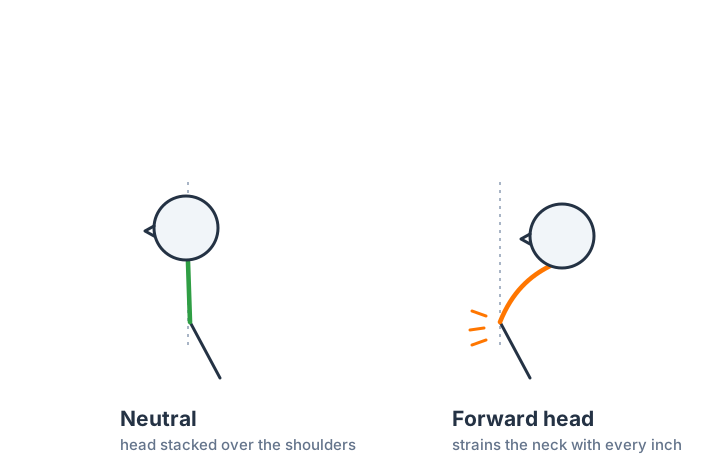
Forward head posture is when your head drifts forward of your shoulders instead of balancing directly over them. From the side, your ears sit ahead of your shoulders rather than stacked above them. It's one of the most common posture patterns we see, and it puts real, ongoing strain on your neck and upper back.
Your head weighs about 10 to 12 pounds when it's balanced over your shoulders. But your neck works like a lever, so the farther your head shifts forward, the harder your neck and upper-back muscles have to work just to hold it up. A head that's crept a couple of inches forward can feel, to the muscles supporting it, dramatically heavier than it truly is.
Balanced over your shoulders, that weight is easy to carry. Let the head drift forward and the effective load your neck muscles fight against climbs steeply — which is why a posture that looks minor can cause real, daily strain.
Over time, that constant effort leads to tightness, fatigue, and the aching neck pain that so many people live with.
What Causes Forward Head Posture?
Forward head posture builds up gradually. It's a shape your body settles into by repeating the same head-forward position day after day, until that position starts to feel like your normal. The most common contributors are:
- Looking down at phones and tablets for hours at a time
- Desk and computer work with a monitor set too low
- Slouching on couches and chairs without back support
- Weak upper-back muscles that let the shoulders round forward
- Long stretches without breaks, so the posture never resets
Posture is something the body learns. Spend enough hours with your head out over your shoulders and the muscles, joints, and even the natural curve of your neck gradually reshape around that position — the same mechanism behind tech neck, which is simply forward head posture driven by devices.
Common Symptoms
Forward head posture tends to show up as:
- Neck and upper-back stiffness, especially by the end of the day
- Tension headaches starting at the base of the skull
- Tight, tender muscles across the shoulders and traps
- A visibly rounded, head-forward look in photos or mirrors
- Reduced range of motion when turning or tilting your head
Over time, that ongoing strain can set the stage for nerve irritation, disc problems, and earlier wear in the neck joints.
Who's Most at Risk?
Anyone can develop forward head posture, but it's most common in:
- Desk and remote workers on screens most of the day
- Students and teens, who average many hours of daily device time
- Older adults, whose posture can gradually settle forward over the years
- Anyone with weak upper-back muscles or a prior neck injury
How Forward Head Posture Is Assessed
Forward head posture is easy to spot but worth measuring properly, because how far the head has shifted — and how much the neck has stiffened around it — shapes the plan. At Thrive Chiropractic, Dr. Rubinstein's exam typically includes:
- A side-view posture assessment, comparing where your ears sit relative to your shoulders and how far the head has translated forward
- Range-of-motion testing to see how freely you can turn, tilt, and extend your neck, and where movement catches or pulls
- Hands-on palpation of the neck and upper back to locate the joints that have lost motion and the muscles carrying the most tension
- A nerve screen if you've noticed any numbness, tingling, or arm symptoms, to be sure nothing more than posture strain is involved
Together, these findings turn "your head sits forward" into a specific picture: which segments are restricted, how the posture has adapted, and what to prioritize first.
What to Expect at Thrive Chiropractic
At Thrive Chiropractic in Troy, MI, care follows from what the exam finds. It's tailored to you and typically combines:
- Chiropractic adjustments to restore motion to restricted neck joints
- Work to help rebuild the neck's natural curve and pull the head back over the shoulders
- Soft-tissue and massage therapy to release tight upper-back and shoulder muscles
- Posture and ergonomic coaching so the correction actually holds
The goal isn't just to relieve the tension — it's to retrain the posture that's creating it. Here's the shift that retraining is working toward:
When symptoms center high up near the base of the skull, this work often draws on our upper cervical care, which uses gentle, precise techniques for that sensitive region.
How to Correct Forward Head Posture
You can make real progress on forward head posture with a few consistent habits:
- Raise your screens to eye level so you're not dropping your head to look down.
- Practice chin tucks — gently draw your chin straight back to stack your head over your shoulders, holding for a few seconds at a time.
- Strengthen your upper back so those muscles help hold your shoulders back.
- Take a posture reset every 30 minutes — sit tall, roll your shoulders back, and lift your gaze.
When to See a Chiropractor
Feeling stiff after a long day is normal. It's worth getting evaluated when you notice neck pain or headaches that keep coming back, stiffness that doesn't ease with rest or stretching, or posture changes that friends and family have pointed out.
Radiating symptoms in particular are a reason to be seen sooner rather than later. When you're ready, you can schedule a visit and Dr. Rubinstein will build a plan around where your posture is today.
Neck Pain Relief Guide (PDF)A one-page take-home guide: simple steps that ease neck pain, what's usually behind it, and the warning signs that need a doctor.PDFThis article is for general education and is not a substitute for professional medical advice, diagnosis, or treatment. Always consult a qualified healthcare provider about your specific situation.
Frequently Asked Questions
Can forward head posture be corrected?
Yes. Caught early, forward head posture responds well to chiropractic care, posture retraining, and targeted exercises. Long-standing cases take longer to improve because the muscles and joints have adapted to the position, but they still respond with consistent care.
Is forward head posture the same as tech neck?
They're closely related. Forward head posture describes the position itself — your head sitting ahead of your shoulders — while tech neck is the term for that same posture and its symptoms when they come specifically from looking down at devices.
How long does it take to fix?
Many patients feel less tension within the first few weeks, but retraining posture and rebuilding the neck's natural curve is a longer process measured in months. After your first exam, Dr. Rubinstein will give you a realistic timeline based on your situation.
Can I fix forward head posture on my own with exercises?
Exercises like chin tucks and upper-back strengthening are an important part of the fix, and they help. But when joints have already stiffened into the posture, exercises alone often stall. Chiropractic care restores the lost motion so your posture work can actually take hold.
Does forward head posture cause headaches?
It commonly does. Holding the head forward keeps the muscles at the base of the skull under constant tension, and that strain frequently refers upward as a tension headache. Correcting the posture usually eases those headaches along with the neck strain.
Ready to get evaluated at Thrive Chiropractic?
Dr. Rubinstein will assess what’s really going on and build a care plan tailored to you. Reach out and we’ll get you scheduled.
2133 Crooks Road | Troy MI 48084