
Vestibular Migraine: When Migraine Causes Dizziness & Vertigo
Vestibular migraine is a form of migraine that causes dizziness and vertigo — sometimes with little or no head pain. This guide explains what it feels like, how to tell it apart from other causes of vertigo, how the neck and balance system connect, and how gentle chiropractic care at Thrive Chiropractic in Troy, MI can support the neck-related piece of the picture.
What Is Vestibular Migraine?
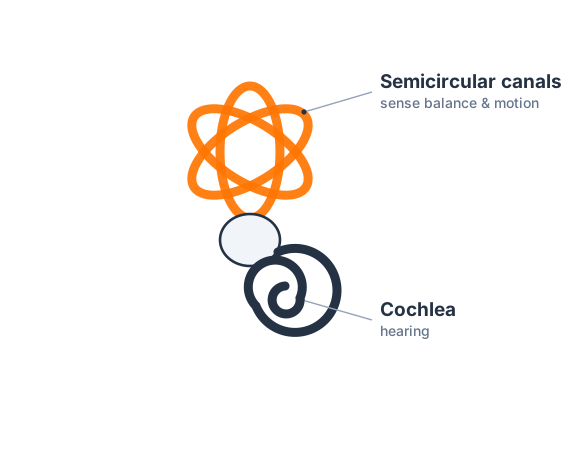
Vestibular migraine is a form of migraine where the leading symptom isn't head pain — it's dizziness or vertigo. If you've ever felt the room spinning, a swaying or rocking sensation, or a deep off-balance fogginess that seems to come and go, and you also have a history of migraines, vestibular migraine may be the thread that ties it together. "Vestibular" refers to your balance system, and in this condition the migraine process disrupts that system rather than only causing a throbbing head.
What surprises many people is that the head pain can be mild or even absent during an episode. You might get the dizziness with light and sound sensitivity but no significant headache at all. Because of that, vestibular migraine is often missed for years and mistaken for an inner-ear problem. It sits within the broader world of migraines, and it overlaps closely with the symptom of vertigo, which has several possible causes worth sorting out.
What It Feels Like
Vestibular migraine episodes vary from person to person, but common experiences include:
- Vertigo — a spinning sensation, or a feeling that the room is moving around you
- Unsteadiness or imbalance, like walking on a boat or a floor that won't hold still
- Dizziness or lightheadedness that isn't clearly a spin but leaves you off-kilter
- Sensitivity to motion, so busy visual scenes, scrolling, or head movement make it worse
- Light and sound sensitivity, nausea, or a foggy, hard-to-concentrate feeling
- Head pain that may be mild, one-sided, or entirely absent during the episode
Episodes can last minutes to hours, and sometimes longer. The mix of symptoms — and the fact that head pain isn't always the headline — is a big part of why this condition is so easy to overlook.
How It Differs From Other Causes of Vertigo
Vertigo is a symptom, not a diagnosis, and several conditions can produce it. Part of what makes vestibular migraine tricky is that it can imitate inner-ear problems. A few contrasts that help:
- Versus BPPV (positional vertigo) — BPPV vertigo is usually brief and triggered by specific head positions, like rolling over in bed, while vestibular migraine tends to last longer and travels with migraine features like light sensitivity.
- Versus inner-ear conditions — some inner-ear disorders bring hearing changes or ringing alongside the dizziness; vestibular migraine more often carries the classic migraine company of light and sound sensitivity and nausea.
- Versus a neck-driven off-balance feeling — a stiff, irritated upper neck can add a foggy, unsteady quality of its own, which is why the neck deserves a look as part of the whole picture.
Because these overlap and can even coexist, a careful history and exam matter before deciding what will actually help. Sorting migraine from the alternatives is what makes care targeted rather than guesswork.
How the Neck and Balance System Connect
Your sense of balance draws on three inputs working together: your inner ears, your eyes, and the position sensors packed into your upper neck. That upper-neck region feeds your brain a constant stream of information about where your head is in space. When those joints and muscles are stiff or irritated, the signal they send can become noisy — and a noisy balance signal can leave you feeling foggy, swaying, or unsteady.
This doesn't mean the neck causes vestibular migraine — migraine is its own neurological condition. But the neck can be a contributing layer that makes the off-balance feeling worse, and it's a layer that responds to hands-on care. This is the same region our upper cervical care is built around, and it's why neck-related dizziness is such a recurring theme in balance complaints. If your symptoms began after a collision, an old neck injury may be part of the story — our page on neck pain explains how that region can stay irritated long after an injury.
How It's Evaluated at Thrive
Because so many things can cause dizziness, the evaluation is what keeps care focused. When you come in, Dr. Rubinstein starts with a detailed history: what your episodes feel like, how long they last, whether light, sound, or motion make them worse, how they relate to any migraine pattern you have, and whether neck stiffness travels with them.
From there, the exam includes:
- A screen for red flags — ruling out signs that point to an urgent medical cause rather than something to manage in the office
- Upper-neck assessment — checking range of motion and gently palpating the upper cervical joints and muscles for restriction and tenderness
- Posture and movement checks — since a head-forward posture loads the very region that feeds your balance signal
- Coordinating with your medical team — vestibular migraine is a medical diagnosis, so when the picture points that way, we work alongside the clinicians managing it
What to Expect From Care at Thrive Chiropractic
At Thrive Chiropractic in Troy, MI, our role is to address the neck-related piece of the picture, not to replace the migraine management your medical team provides. When the exam points to an upper-neck contribution, care may include:
- Gentle, specific chiropractic adjustments to restore motion to stiff upper-neck joints, an area addressed through upper cervical care
- Soft-tissue and massage therapy to release tension at the base of the skull and across the upper back
- Posture and ergonomic coaching to reduce the daily strain on the region that feeds your balance signal
- A tailored plan based on what your exam reveals — and clear communication with the clinicians managing your migraines
The goal is honest and specific: ease the neck component that may be adding to your off-balance episodes, so it can work in concert with the rest of your care.
How to Ease and Prevent Episodes
Vestibular migraine often responds to the same steady habits that help migraine generally, plus a little extra attention to the balance system:
- Keep a consistent routine. Regular sleep, meals, and hydration help stabilize the migraine process that drives episodes.
- Notice your triggers. Certain foods, skipped meals, stress, and poor sleep are common — the strategies in our migraine triggers guide help you spot and manage them.
- Ease motion sensitivity gently. During busy visual moments — scrolling, crowded spaces, fast head turns — slow down rather than pushing through.
- Tend to your neck. Bring screens to eye level, take posture breaks, and support your head at night to keep the upper neck from stiffening.
Because the neck is one contributor you can actively address, pairing these habits with a proper evaluation tends to give the most durable support. For a wider look at calming and preventing episodes, see our guide to migraine relief and prevention.
When to Seek Prompt or Emergency Care
Most vestibular migraine is a manageable, if disruptive, condition. But sudden severe dizziness can occasionally signal something urgent, and those symptoms need immediate medical attention — not a chiropractic visit.
Short of an emergency, get a prompt medical evaluation for dizziness that is new, persistent, or clearly different from your usual pattern so the cause can be pinned down. For the neck-related part of the picture once migraine has been identified, a chiropractic evaluation is a natural fit — you can schedule a visit here.
Frequently Asked Questions
The questions Dr. Rubinstein hears most about migraine-related dizziness — how it differs from other kinds of vertigo, whether the neck plays a role, and when to be seen — are answered in the FAQ section on this page. If your situation isn't covered there, the team is glad to talk it through before you come in.
Headache & Migraine Relief Guide (PDF)A one-page take-home guide: steps that ease headaches and migraines, common triggers, and the warning signs that need a doctor.PDFThis article is for general education and is not a substitute for professional medical advice, diagnosis, or treatment. Always consult a qualified healthcare provider about your specific situation.
Frequently Asked Questions
Can a migraine cause dizziness without a headache?
Yes. With vestibular migraine, the dominant symptom is often dizziness or vertigo, and some episodes come with little or no head pain at all. That's exactly why it's so easily mistaken for an inner-ear problem. A careful history — looking at your migraine pattern, sensitivity to light or sound, and how episodes come and go — helps sort out whether migraine is driving the dizziness.
How is vestibular migraine different from vertigo?
Vertigo is a symptom — the false sense that you or the room is spinning — and it has several possible causes. Vestibular migraine is one specific cause of that vertigo, driven by the migraine process rather than the inner ear alone. Other causes, like BPPV or inner-ear conditions, behave differently, which is why pinning down the source matters before choosing care.
Can chiropractic care help vestibular migraine?
Chiropractic care doesn't cure migraine, but the upper neck plays a real role in balance, and a stiff or irritated neck can add to a foggy, off-balance feeling. Easing upper-neck restriction may help the neck-related part of the picture. At Thrive, Dr. Rubinstein focuses on that component while encouraging you to keep your medical team involved in the migraine side of care.
Should I see a doctor for migraine-related dizziness?
Yes — persistent or recurring dizziness always deserves a proper evaluation so the cause can be identified. Vestibular migraine is a medical diagnosis, and other causes of vertigo need to be ruled out. Once that's clear, addressing any neck contribution can be a helpful piece alongside the migraine management your medical team provides.
Is vestibular migraine dangerous?
Vestibular migraine itself isn't dangerous, but sudden severe vertigo can also signal something urgent, so new or dramatically different symptoms should never be brushed off. Seek emergency care right away if severe dizziness comes with slurred speech, weakness, numbness, vision loss, or a sudden 'worst-ever' headache. Short of that, a proper evaluation helps confirm the diagnosis.
Ready to get evaluated at Thrive Chiropractic?
Dr. Rubinstein will assess what’s really going on and build a care plan tailored to you. Reach out and we’ll get you scheduled.
2133 Crooks Road | Troy MI 48084