
Migraine With Aura: What the Warning Signs Mean
Migraine with aura brings temporary neurological symptoms — shimmering zigzags, blind spots, tingling, or speech changes — before or during the headache. This guide explains what aura is, how it differs from aura-free migraine, and the important safety signs that mean an aura needs urgent evaluation, because it can mimic a stroke. Plus how care at Thrive Chiropractic in Troy, MI supports the neck-tension side of migraine.
What Is a Migraine Aura?
A migraine aura is a set of temporary neurological symptoms that some people experience before or during a migraine. Think of it as a disturbance that ripples briefly across part of the brain — most often the area that processes vision — producing symptoms that build up, peak, and then fade, usually within about an hour. For many people the aura arrives first and then hands off to the headache, though the two can overlap.
The key thing to understand is that aura is temporary and self-limiting: it comes on gradually over minutes rather than all at once, and it passes. It's one of the four phases a migraine can move through, which we lay out in the stages of a migraine. But because the symptoms can be dramatic and unfamiliar, aura deserves its own explanation — both so you know what's normal for it, and so you know the specific signs that mean something needs urgent attention.
What an Aura Can Feel Like
Auras vary from person to person, but they tend to fall into a few recognizable types.
- Visual aura is by far the most common. People describe shimmering or flickering zigzag lines, flashing or sparkling lights, or a blind spot that starts small and slowly grows, sometimes with a bright, jagged edge, drifting across the field of view.
- Sensory aura shows up as tingling or numbness that typically begins in the fingers or hand and creeps up the arm, or spreads across one side of the face, over a few minutes.
- Speech or language aura is less common — trouble finding the right words or putting a sentence together, which usually resolves as the aura fades.
The signature feature across all of these is the gradual build and then the fade. An aura doesn't slam into place instantly; it develops over minutes and generally clears within an hour, most often giving way to the headache phase.
How Aura Differs From Aura-Free Migraine
Not everyone with migraine has aura — in fact, most people don't. Migraine without aura simply moves from its early warning signs straight into the headache, skipping the neurological light show entirely. Migraine with aura adds that neurological phase into the mix.
Beyond that, the two are more alike than different. Having aura doesn't automatically mean your migraines are more severe, more frequent, or harder to manage — it's a different pattern, not a worse grade of the same thing. The same person can even have some migraines with aura and some without. What matters most is learning your usual pattern, because that's what lets you notice when something is out of the ordinary — and the out-of-the-ordinary is where the safety flags come in. The headache phase that follows, by the way, has the same features that separate any migraine from other headaches, covered in migraine vs. headache.
Why Aura Can Be Alarming — and When It's a Warning
Here's the part that matters most on this page. A typical aura in someone who's had them before, following their usual pattern, is generally not an emergency — it builds, peaks, and fades, and the headache follows. But some aura situations can mimic a stroke, and in the moment you can't always tell the difference. That uncertainty is exactly why certain patterns should be treated as urgent until a professional says otherwise.
None of this is meant to make a familiar aura frightening. It's meant to draw a clear line: know your usual pattern, and treat anything new, unusually long, or paired with weakness or speech difficulty as urgent.
How Chiropractic Care Fits In
To be straightforward about scope: the aura itself is a neurological event, and migraine with aura is a medical condition that usually needs medical management — often with a physician or neurologist. Chiropractic care doesn't treat the aura, and anyone suggesting it can would be overstating things.
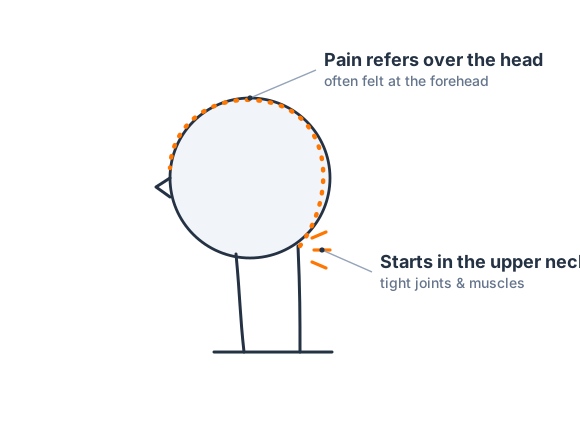
What chiropractic care can address is the neck-tension side of migraine that so many people carry — the stiff upper neck, the tight muscles at the base of the skull, the shoulders that never quite let go. At Thrive Chiropractic in Troy, MI, that support typically includes:
- Upper cervical care to restore motion to the joints at the top of the neck
- Soft-tissue and massage therapy to ease tension across the neck, shoulders, and base of the skull
- Posture and ergonomic guidance to reduce the daily strain that adds to that tension
The idea is to work alongside your medical care as part of a broader plan — helping with the neck component while your medical team manages the migraine itself. Because the neck and head pain overlap so often, this connects closely to cervicogenic headaches, which are head pain that genuinely originates in the neck.
When to Seek Prompt or Emergency Care
The danger box above covers the situations that need emergency care. Short of those, it's worth a prompt (non-emergency) medical evaluation any time your aura or migraine pattern changes — new symptoms, more frequent episodes, or auras that don't behave the way yours usually do. New patterns deserve a fresh look so the cause can be confirmed.
And for the neck-tension part of the picture — the stiffness and muscle tightness that so often travel with migraine — a chiropractic evaluation is a natural fit. When you're ready, you can schedule a visit with Dr. Rubinstein, who will start with a careful exam and be honest about what care can and can't do for your situation.
Frequently Asked Questions
The questions Dr. Rubinstein hears most about migraine with aura — what an aura feels like, whether it means your migraines are more serious, whether you can have the aura without the headache, and how to tell an aura from a stroke — are answered in the FAQ section on this page. If your situation isn't covered there, the team is glad to talk it through before you come in.
Headache & Migraine Relief Guide (PDF)A one-page take-home guide: steps that ease headaches and migraines, common triggers, and the warning signs that need a doctor.PDFThis article is for general education and is not a substitute for professional medical advice, diagnosis, or treatment. Always consult a qualified healthcare provider about your specific situation.
Frequently Asked Questions
What does a migraine aura actually feel like?
Most auras are visual: shimmering or flickering zigzag lines, flashing lights, or a blind spot that slowly grows and drifts across your field of view. Some auras instead cause tingling or numbness that creeps up an arm or across the face, and less commonly, trouble finding words. The hallmark is that it builds gradually over a few minutes and then fades, usually within about an hour, often giving way to the headache.
Does having aura mean my migraines are more serious?
Not by itself. Migraine with aura is simply a different pattern from migraine without aura — it isn't automatically more severe or more dangerous. That said, a brand-new aura, an unusually long one, or an aura with weakness or speech difficulty does need prompt medical evaluation, because those specific patterns can overlap with more serious causes. Knowing your usual pattern is what makes an unusual one stand out.
Can you have a migraine without the headache?
Yes. Some people experience the aura on its own, with little or no headache following — sometimes called a 'silent migraine.' Because aura symptoms can look like other neurological problems, an aura without a headache is still worth having evaluated the first time it happens, so a provider can confirm what's going on.
How is a migraine aura different from a stroke?
They can look similar, which is exactly why caution matters. A migraine aura typically builds gradually over minutes, involves 'positive' symptoms like shimmering lights or spreading tingling, and resolves within about an hour. Stroke symptoms usually come on suddenly, often with 'negative' symptoms like sudden loss of vision, one-sided weakness, or speech trouble. Because you can't always tell them apart in the moment, a first-time aura or one with weakness or speech difficulty should be treated as an emergency until a professional says otherwise.
Can chiropractic care help migraines with aura?
Chiropractic care doesn't treat the aura itself, which is a neurological event. What it can help with is the neck-tension that so often accompanies migraine — the tight, stiff upper neck and the muscles at the base of the skull. Dr. Rubinstein focuses on that component as part of a broader plan, working alongside the medical care that migraine with aura usually also needs.
Ready to get evaluated at Thrive Chiropractic?
Dr. Rubinstein will assess what’s really going on and build a care plan tailored to you. Reach out and we’ll get you scheduled.
2133 Crooks Road | Troy MI 48084