
Migraine vs. Headache: How to Tell the Difference
"Is this a migraine or just a headache?" is one of the most common questions about head pain — and the answer shapes what actually helps. This guide compares migraines with tension, sinus, and cervicogenic headaches, so you can describe your symptoms accurately to a provider. It's a guide to understanding, not a self-diagnosis tool. Plus how care at Thrive Chiropractic in Troy, MI addresses the neck-tension side.
Why the Difference Matters
"Is this a migraine, or just a headache?" is one of the most common questions people ask about head pain — and it's a good one, because the answer genuinely shapes what helps. The key thing to understand up front is that "headache" is a broad category, and a migraine is one specific type within it. Saying you have a headache describes that your head hurts; identifying which kind starts to explain why, and that's what points toward the right care.
Different headache types respond to different things. What eases a tension headache may do little for a migraine; what helps a neck-driven headache is different again. So learning the patterns is worthwhile. But one honest caveat before we start: this is a guide to understanding, not a self-diagnosis tool. Headache types overlap, many people have more than one, and a few patterns need urgent care. The aim here is to help you describe your symptoms accurately to a provider — not to hand you a label. The broader family of headaches has many members, and sorting them out is a job for a careful history and exam.
What Makes a Migraine a Migraine
A migraine is a neurological condition, not just a stronger headache. Its signature is the combination of the pain and its companions. The headache phase of a migraine is often:
- Throbbing or pulsing, rather than a steady squeeze
- One-sided, though it can spread or switch sides
- Moderate to severe — enough to interrupt what you're doing
- Worse with movement, so you instinctively want to hold still
And crucially, it usually travels with extras that set it apart: nausea (sometimes vomiting) and a strong sensitivity to light, sound, and smells. Some people also get an aura — temporary visual or sensory symptoms — before or during the attack, which we cover in migraine with aura. A migraine also tends to unfold in phases rather than arrive all at once, described in the stages of a migraine. It's that whole package — the throbbing, one-sided pain plus the nausea and sensitivity — that most clearly marks a migraine.
Tension Headaches
A tension headache is the everyday headache most people picture. Its pattern is almost the opposite of a migraine's:
- A steady, dull pressure rather than a throb
- Often felt as a band around the whole head, on both sides
- Mild to moderate — annoying, but usually not disabling
- Generally without the nausea and light sensitivity of a migraine
- Frequently tied to stress, fatigue, or holding one position too long
Because a tension headache is milder and more diffuse, people often push through it. The overlap with migraine mostly comes when a tension-type headache is unusually strong, or when someone has both patterns.
Sinus Headaches
A sinus headache is pain and pressure people attribute to the sinuses — across the forehead, cheeks, and around the eyes. A genuine sinus headache usually comes with an active sinus infection, which means:
- Facial pressure that worsens when you bend forward or lie down
- Thick, discolored nasal discharge
- Often a fever and a general sense of being unwell
Here's the catch that matters for this comparison: migraines can masquerade as sinus headaches. A migraine can cause facial pressure, a stuffy or runny nose, and watery eyes — all of which feel sinus-related. So if "sinus headaches" keep recurring without an infection, that's a detail worth raising with a provider, because it may point toward migraine instead.
Cervicogenic (Neck-Driven) Headaches
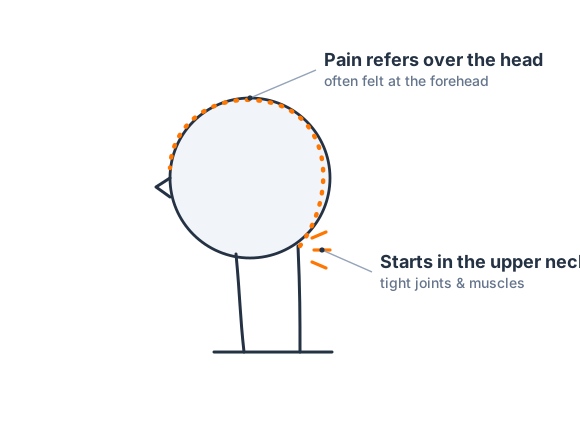
A cervicogenic headache is head pain that actually starts in the neck — the joints, muscles, and nerves of the upper neck referring pain up into the head. It's the type most directly in a chiropractor's wheelhouse, and it has a fairly recognizable signature:
- Pain that usually stays on one side
- Aching that begins at the base of the skull and spreads toward the forehead or temple
- Neck stiffness that travels with the headache
- Pain that's provoked or worsened by certain neck positions or movements
The strong link between the head pain and neck movement is the biggest clue. Because it can feel one-sided, it's sometimes mistaken for a migraine — but it isn't driven by the neurological triggers a migraine is, and it responds to care aimed at the neck. Our full guide to cervicogenic headaches covers this type in depth.
A Side-by-Side Comparison
Putting the four together highlights how their signatures differ:
- Migraine — throbbing, often one-sided, moderate to severe, worse with movement, with nausea and light/sound sensitivity, sometimes aura.
- Tension headache — steady pressure, both sides, a band around the head, mild to moderate, without nausea or light sensitivity.
- Sinus headache — pressure over the forehead and cheeks, worse bending forward, with infection signs like fever and discolored discharge (and easily confused with migraine when those signs are absent).
- Cervicogenic headache — one-sided, starts at the base of the skull, travels with neck stiffness, provoked by neck movement.
Describing Your Symptoms to a Provider
The most useful thing this comparison can do is help you give a clear, specific account of your head pain — which is often what points a provider toward the right diagnosis. When you're seen, it helps to be ready to describe:
- Where the pain sits, and whether it's one-sided or all over
- What it feels like — throbbing, pressure, a band, a deep ache
- How severe it gets, and whether it stops you from your usual activities
- What comes with it — nausea, light or sound sensitivity, neck stiffness, nasal symptoms, or aura
- What brings it on or eases it — stress, certain foods, neck positions, movement, time of day
- How it unfolds — sudden or gradual, and whether it changes as it goes
How Chiropractic Care Fits In
A word on scope: migraine is a medical condition that often needs medical management, sometimes with a physician or neurologist. Chiropractic care doesn't replace that. Where it fits is the neck-tension component of head pain — most directly with cervicogenic (neck-driven) headaches, and as a supporting piece when a migraine has a genuine neck contribution.
At Thrive Chiropractic in Troy, MI, that care typically includes:
- Upper cervical care to restore motion to stiff joints at the top of the neck
- Soft-tissue and massage therapy to ease tension across the neck, shoulders, and base of the skull
- Posture and ergonomic guidance to reduce the daily strain that feeds neck-related head pain
Part of the value is simply sorting out what's contributing. A careful exam helps tell a neck-driven headache — which chiropractic care can address at its source — from a migraine that needs medical management, so the care actually matches the problem instead of guessing.
When to Seek Prompt or Emergency Care
Most headaches, including most migraines, follow a familiar pattern and aren't dangerous. But some headache symptoms are warning signs of something serious and need urgent medical attention right away — regardless of which "type" your past headaches have been.
Short of an emergency, it's worth a medical evaluation whenever your headaches change in pattern, become more frequent or severe, or stop responding to what usually helps. For the everyday one-sided headaches that flare with neck positions and travel with neck stiffness, a chiropractic evaluation is a natural fit — you can schedule a visit with Dr. Rubinstein whenever you're ready.
Frequently Asked Questions
The questions Dr. Rubinstein hears most about telling headaches apart — how to know if it's a migraine or a regular headache, whether a headache can turn into a migraine, whether "sinus headaches" are often migraines, and whether you should try to diagnose your own — are answered in the FAQ section on this page. If your situation isn't covered there, the team is glad to talk it through before you come in.
Headache & Migraine Relief Guide (PDF)A one-page take-home guide: steps that ease headaches and migraines, common triggers, and the warning signs that need a doctor.PDFThis article is for general education and is not a substitute for professional medical advice, diagnosis, or treatment. Always consult a qualified healthcare provider about your specific situation.
Frequently Asked Questions
How do I know if I have a migraine or a regular headache?
The clearest clues are the migraine's companions. A migraine is often throbbing, frequently one-sided, moderate to severe, worse with movement, and commonly paired with nausea or strong sensitivity to light, sound, or smells. A common tension headache tends to be a milder, steady band of pressure around the whole head without those extras. That said, these can overlap, so this is a guide to help you describe what you're feeling — the actual diagnosis comes from a provider who can take your full history.
Can a headache turn into a migraine?
People sometimes feel a headache build from a mild ache into something that looks more like a migraine, with throbbing and light sensitivity. It's also common to have more than one type of headache, so what feels like one 'turning into' another may be two patterns overlapping. Because the distinction affects what helps, it's worth describing the whole progression — how it started and how it changed — to your provider rather than sorting it out alone.
Are sinus headaches often actually migraines?
They can be confused, because migraines can cause facial pressure, a stuffy or runny nose, and watery eyes — symptoms people naturally attribute to their sinuses. True sinus headaches usually come with an active sinus infection: fever, thick discolored nasal discharge, and pressure that worsens when you bend forward. If 'sinus headaches' keep recurring without an infection, it's worth mentioning migraine to your provider as a possibility.
How is a neck-driven headache different from a migraine?
A cervicogenic, or neck-driven, headache usually stays on one side, starts at the base of the skull and spreads forward, travels with neck stiffness, and is often provoked by certain neck positions or movements. A migraine is a neurological condition with its own triggers and companions like nausea and light sensitivity, and isn't primarily driven by neck movement. They can overlap, though, which is exactly why a careful exam matters.
Should I try to diagnose my own headaches?
It's genuinely helpful to learn the patterns so you can describe your head pain clearly — but stop short of self-diagnosis. Headache types overlap, more than one can occur together, and a few patterns need urgent medical attention. Use what you learn here to give your provider an accurate account of your symptoms; let the diagnosis come from a professional who can weigh your full history and rule out anything serious.
Ready to get evaluated at Thrive Chiropractic?
Dr. Rubinstein will assess what’s really going on and build a care plan tailored to you. Reach out and we’ll get you scheduled.
2133 Crooks Road | Troy MI 48084