
Migraine Triggers: What Sets Them Off and How to Find Yours
Migraines rarely come out of nowhere — foods, hormones, sleep, stress, dehydration, weather, screens, and neck tension can all tip you over the edge. This guide walks through the common triggers, explains why they're so personal, and shows how a simple trigger diary helps you spot yours. Plus how care at Thrive Chiropractic in Troy, MI addresses the neck-tension side of the picture.
Why Migraines Have Triggers
If your migraines seem to strike almost at random, there's usually more logic to them than it first appears. Many people who live with migraine have a threshold — a tipping point that, once crossed, sets an attack in motion. Triggers are the things that nudge you toward that edge. On a good day, with plenty of rest and steady routines, your threshold sits high and it takes a lot to reach it. On a rough day, several factors can push you over.
The tricky part is that triggers are deeply personal. What reliably sets off one person's migraine may do nothing to yours, and vice versa. That's why lists of "migraine foods" only get you so far — the real value comes from learning your particular pattern. Understanding triggers also helps explain why a migraine is more than an ordinary headache, a distinction we cover in migraine vs. headache, and it overlaps with the broader picture of headache causes and triggers that applies to head pain in general.
Common Migraine Triggers
While the specifics vary, certain triggers come up again and again. Here are the ones worth knowing:
- Foods and drinks — aged cheeses, cured or processed meats, and alcohol (red wine especially) are frequent offenders for some people. Skipping meals can be a trigger in its own right.
- Hormonal changes — shifts in hormone levels, particularly around the menstrual cycle, are a well-known trigger for many.
- Sleep changes — both too little and too much, and irregular sleep timing, can set migraines off. Consistency tends to matter as much as quantity.
- Stress — and notably the "let-down" period after stress eases, which is why migraines so often land on a weekend or the start of a vacation.
- Dehydration — not drinking enough through a busy day is a common, easily overlooked trigger.
- Weather and pressure changes — shifts in barometric pressure, storms, or big temperature swings affect some people reliably.
- Bright light and screens — glare, flickering light, and long stretches of screen time can all contribute, especially without breaks.
- Neck tension — a stiff, tight upper neck is both a common trigger and a frequent companion of migraine, covered in its own section below.
The Role of Neck Tension
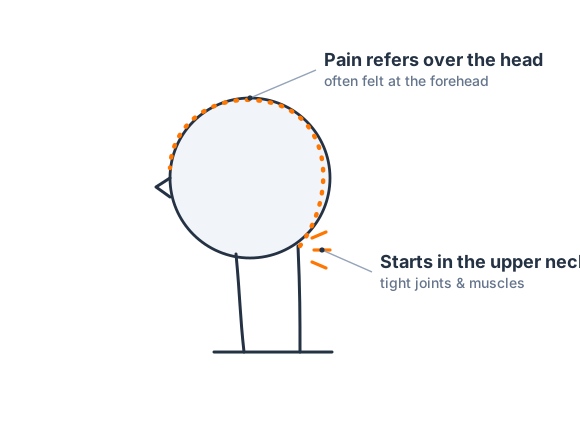
Neck tension deserves a closer look, because it sits right at the intersection of migraine and the kind of care we provide. A stiff, tight upper neck — from long hours at a screen, forward-head posture, stress held in the shoulders, or an old injury — can contribute to migraine in a couple of ways. For some people it acts as one of the factors stacking toward the threshold; for others, the neck stiffness is part of how the migraine itself shows up, arriving in the early warning phase we describe in the stages of a migraine.
Either way, the neck and the head are closely linked. The nerves at the top of the neck share pathways with the nerves of the head, which is the same mechanism behind cervicogenic headaches — head pain that actually starts in the neck. When neck tension is part of your migraine picture, addressing it is one of the more actionable things you can do, and it's where chiropractic care fits naturally.
How a Trigger Diary Helps
Because triggers are personal, delayed, and prone to stacking, they're genuinely hard to identify from memory. The single most reliable tool for finding yours is a trigger diary — a simple, consistent record of your days and your migraines.
The goal isn't to become obsessive about every bite and hour — it's to gather enough honest data to see your real patterns. Once you know your top few triggers, you can focus your energy where it actually helps, instead of avoiding a long list of foods that may have nothing to do with your migraines.
Reducing Your Exposure
Once your diary points to a few likely triggers, a handful of steady habits tend to lower your overall load:
- Keep regular routines. Consistent sleep, meals, and hydration keep your threshold higher and leave less room for stacking.
- Don't skip meals, and drink water steadily through the day rather than in one late gulp.
- Keep caffeine consistent day to day — it's the sudden changes, not the coffee itself, that tend to cause trouble.
- Manage screen glare and take breaks. Lower harsh brightness, cut flicker where you can, and look away regularly.
- Address stress deliberately, and be especially mindful during the let-down after a demanding stretch.
- Care for your neck — the posture, movement, and hands-on care discussed below.
You won't control everything (weather and hormones aren't up to you), but reducing the triggers you can influence often means fewer attacks, or gentler ones.
How Chiropractic Care Fits In
A little honesty about scope: migraine is a medical condition, and for most people it needs medical management, sometimes with a physician or neurologist. Chiropractic care isn't a cure and doesn't replace that. What it can do is address the neck-tension component — one of the more actionable pieces of the trigger puzzle.
At Thrive Chiropractic in Troy, MI, that means:
- Upper cervical care to restore motion to stiff joints at the top of the neck
- Soft-tissue and massage therapy to release the tightness across the neck, shoulders, and base of the skull that can feed migraine
- Posture and ergonomic coaching, since forward-head posture and long screen hours add steadily to neck tension
When neck tension is genuinely part of your pattern, easing it can remove one of the factors that stacks toward an attack — working alongside your medical care as part of a broader plan, not instead of it.
When to Seek Prompt or Emergency Care
Most migraines, however disruptive, follow a familiar pattern and aren't dangerous. But some headache symptoms signal something serious and need urgent medical attention right away — not a trigger diary, and not a wait-and-see approach.
Short of an emergency, it's worth a medical evaluation whenever your migraines change in pattern, grow more frequent or severe, or stop responding to what usually helps. And for the neck-tension side of things, a chiropractic evaluation is a natural fit — you can schedule a visit with Dr. Rubinstein whenever you're ready.
Frequently Asked Questions
The questions Dr. Rubinstein hears most about migraine triggers — which ones are most common, whether several can combine into one attack, how long a trigger takes to act, and whether caffeine helps or hurts — are answered in the FAQ section on this page. If your situation isn't covered there, the team is glad to talk it through before you come in.
Headache & Migraine Relief Guide (PDF)A one-page take-home guide: steps that ease headaches and migraines, common triggers, and the warning signs that need a doctor.PDFThis article is for general education and is not a substitute for professional medical advice, diagnosis, or treatment. Always consult a qualified healthcare provider about your specific situation.
Frequently Asked Questions
What are the most common migraine triggers?
The usual suspects include certain foods and drinks (aged cheeses, cured meats, alcohol, and sometimes caffeine changes), hormonal shifts, skipped meals, too little or too much sleep, stress — and often the let-down after stress — dehydration, weather and pressure changes, bright or flickering light and long screen time, and neck tension. Which ones matter is very individual, though, which is why finding your own is more useful than memorizing the full list.
Can more than one thing trigger a single migraine?
Yes, and that's usually how it works. Most migraines aren't set off by one clear cause but by several smaller factors stacking up — a poor night's sleep, a skipped lunch, a stressful afternoon, and a bright screen together can push you past your threshold when none of them would alone. This 'stacking' is why triggers can seem inconsistent, and why lowering your overall load often helps more than chasing a single villain.
How long does it take a trigger to cause a migraine?
It varies. Some triggers act within a few hours, while others — like a change in sleep or the let-down after a stressful week — may take a day or more to show up as a migraine. That delay is exactly why triggers are so hard to pin down from memory alone, and why a written diary that captures the day or two beforehand is so helpful.
Is caffeine a trigger or a help?
It can be both, which trips a lot of people up. A steady, consistent amount of caffeine is fine for many people, but a sudden change — a skipped morning coffee, or a big increase — can act as a trigger. The practical takeaway is consistency: keeping your intake steady day to day tends to matter more than the exact amount.
Can fixing my neck reduce my migraines?
For people whose migraines have a real neck-tension component, easing that tension can help — either by removing one of the factors that stacks toward a migraine, or by making the neck stiffness that travels with attacks more comfortable. It isn't a cure, and migraine usually needs medical management too, but addressing the neck is a genuine, worthwhile piece of the puzzle that Dr. Rubinstein can help with.
Ready to get evaluated at Thrive Chiropractic?
Dr. Rubinstein will assess what’s really going on and build a care plan tailored to you. Reach out and we’ll get you scheduled.
2133 Crooks Road | Troy MI 48084