
The Stages of a Migraine: Prodrome, Aura, Attack & Postdrome
A migraine is rarely just a headache — for many people it unfolds in four phases: prodrome, aura, attack, and postdrome. This guide walks through what each stage feels like, why the early warning signs matter, and how recognizing them sooner can help you act early — plus how care at Thrive Chiropractic in Troy, MI supports the neck-tension side of migraine.
A Migraine Is More Than the Headache
If you've only ever thought of a migraine as "a really bad headache," you're not alone — but that picture leaves out a lot of what people actually experience. For many, a migraine isn't a single event so much as a process that unfolds over time, sometimes beginning long before the head pain and lingering well after it fades.
Researchers and clinicians often describe that process in four phases: the prodrome, the aura, the attack, and the postdrome. Not everyone goes through all four — plenty of people never have an aura, and the same person can have a phase one time and skip it the next. Still, understanding the full arc is genuinely useful, because the earliest phases can serve as a warning that gives you time to respond. This is also part of what sets a migraine apart from an ordinary headache, a distinction we cover in migraine vs. headache.
Phase 1: The Prodrome (Warning Signs)
The prodrome is the quiet opening act. It can start anywhere from a few hours to about a day before the headache, and its signals are easy to miss until you know to look for them. Common prodrome clues include:
- Mood changes — feeling unusually irritable, low, or oddly energized
- Food cravings, often for something sweet or specific
- Frequent yawning that doesn't seem to match how tired you are
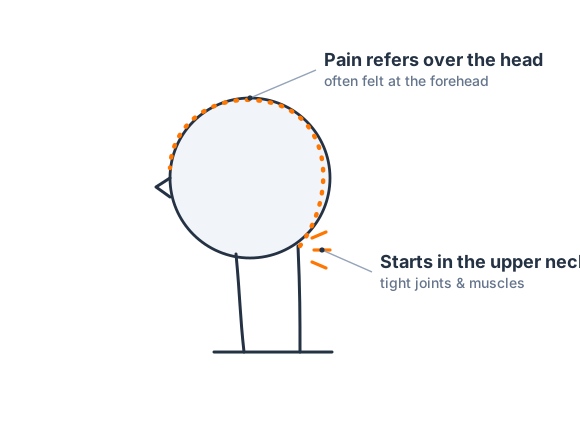
- Neck stiffness or tightness, which many people feel before the headache itself
- Increased thirst and more trips to the bathroom
- Trouble concentrating or a vague sense of being "off"
None of these are dramatic on their own, which is exactly why they slip by. But once you've learned to recognize your particular set, the prodrome becomes a valuable early-warning window rather than just background noise.
Phase 2: The Aura
The aura is a set of temporary neurological symptoms that some people experience before or during the headache. It's the phase that tends to alarm people the most the first time it happens, because the symptoms can feel strange and sudden. Aura most often affects vision — shimmering zigzag lines, flashing lights, or a blind spot that slowly grows and drifts across your field of view — but it can also involve tingling that spreads up an arm, or trouble finding words.
Importantly, most people with migraine never have an aura at all. When it does occur, it usually builds gradually over a few minutes and fades within about an hour, typically giving way to the headache. Because aura has its own patterns and some specific safety flags worth knowing, we cover it in depth in migraine with aura — and if you've never had one before, that first-ever aura is something to have checked promptly, for reasons explained below.
Phase 3: The Attack (Headache)
The attack is the phase almost everyone recognizes as "the migraine." This is the headache itself, and it's usually quite different from an everyday tension headache. The pain is often:
- Throbbing or pulsing, rather than a steady band of pressure
- One-sided, though it can spread or switch sides
- Moderate to severe, enough to interrupt what you're doing
- Worse with movement, so you instinctively want to stay still
Alongside the pain, the attack commonly brings nausea, sometimes vomiting, and a strong sensitivity to light, sound, and smells — which is why a dark, quiet room feels like such a relief. An attack can last anywhere from a few hours to a few days if it isn't settled. These are the features that most clearly separate a migraine from other headaches, and knowing them helps you describe what you're experiencing accurately.
Phase 4: The Postdrome (The Hangover)
Even after the headache lifts, the migraine isn't always finished. The postdrome, sometimes called the "migraine hangover," is the tail end — a stretch of a day or so when many people feel drained, foggy, or tender, as though they've run a race. You might feel unusually tired, have trouble concentrating, or notice a lingering sensitivity where the pain was.
This phase is a reminder that a migraine takes a real toll on the body, and that bouncing straight back to a full schedule often backfires. Gentle rest, steady hydration, and easing into your day tend to help the postdrome pass more smoothly than pushing through it does.
Why Recognizing the Phases Early Helps
Learning your own migraine pattern isn't just interesting — it's practical. When you can spot the prodrome or aura, you gain a head start on the attack, and that early window is often where you have the most influence over how the day goes.
Recognizing the early phases lets you act while there's still time: resting, hydrating, stepping away from bright screens and noise, and starting whatever plan your provider has given you before the attack is in full swing. It won't prevent every migraine, but acting early tends to make the whole experience more manageable than waiting until the headache has fully arrived.
How Chiropractic Care Fits In
It's worth being clear about scope: migraine is a medical condition, and for many people it needs medical management, sometimes with a physician or neurologist. At the same time, the neck often plays a supporting role — that pre-headache neck stiffness in the prodrome is a common example — and the neck is where chiropractic care can genuinely help.
At Thrive Chiropractic in Troy, MI, care focuses on the neck-tension component that so often accompanies migraine:
- Upper cervical care to restore motion to stiff joints at the top of the neck, an area closely linked to head pain
- Soft-tissue and massage therapy to ease the tightness across the neck, shoulders, and base of the skull
- Posture and ergonomic coaching, since forward-head posture and long screen hours add to the tension load
The goal is to work alongside your medical care, not replace it — addressing the neck piece as part of a broader plan. Because the neck and migraine overlap so much, this is also closely related to cervicogenic headaches, which are head pain that actually starts in the neck.
When to Seek Prompt or Emergency Care
Most migraines, however uncomfortable, follow a familiar pattern and aren't dangerous. But certain headache symptoms are warning signs of something serious and need urgent medical attention right away — not a wait-and-see approach, and not a chiropractic visit.
Short of an emergency, it's worth a medical evaluation any time your migraines change in pattern, become more frequent or severe, or stop responding to what usually helps. And for the neck-tension side of the picture, a chiropractic evaluation is a natural fit — you can schedule a visit with Dr. Rubinstein whenever you're ready.
Frequently Asked Questions
The questions Dr. Rubinstein hears most about the stages of a migraine — whether every migraine follows all four phases, how early the warning signs begin, and why the postdrome leaves you so wiped out — are answered in the FAQ section on this page. If your situation isn't covered there, the team is glad to talk it through before you come in.
Headache & Migraine Relief Guide (PDF)A one-page take-home guide: steps that ease headaches and migraines, common triggers, and the warning signs that need a doctor.PDFThis article is for general education and is not a substitute for professional medical advice, diagnosis, or treatment. Always consult a qualified healthcare provider about your specific situation.
Frequently Asked Questions
Does every migraine go through all four phases?
No. The four phases — prodrome, aura, attack, and postdrome — describe the full arc a migraine can follow, but many people skip one or more. Most people never experience aura at all, and the same person can have a phase one time and not the next. Learning your own usual pattern is more useful than expecting a textbook sequence every time.
How long before a migraine do the warning signs start?
The prodrome can begin anywhere from a few hours to about a day before the headache. Because the clues are often subtle — a change in mood, extra yawning, food cravings, or a stiff neck — many people only recognize them in hindsight until they start paying attention. Keeping a simple log helps you spot your own early signals.
What's the difference between the aura and the headache?
The aura is a set of temporary neurological symptoms — most often visual, like shimmering zigzags or a blind spot — that can come before or alongside the headache and usually lasts under an hour. The attack is the headache itself: often throbbing, frequently one-sided, and commonly paired with nausea or sensitivity to light and sound. Not everyone with migraine has aura, but the attack is the phase almost everyone recognizes.
Why do I feel wiped out for a day after a migraine?
That's the postdrome, sometimes called the migraine hangover. After the headache eases, many people feel drained, foggy, or unusually tired for a day or so, as the body settles back to baseline. Gentle rest, steady hydration, and easing back into your day rather than rushing tend to help this phase pass more comfortably.
Can paying attention to the phases actually help?
It can. Recognizing your prodrome or aura gives you a head start — a window to rest, hydrate, reduce light and screen time, and begin whatever plan your provider has set before the attack fully arrives. It won't stop every migraine, but acting during those early signals often makes the experience more manageable than waiting until the headache has taken hold.
Ready to get evaluated at Thrive Chiropractic?
Dr. Rubinstein will assess what’s really going on and build a care plan tailored to you. Reach out and we’ll get you scheduled.
2133 Crooks Road | Troy MI 48084