
Menstrual (Hormonal) Migraine: When Migraines Track Your Cycle
Menstrual, or hormonal, migraines are attacks tied to the estrogen drop around your period. This guide explains the timing patterns, how to recognize them, drug-free supports you can start now, when to involve your OB/GYN, and how gentle, pregnancy-safe chiropractic care at Thrive Chiropractic in Troy, MI can be a supportive layer.
What Is a Menstrual Migraine?
A menstrual migraine — also called a hormonal migraine — is a migraine attack that tracks your monthly cycle. If your worst headaches seem to arrive like clockwork around your period, you're noticing the hallmark of this pattern. The migraine itself feels like other migraines — often one-sided, throbbing, with light and sound sensitivity or nausea — but the trigger is hormonal, which is what sets these apart and, helpfully, makes them more predictable.
That predictability is the silver lining. Because the vulnerable window tends to repeat month after month, you can often see it coming and prepare, rather than being caught off guard. Menstrual migraine is one branch of the broader migraines picture, and while it shares a lot with other headaches, its tie to the hormonal cycle gives it its own logic and its own set of helpful strategies.
The Hormone Connection
The key player is estrogen. Across your cycle, estrogen rises and falls, and in the days just before your period it drops sharply. For someone who is migraine-prone, that rapid decline can act as a potent trigger — the brain's migraine machinery is sensitive to the swing, and the falling estrogen tips it into an attack.
This is why menstrual migraines cluster around a specific part of the month rather than scattering randomly. It also explains why they can shift over the course of life — during pregnancy, around perimenopause, or with changes in birth control, the hormonal landscape changes and the migraine pattern often changes with it. Understanding the estrogen connection is what turns a mysterious, recurring headache into something you can actually anticipate and plan around.
Timing Patterns to Watch For
Menstrual migraines tend to follow a recognizable schedule:
- The classic window runs from about two days before your period through the first few days of bleeding — right around the estrogen drop.
- Some people notice a second vulnerable point around ovulation, when hormones shift again.
- The pattern usually repeats month to month, which is exactly what makes tracking so useful.
Keeping a simple record of your cycle alongside your headache days is the single most revealing thing you can do. Once the pattern is clear, you can shore up sleep, hydration, and stress care in advance of the vulnerable window and be ready to act early if an attack begins. Your broader migraine triggers matter here too — a skipped meal or a poor night's sleep during the hormonal dip can stack the odds against you.
Common Symptoms
Menstrual migraines carry the usual migraine signature, timed to your cycle:
- Throbbing head pain, frequently one-sided
- Light and sound sensitivity, and sometimes nausea
- A predictable arrival in the days around your period
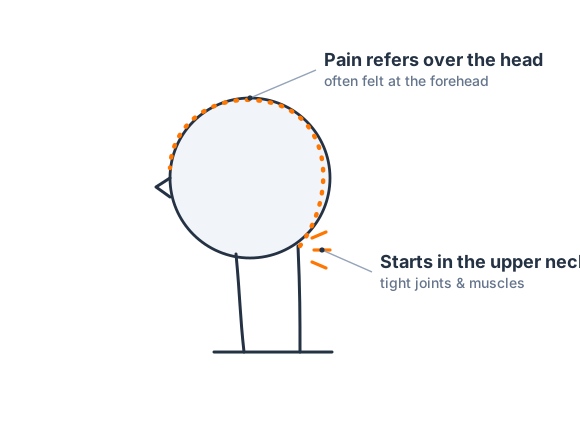
- Neck stiffness and tension that often travels with the head pain
- Fatigue or fogginess in the surrounding days
Because attacks arrive on a hormonal schedule, they can feel especially draining — landing at the same demanding time each month. That reliability, though, is also what makes them easier to prepare for than migraines that strike out of the blue.
Drug-Free Supports You Can Start Now
You don't have to wait to take action. Several drug-free supports genuinely help lower the odds and intensity of menstrual migraines, especially when you time them to your vulnerable window:
- Protect your sleep. Consistent bed and wake times steady the system that governs attacks — and matter most in the days around your period.
- Stay ahead on hydration and meals. Skipped meals and dehydration are common triggers that hit harder during the hormonal dip.
- Ease stress in the run-up. Gentle movement, breathing, and downshifting in the days before your period can lower the odds of an attack.
- Tend to your neck and posture. Bringing screens to eye level, taking posture breaks, and supporting your head at night keep neck tension from adding to the load.
- Act early if one starts. Getting to a dark, quiet room and applying something cold at the first signs can take the edge off before an attack fully builds.
For a fuller walk-through of both easing an active attack and preventing the next one, see our guide to migraine relief and prevention.
When to Involve Your OB/GYN
Because menstrual migraines are tied to your hormonal cycle, your OB/GYN is a key partner in managing them. They can look at the hormonal picture in a way that's specific to you — reviewing any birth control considerations, weighing hormonal factors, and discussing medical options suited to your situation and history.
This matters because the right medical approach can depend on details like your migraine type and other health factors, which your OB/GYN is positioned to weigh. Drug-free supports and gentle chiropractic care are meant to sit alongside that medical guidance, not replace it. If your hormonal migraines are frequent, severe, or changing, that's a clear cue to bring your OB/GYN into the conversation.
How Chiropractic Care Can Support You at Thrive
At Thrive Chiropractic in Troy, MI, our role with menstrual migraine is a supportive one — we address the neck-and-posture component that can add to any migraine's load, while you and your OB/GYN handle the hormonal side. Chiropractic care doesn't cure migraine, and it doesn't change your hormones. What it can do, when the exam points to it, is ease a contributor you can feel:
- Gentle chiropractic adjustments to restore motion to stiff upper-neck joints, an area addressed through upper cervical care
- Soft-tissue and massage therapy to release tension at the base of the skull and across the upper back
- Posture and ergonomic coaching to reduce the daily neck strain that feeds headache patterns
- A tailored plan that respects where you are in your cycle and complements your medical care
The honest framing: this is one helpful layer among several, not a stand-alone answer to a hormonal condition.
A Note on Pregnancy
Pregnancy changes the hormonal landscape, and with it, migraine patterns often shift — for some people they ease, for others they change in character. If you're expecting and dealing with migraines, gentle, pregnancy-adapted care can be a comforting, drug-free layer of support. Approaches like the Webster Technique are specifically pregnancy-focused, using gentle methods suited to a changing body, and the whole-body comfort and better posture they support can ease the neck-and-upper-back tension that often travels with headaches.
When to Seek Prompt or Emergency Care
Most menstrual migraines follow your familiar pattern, timed to your cycle. But some headaches are warning signs of something serious and need immediate medical attention — not a chiropractic visit — regardless of your usual migraines.
Short of an emergency, get a prompt medical evaluation for migraines that are new, worsening, or clearly different from your usual cycle-linked pattern — and loop in your OB/GYN about the hormonal side. For the neck-and-posture piece, a chiropractic evaluation fits naturally alongside your medical care — you can schedule a visit here.
Frequently Asked Questions
The questions Dr. Rubinstein hears most about hormonal migraines — what causes them, when in the cycle they strike, how to support yourself without medication, and where your OB/GYN and gentle chiropractic care each fit — are answered in the FAQ section on this page. If your situation isn't covered there, the team is glad to talk it through before you come in.
Headache & Migraine Relief Guide (PDF)A one-page take-home guide: steps that ease headaches and migraines, common triggers, and the warning signs that need a doctor.PDFThis article is for general education and is not a substitute for professional medical advice, diagnosis, or treatment. Always consult a qualified healthcare provider about your specific situation.
Frequently Asked Questions
What causes menstrual migraines?
They're linked to the natural fall in estrogen that happens just before your period. For people who are migraine-prone, that hormonal dip can act as a powerful trigger, setting off an attack in the days around menstruation. It's not that hormones are the only factor, but the estrogen drop is the thread that ties these particular migraines to your cycle.
When in my cycle do menstrual migraines usually happen?
Most often in the window from a couple of days before your period through the first few days of bleeding — right around the estrogen drop. Because the timing tends to repeat month to month, tracking your cycle alongside your headaches usually reveals a fairly predictable pattern you can plan around.
How can I relieve menstrual migraines without medication?
Steady sleep, consistent meals, good hydration, stress reduction, and neck and posture care all help lower the odds and intensity of an attack, and acting early when one starts — resting in a dark, quiet room with cold applied — can take the edge off. These drug-free supports work best when you anticipate the vulnerable window in your cycle. Your OB/GYN can advise on medical options too.
Should I see my OB/GYN about hormonal migraines?
Yes — because these migraines are tied to your hormonal cycle, your OB/GYN is an important partner. They can look at the hormonal picture, review any birth control considerations, and discuss medical options suited to your situation. Drug-free supports and gentle chiropractic care can sit alongside that medical guidance rather than replace it.
Can I get chiropractic care for migraines while pregnant?
Chiropractic care is widely used during pregnancy, with gentle techniques adapted to your changing body — and approaches like the Webster Technique are specifically pregnancy-focused. It won't cure migraine, but easing neck tension and supporting posture and comfort can be a helpful layer. As with any care in pregnancy, keep your OB or midwife in the loop, and Dr. Rubinstein tailors every visit to your stage.
Ready to get evaluated at Thrive Chiropractic?
Dr. Rubinstein will assess what’s really going on and build a care plan tailored to you. Reach out and we’ll get you scheduled.
2133 Crooks Road | Troy MI 48084