
Cluster Headaches: One of the Most Severe Headaches There Is
Cluster headaches are among the most intense headaches a person can experience — sharp, one-sided pain around the eye that strikes in cyclical 'clusters.' This guide explains what sets them apart from migraines, why they need proper medical diagnosis and management, and how chiropractic care at Thrive Chiropractic in Troy, MI can play a supportive role for the neck tension that often rides along — while being honest that it is not a cure.
What Are Cluster Headaches?
A cluster headache is one of the most severe types of headache a person can experience. The pain is sharp and concentrated on one side of the head, almost always centered around or behind a single eye, and it comes on fast and hard. The name comes from the way the attacks group together: they tend to arrive in bouts — daily or near-daily for weeks or months — separated by stretches of relief.
Cluster headaches sit within the broader world of headaches, but they stand apart from the everyday kinds most people know. They're far less common than tension headaches, and their intensity and clock-like cycles make them a distinct condition. Because they're so severe, and because any new severe headache needs a proper look, this is one type where a medical diagnosis genuinely comes first.
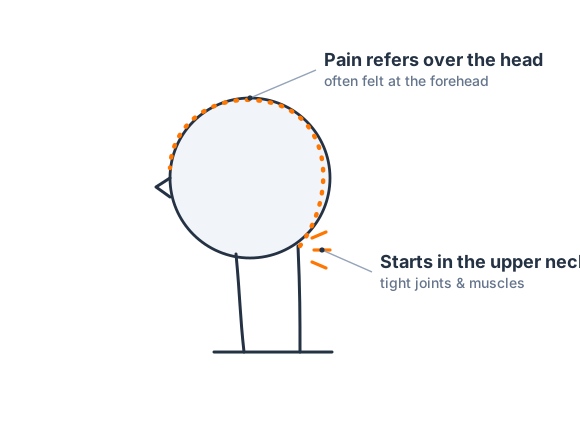
What They Feel Like
Cluster headaches have a striking, recognizable pattern:
- Severe, one-sided pain centered around or behind one eye
- Attacks that come on quickly and are often described as sharp, burning, or piercing
- A cyclical rhythm — bouts of frequent attacks, sometimes at the same times each day, that can wake people from sleep
- Attacks that are relatively short compared with a migraine, but far more intense
- On the affected side, often a watering or red eye, a drooping eyelid, or a stuffy or running nostril
- A feeling of restlessness during an attack — many people pace or rock rather than lie still
That last point is a telling one, and it's part of what separates cluster headaches from migraines, where people usually want to stay as still as possible.
How They Differ From Migraines
It's easy to lump every severe headache under "migraine," but cluster headaches have their own signature. Migraines tend to build more gradually, often throb, and frequently come with nausea and a strong pull to lie down in a dark, quiet room. Cluster headaches strike fast, stay tightly focused around one eye, run in clock-like cycles, and tend to make people restless and agitated during an attack.
These are genuinely different conditions, which is why sorting them out matters — the care that helps one isn't the care that helps the other. If you're trying to understand where your headaches fit, our migraine vs. headache guide lays out the broader distinctions, and the migraines resource covers that picture in depth.
Why Medical Diagnosis and Management Come First
We want to be clear and honest about scope here, because it matters for your safety and your relief.
None of that means you're out of options for support — it just means the medical diagnosis leads, and everything else fits around it.
Where Chiropractic Care Fits In
So where does a chiropractor come in? In a supporting role, alongside your medical care — never instead of it.
The reality is that living through cluster bouts is physically and emotionally punishing, and many people end up holding a great deal of tension in the neck, shoulders, and upper back. That muscle tension can layer its own head and neck discomfort on top of the attacks, and it may show up as upper neck pain or a cervicogenic ache riding alongside the cluster pain. Easing that tension won't stop the cluster cycle — nothing about chiropractic care will — but for some people it makes the overall burden a little more manageable while their medical treatment does the heavy lifting.
That's the honest picture: chiropractic care here is about comfort and reducing the extra muscular load, not about treating the cluster headaches themselves.
What to Expect From Supportive Care at Thrive
At Thrive Chiropractic in Troy, MI, if you're already under medical care for cluster headaches and want help with the accompanying tension, Dr. Rubinstein starts by understanding your full picture — your diagnosis, your medical management, and how the cycles are affecting your neck and shoulders. Supportive care may then include:
- Soft-tissue and massage therapy to ease the tension that builds across the neck, shoulders, and upper back during a bout
- Gentle chiropractic adjustments to restore motion to stiff upper-neck joints when appropriate, an area addressed through upper cervical care
- Guidance on posture and everyday tension to keep the neck load from stacking up
- Coordination with your medical care, keeping chiropractic firmly in a supportive role
The aim is straightforward and modest: help you carry a bit less muscular tension while your physician manages the condition itself.
Living With the Cycles
Because cluster headaches run in bouts, a lot of coping is about managing the periods around and between attacks:
- Keep working with your physician, since medical management is the foundation of living with cluster headaches.
- Track your cycles — noting when bouts start, how long they last, and any patterns can help you and your doctor stay ahead of them.
- Protect your sleep as much as you can, since attacks often strike at night and fatigue makes everything harder.
- Ease neck and shoulder tension between attacks with gentle movement and supportive care.
When to Seek Prompt or Emergency Care
Cluster headaches themselves need ongoing medical management, but some headaches are warning signs of something serious and call for urgent attention right away — not a chiropractic visit — regardless of any past diagnosis.
And to say it plainly one more time: a new pattern of severe, one-sided head pain always deserves a medical evaluation first. If you're already diagnosed and managed, and you'd like support for the neck and shoulder tension that comes with the cycles, a chiropractic visit can complement that care — you can schedule a visit here.
Frequently Asked Questions
The questions Dr. Rubinstein hears most about cluster headaches — how they differ from migraines, why medical care leads, and where chiropractic support fits — are answered in the FAQ section on this page. If your situation isn't covered there, the team is glad to talk it through before you come in.
Headache & Migraine Relief Guide (PDF)A one-page take-home guide: steps that ease headaches and migraines, common triggers, and the warning signs that need a doctor.PDFThis article is for general education and is not a substitute for professional medical advice, diagnosis, or treatment. Always consult a qualified healthcare provider about your specific situation.
Frequently Asked Questions
How are cluster headaches different from migraines?
Cluster headaches are typically shorter but far more intense than migraines, striking one side around the eye, often at the same times of day and in bouts that last weeks to months before easing. During an attack many people feel restless and can't sit still, whereas people with migraines usually want to lie still in a dark room. They're distinct conditions, which is why a proper diagnosis matters.
Can a chiropractor cure cluster headaches?
No — and we want to be straight with you about that. Cluster headaches are a distinct neurological condition that needs proper medical diagnosis and management. Chiropractic care can play a supportive role by easing the neck and upper-back tension that often travels with the cycles, but it isn't a cure and shouldn't replace medical care.
Should I see a doctor for cluster headaches?
Yes. Because the attacks are so severe and any new or severe headache deserves a proper workup, a medical evaluation should come first to confirm the diagnosis and set up management. Once you're under medical care, chiropractic support for the accompanying neck tension can be discussed as a complement, not a substitute.
Why do cluster headaches come in cycles?
Cluster headaches tend to run in bouts — daily or near-daily attacks for weeks or months, often followed by a stretch of relief — and they frequently strike at consistent times, sometimes waking people from sleep. This clock-like, cyclical pattern is one of their most recognizable features and part of what sets them apart from other headaches.
Can neck tension make cluster headache periods harder?
The pain and stress of a cluster bout often leave people holding tension in the neck and upper back, which can add its own layer of head and neck discomfort on top of the attacks. Easing that muscle tension won't stop the cluster cycle, but for some people it makes the overall load a little more manageable alongside their medical care.
Ready to get evaluated at Thrive Chiropractic?
Dr. Rubinstein will assess what’s really going on and build a care plan tailored to you. Reach out and we’ll get you scheduled.
2133 Crooks Road | Troy MI 48084