
Chronic Daily Headaches
Chronic daily headaches — head pain on 15 or more days a month — often begin as occasional headaches that gradually take over. This guide explains how episodic headaches become chronic (including the role of medication overuse), why a root-cause approach matters more than ever once headaches are near-constant, and how Dr. Rubinstein at Thrive Chiropractic in Troy, MI looks for the drivers underneath.
What Counts as a Chronic Daily Headache?
"Chronic daily headache" is the term doctors use when headaches stop being an occasional event and become a near-constant presence. The working definition is a headache on 15 or more days a month, for at least three months. It isn't a single diagnosis so much as a pattern — the headaches underneath are usually chronic versions of familiar types, most often tension headaches or migraines, sometimes with a rebound component layered on top.
What makes chronic daily headaches so wearing isn't necessarily their intensity — many are moderate rather than severe — but their sheer frequency. When a headache is there most days, it colors everything: work, sleep, mood, and patience. The good news is that headaches rarely start this way. They build up over time, and understanding how they got frequent points the way toward turning the frequency back down.
How Episodic Headaches Become Chronic
Most people with daily headaches began with episodic ones — a headache now and then, tied to a rough night's sleep, a stressful week, or a long stretch at the computer. The shift to chronic happens when the triggers behind those headaches stop letting up. Instead of flaring and settling, the system stays sensitized, and headaches begin arriving more and more often.
Several ongoing pressures commonly drive that slide:
- Unrelenting stress, which keeps the muscles of the neck, shoulders, and scalp under constant tension
- Chronically poor or irregular sleep, which lowers the threshold for the next headache
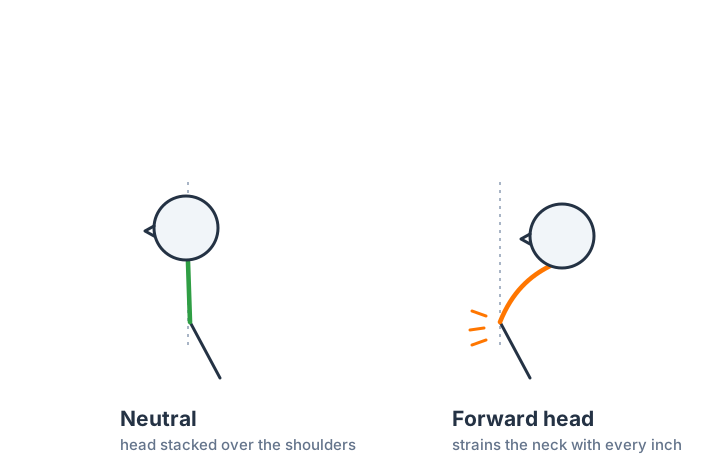
- Sustained poor posture from desk and phone use, loading the upper neck day after day — the pattern behind many cervicogenic headaches
- An unaddressed neck problem, where stiff upper-neck joints keep feeding a low-grade headache that never fully clears
- Frequent pain-reliever use, which can quietly tip the balance toward more headaches rather than fewer
Because these factors overlap and reinforce one another, the change is usually gradual — few people can point to the day their headaches became daily. That gradual onset is exactly why stepping back to look at the whole picture, rather than each individual headache, tends to be so useful.
The Medication-Overuse Trap
One of the most common — and most hidden — reasons headaches turn daily is the very thing people reach for to relieve them. Taking over-the-counter or prescription pain relievers on more days than not can lead to medication-overuse, or rebound, headaches: the medicine helps for a while, then as it wears off the headache returns, prompting another dose. Over time the cycle feeds itself, and the headaches become both more frequent and harder to shake.
The important takeaway isn't to fear pain relievers, which have their place, but to recognize when their frequency has become part of the problem. If you're using something for headaches most days of the week, that's worth raising with your doctor.
Why a Root-Cause Approach Matters
When headaches are occasional, treating each one as it arrives is perfectly reasonable. When they're near-daily, that same approach tends to keep you on a treadmill — and, with medication, can even accelerate the problem. This is why a root-cause approach matters more the more frequent your headaches become.
Rather than asking only "how do I stop this headache?", a root-cause approach asks "what keeps generating these headaches?" That means looking at the whole set of drivers together: stress, sleep, posture, any neck component, and whether a rebound cycle has taken hold. Some of these are best handled by your physician; some — like a neck and posture contribution — are exactly what chiropractic care addresses. Untangling which factors are in play for you is what turns a frustrating, open-ended situation into a plan with a realistic path to fewer headaches.
How Thrive Chiropractic Approaches Chronic Headaches
At Thrive Chiropractic in Troy, MI, the starting point for frequent headaches is understanding what's feeding them. Dr. Rubinstein begins with a thorough history — how often the headaches come, where they sit, what precedes them, how you sleep and sit, and what you've been taking for relief — followed by a focused exam of the upper neck and posture to gauge whether a neck component is part of the picture.
When it is, care commonly includes:
- Gentle chiropractic adjustments through upper cervical care to restore motion to stiff upper-neck joints
- Soft-tissue and massage therapy to release the sustained tension that near-daily headaches tend to build up
- Posture and ergonomic coaching to lift the constant load off your neck
Here's the honest scope: chronic daily headaches usually have several drivers, and chiropractic care addresses the neck-and-posture portion — which is often a meaningful share, but rarely the whole story. If a rebound cycle or another medical factor is involved, that's coordinated with your physician. Dr. Rubinstein will tell you plainly what he expects to help, how quickly, and where other care fits in. Our chiropractic for headaches guide walks through what care itself looks like.
Everyday Steps That Support Fewer Headaches
Alongside professional care, steady daily habits help lower the frequency over time:
- Track your headaches and your medication use. A simple log reveals both your triggers and whether pain-reliever frequency has crept up — bring it to any visit.
- Anchor your sleep. Consistent bed and wake times steady the system more than any single long night can.
- Unload your neck through the day. Raise your screens, keep your phone up, and take frequent posture breaks to break up sustained strain.
- Address stress directly. Whatever form it takes for you, easing chronic stress takes pressure off the muscles that feed frequent headaches.
- Stay ahead on water and meals. Dehydration and long gaps between meals are small, fixable triggers that add up on busy days.
For a broader look at what sets headaches off in the first place, the headache causes and triggers guide breaks the common triggers down one by one.
When to Seek Prompt or Emergency Care
Most chronic daily headaches, while genuinely draining, are not dangerous — they're a pattern to unwind, not an emergency. But a change in your headaches, or certain symptoms, can signal something serious that needs prompt medical attention regardless of your usual pattern.
Short of an emergency, any distinct change from your usual daily-headache pattern — new intensity, new location, or new accompanying symptoms — deserves prompt medical evaluation. For the near-daily headaches that travel with neck stiffness and posture strain, a chiropractic assessment is a natural part of the picture; you can schedule a visit here.
Frequently Asked Questions
The questions Dr. Rubinstein hears most about chronic daily headaches — what counts as chronic, how they became so frequent, and how to break a rebound cycle — are answered in the FAQ section on this page. If your situation isn't covered there, the team is glad to talk it through before you come in.
Headache & Migraine Relief Guide (PDF)A one-page take-home guide: steps that ease headaches and migraines, common triggers, and the warning signs that need a doctor.PDFThis article is for general education and is not a substitute for professional medical advice, diagnosis, or treatment. Always consult a qualified healthcare provider about your specific situation.
Frequently Asked Questions
What qualifies as a chronic daily headache?
Doctors use 'chronic daily headache' as an umbrella term for having a headache on 15 or more days a month, for at least three months. It isn't a single diagnosis but a pattern — the underlying headaches are often chronic versions of tension headaches or migraines, sometimes with a rebound component from medication. The key feature is frequency: the headaches have become a near-constant presence rather than an occasional event.
How do occasional headaches turn into daily ones?
It usually happens gradually. Ongoing triggers that never let up — chronic stress, poor sleep, sustained poor posture, or an unaddressed neck problem — keep the system sensitized, so headaches arrive more and more often. Frequent use of pain relievers can accelerate the shift by creating rebound headaches. Over months, what began as a headache now and then becomes a headache most days.
Can pain medication be making my daily headaches worse?
It can, and this is one of the most overlooked causes. Taking over-the-counter or prescription pain relievers on more days than not can lead to medication-overuse (rebound) headaches, where the relief wears off and the headache returns, prompting another dose. Breaking that cycle — under guidance from your physician — is often a turning point, which is why we cover it on our rebound headaches page.
Why does a root-cause approach matter for daily headaches?
When headaches are near-constant, simply treating each one as it comes tends to keep you on a treadmill — and, with medication, can even feed the problem. A root-cause approach steps back to ask what keeps generating the headaches: stress, sleep, posture, a neck component, or a rebound cycle. Addressing those drivers is what gives a realistic path to fewer headaches rather than just briefly quieter ones.
Can chiropractic care help with chronic daily headaches?
It can help with the portion of your headaches that has a neck and posture component, which is common when headaches are frequent. Gentle care to restore upper-neck motion and release muscle tension often reduces how often and how hard those headaches strike. Because chronic daily headaches usually have several drivers, chiropractic care works best as part of a coordinated plan — Dr. Rubinstein will be candid about what he expects to help and when other care is needed.
Ready to get evaluated at Thrive Chiropractic?
Dr. Rubinstein will assess what’s really going on and build a care plan tailored to you. Reach out and we’ll get you scheduled.
2133 Crooks Road | Troy MI 48084