
Spondylolisthesis: Causes, Symptoms & How Chiropractic Helps
Spondylolisthesis is a condition where one vertebra slips forward on the one beneath it — sometimes from a stress fracture in a young athlete, sometimes from age-related wear in an older adult. Here's what's happening in your spine, how the slip is graded, how it's evaluated, when surgery is considered, and how conservative chiropractic care at Thrive Chiropractic in Troy, MI helps you build stability and stay comfortable.
What Is Spondylolisthesis?
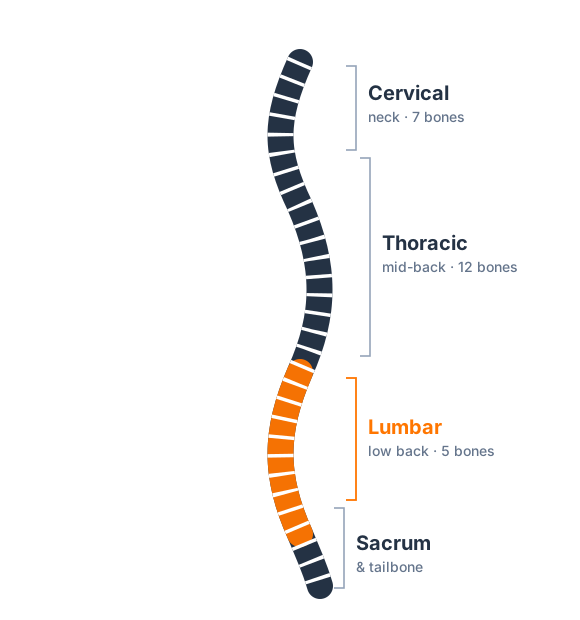
Spondylolisthesis is a condition in which one vertebra slips forward on the one directly beneath it. The name is a mouthful, but it breaks down simply: spondylo- means spine, and -listhesis means to slip or slide. It happens most often low in the lumbar spine, where the load is greatest, and the amount of slip ranges from very slight to more pronounced.
There are two main stories behind it, and they show up in very different people. In younger athletes, it often begins as a stress fracture in a small bridge of bone in the vertebra — a defect called spondylolysis — caused by repeated hard backward bending and loading. Gymnasts, football linemen, divers, dancers, and weightlifters are the classic examples. If that weakened bone lets the vertebra drift forward, spondylolysis becomes spondylolisthesis. In older adults, the cause is usually different: the gradual wear of aging — the same spinal arthritis process that loosens the small joints and thins the discs — lets a vertebra slip. This is called degenerative spondylolisthesis, and it's more common with age.
The most important thing to understand up front is that a slip on an X-ray isn't automatically a crisis. Many slips are low-grade and stable — they don't keep moving, and they cause manageable back symptoms rather than anything sinister. What determines the plan is the grade of the slip, whether it's stable or changing, and whether it's crowding a nerve.
What's Happening in Your Spine
To make sense of spondylolisthesis, picture how the vertebrae interlock. Each vertebra sits on the one below, cushioned in front by a disc and connected at the back by a pair of small facet joints that guide motion and, crucially, help keep each vertebra from sliding forward on the next. A slender bridge of bone called the pars links the front and back of the vertebra and is part of what holds the level in place. Spondylolisthesis is what happens when the structures that normally prevent forward slippage give way.
That failure happens in a few distinct ways:
- A stress fracture in the pars. Repeated hard backward bending — common in certain sports — can crack that small bridge of bone. This is the classic route in young athletes, and it's why the condition is one of the more common causes of persistent low back pain in adolescent athletes, where sports injuries load the growing spine.
- Age-related wear at the facet joints and disc. Over decades, the small joints loosen and the disc thins — the process of degenerative disc disease — and the vertebra can gradually drift forward. This degenerative form typically appears in older adults.
- Less common causes — including slips people are born with a tendency toward, or ones that follow a significant injury.
Once a vertebra has slipped, two things can generate symptoms. The segment itself becomes a source of mechanical back pain and protective muscle guarding, especially with movements that load or extend it. And if the slip narrows the space where nerves travel, it can crowd a nerve root or the nerve bundle in the lower canal — the same territory as sciatica, nerve-related neuropathy, and spinal stenosis — and send symptoms into the legs.
Common Symptoms
Spondylolisthesis varies a great deal depending on the grade, the cause, and whether a nerve is involved. Many low-grade slips cause surprisingly little. When symptoms do appear, you might notice:
- Low back pain and stiffness, often aching and worse with activity, that eases with rest
- Pain that worsens with leaning backward or with prolonged standing and walking, since these movements load the slipped segment
- Tight, guarding muscles in the lower back and often the hamstrings, which can feel notably tight
- Radiating pain, tingling, or numbness into a leg if the slip is crowding a nerve
- A sense that the back is unstable, catching, or "giving way" at a certain point in a movement
- In a young athlete, back pain that flares with their sport — especially activities involving repeated backward bending — and settles with rest
Some people have a slip for years and only mild, intermittent stiffness. Others, particularly when a nerve is involved, have leg symptoms that are more bothersome than the back itself. For adolescent athletes, persistent back pain that keeps returning with sport is a pattern worth taking seriously and having evaluated rather than pushing through.
How the Slip Is Graded
Because the plan depends so much on how far a vertebra has slipped, spondylolisthesis is described by grade. Being honest about grading matters, because it separates the common, manageable slips from the smaller number that need closer attention:
- Low-grade slips — the more common situation — involve a relatively small forward slip. These are frequently stable, cause manageable back symptoms, and respond well to conservative care and core strengthening. Most people you'll meet with spondylolisthesis fall here.
- Higher-grade slips — where the vertebra has slipped further — are less common but warrant closer monitoring and a lower threshold for specialist input, because they carry more potential to crowd nerves or to progress.
Two other questions shape the plan as much as the grade: is it stable or changing? A slip that stays put over time is treated very differently from one that's gradually increasing, which is why periodic imaging is sometimes used to keep an eye on it. And is a nerve involved? A slip with no nerve symptoms is a different situation from one producing leg pain, tingling, or weakness. Getting these answers is what keeps care matched to your slip rather than to the label.
Who's Most at Risk?
Spondylolisthesis shows up in two fairly distinct groups:
- Young athletes in sports with repeated backward bending or heavy loading — gymnasts, football linemen, divers, dancers, weightlifters, and cricketers among them — where the growing spine is vulnerable to a pars stress fracture. This is why it's a leading cause of persistent low back pain in adolescent athletes.
- Older adults, in whom the degenerative form appears as the facet joints and discs wear — more common with advancing age, and somewhat more common in women.
- People with a family tendency toward the condition, or a naturally weaker pars.
- Anyone with existing spinal arthritis or disc degeneration in the lower back, which sets the stage for a degenerative slip.
Often the cause tracks the age: a fresh stress fracture in a teenager who trains hard, or a gradual degenerative slip in an older adult with years of wear. Knowing which story fits you shapes both the evaluation and the plan.
How Spondylolisthesis Is Evaluated
Because the grade, stability, and any nerve involvement all shape the plan, a careful evaluation is essential. At Thrive Chiropractic, Dr. Rubinstein starts with a detailed history — when the pain started, whether there's a sport or injury behind it, what movements aggravate or ease it, and whether anything travels into the legs. In a young athlete, the training history and the pattern of sport-related pain are especially telling.
The physical exam typically includes:
- Motion testing, noting whether leaning backward provokes your pain and how the segment behaves
- Palpation of the lower back to locate the tender, guarded level, sometimes with a subtle step-like feel at the slip
- A neurological screen when there's any leg involvement — checking reflexes, strength, and sensation to see whether a nerve is being crowded and which one
- Hamstring and core assessment, since tight hamstrings and weak trunk support are common companions
Imaging has a real role here. Because the diagnosis and grading depend on seeing the slip, X-rays are commonly used to confirm spondylolisthesis and measure its grade, and sometimes to compare over time and check whether it's stable or changing. Advanced imaging such as an MRI is added when there are nerve symptoms or when more detail about the nerves and discs is needed. For a young athlete suspected of a fresh pars stress fracture, specific imaging may be warranted to catch it early. If your slip is high-grade, appears to be progressing, or is compressing a nerve, Dr. Rubinstein will coordinate the appropriate imaging or a specialist referral rather than continue hands-on care alone.
What to Expect at Thrive Chiropractic
At Thrive Chiropractic in Troy, MI, care for spondylolisthesis is conservative, gentle, and matched to your grade and exam findings. The guiding idea is honest and specific: the aim isn't to shove the vertebra back into place — that isn't how the condition works — but to calm the irritated segment and, above all, build the stability that helps the area tolerate daily load. Care often includes:
- Gentle chiropractic adjustments or mobilization aimed at the stiff, irritated joints around the slipped level to ease pain and restore comfortable motion, using techniques scaled to what your back tolerates. The slipped segment itself is treated with care, and low-force methods are used where they're the better fit.
- Core and trunk stabilization — the cornerstone of managing spondylolisthesis — progressive exercises that build the deep support the spine needs so the segment handles load better. This is where a back-pain exercise routine earns its place.
- Soft-tissue and massage therapy to release the tight lower-back and hamstring muscles that guard a slipped segment
- Activity, posture, and lifting coaching — including which movements to be cautious with, such as repeated hard backward bending and heavy unsupported lifting
- Gentle spinal decompression in selected cases where a nerve is being crowded, to reduce load on the irritated nerve root
- Custom orthotics where foot or gait imbalances are adding uneven load to the lower back
The plan is realistic about the outcome: for most low-grade, stable slips, conservative care and steady core work manage the condition well and let people stay active — often getting them back to the activities and sports they enjoy — but it doesn't reverse the slip, and it's a process rather than a single fix. For a young athlete with a fresh stress fracture, a period of relative rest and a careful return to sport usually come first. If your slip is high-grade, progressing, or compressing a nerve in a way that isn't settling, Dr. Rubinstein will say so plainly and coordinate the right medical or surgical referral.
Caring for Your Back at Home
A few habits genuinely help you manage spondylolisthesis alongside professional care.
A few more habits worth building in:
- Stick with your prescribed exercises. Consistency with core and stabilization work is what makes the biggest long-term difference; Dr. Rubinstein can guide the right progression for your grade.
- Stretch tight hamstrings gently. Tight hamstrings are common with spondylolisthesis, and gentle, regular stretching can ease some of that pull.
- Mind your workspace and sleep. Support your lower back when sitting, and use a neutral sleep position — often with a pillow under or between the knees. The ergonomic principles that help with lower back pain apply directly.
- For young athletes, respect the recovery timeline. Returning to a demanding sport too soon after a pars stress fracture invites a setback; a guided, progressive return protects the healing bone.
If your back pain is worsening, or leg symptoms appear or spread despite these steps, treat that as a signal to be re-evaluated rather than waited out.
When to Seek Prompt or Emergency Care
Most spondylolisthesis is a manageable, often stable condition — but a small set of warning signs suggests the slip is compressing the nerves at the base of the spine seriously enough to be an emergency, and these should never be waited out.
Short of that emergency, it's also worth being evaluated — sooner rather than later — when back pain lingers for weeks or keeps returning; when pain, tingling, or numbness travels into a leg; when a leg or foot feels weak; when the back feels increasingly unstable; or, for a young athlete, when sport-related back pain keeps coming back. Catching a progressing slip or nerve involvement early keeps care matched to your situation.
When Surgery Is Considered
For the great majority of people with spondylolisthesis, surgery never enters the picture — the condition is managed with the conservative care and core strengthening described above, and low-grade slips in particular tend to stay stable and livable. Surgery becomes a consideration in a narrower set of situations, generally:
- A high-grade slip, or one that is clearly progressing on repeat imaging despite good conservative care
- Significant nerve compression — persistent leg pain, tingling, or weakness, or the cauda equina red flags above, which are an emergency and can require urgent surgery
- Severe, persistent back or leg symptoms that meaningfully limit daily life and haven't responded to a fair course of conservative and medical care
Surgery for spondylolisthesis generally aims to stabilize the affected level and, when needed, relieve pressure on the crowded nerves. Even so, apart from a true emergency, it's a decision made carefully with a spine specialist, weighing how much the symptoms are affecting your life against what a procedure can realistically offer. If your case heads that way, Dr. Rubinstein will explain why and coordinate the referral. For most people, though, a well-run course of conservative care keeps spondylolisthesis manageable without surgery entering the conversation.
Frequently Asked Questions
Spondylolisthesis raises a lot of understandable questions — whether a chiropractor can treat it, whether it's serious or will keep slipping, whether you can still exercise or play sports, how it differs from spondylolysis, and whether you'll need surgery. Those are answered in detail in the FAQ section on this page.
If you've got persistent low back pain — or you're an athlete whose back keeps flaring with your sport — and want a clear picture of what's going on, schedule a visit with Dr. Rubinstein at Thrive Chiropractic in Troy, MI. You'll get a thorough exam, an honest read on your grade and whether a nerve is involved, and a conservative plan built around stability and getting you comfortably back to what you love. You can also explore the wider Back Pain library for related topics like spinal stenosis and spinal arthritis.
Back Pain Relief Guide (PDF)A one-page take-home guide: simple steps that help now, what's usually behind back pain, and the warning signs that mean it's time to see a doctor.PDFThis article is for general education and is not a substitute for professional medical advice, diagnosis, or treatment. Always consult a qualified healthcare provider about your specific situation.
Frequently Asked Questions
Can a chiropractor treat spondylolisthesis?
Yes — for most low-grade, stable slips, chiropractic care is a reasonable conservative approach. The aim isn't to push the vertebra back into place, which isn't how it works, but to ease the joint irritation and muscle guarding around the segment and, importantly, to build the core stability that helps the area tolerate daily load. Dr. Rubinstein tailors the technique to your grade and exam findings, favoring gentle, targeted methods, and coordinates a referral if the slip is high-grade or your exam raises concern.
Is spondylolisthesis serious? Will the vertebra keep slipping?
For most people it's a manageable condition rather than a dangerous one, and the majority of slips — especially the low-grade ones — stay stable and don't progress. Higher-grade slips, or slips in a still-growing young athlete, are watched more closely because they have more potential to change. An evaluation, sometimes with periodic imaging, is how your specific slip is monitored so care stays matched to it.
Can I still exercise or play sports with spondylolisthesis?
Often yes, with the right guidance. Many people with low-grade, stable slips stay active and even return to sport once they've built up core stability and learned which movements to be cautious with — typically repeated hard backward bending and heavy, unsupported loading. For a young athlete with a fresh stress fracture, a period of relative rest is usually needed first. Dr. Rubinstein can help map out what's safe for your situation.
What's the difference between spondylolysis and spondylolisthesis?
They're closely related. Spondylolysis is a stress fracture or defect in a small bridge of bone in the vertebra, often from repetitive backward bending in young athletes. Spondylolisthesis is when that weakness — or age-related wear — actually lets the vertebra slip forward on the one below. So spondylolysis can be the setup, and spondylolisthesis is the slip itself.
Do I need surgery for spondylolisthesis?
Most people don't. The great majority of slips, particularly low-grade ones, are managed well with conservative care and core strengthening. Surgery is generally reserved for high-grade or progressing slips, or for cases with significant nerve compression — like persistent leg pain, weakness, or the red-flag signs below — that haven't responded to non-surgical care. Starting conservatively is a reasonable first step for most people.
Ready to get evaluated at Thrive Chiropractic?
Dr. Rubinstein will assess what’s really going on and build a care plan tailored to you. Reach out and we’ll get you scheduled.
2133 Crooks Road | Troy MI 48084