
Spinal Stenosis: Causes, Symptoms & How Chiropractic Helps
Spinal stenosis is a narrowing of the spinal canal or the side openings where nerves exit, which can crowd the nerves in the lower back and produce the classic pattern of leg pain or heaviness that comes on with standing and walking and eases when you sit or lean forward. Here's what's happening in your spine, how it's evaluated, the red flags that need urgent care, and how conservative chiropractic care at Thrive Chiropractic in Troy, MI helps you stay comfortable and moving.
What Is Spinal Stenosis?
Spinal stenosis is a narrowing of the spaces inside your spine that the spinal cord and nerves travel through. "Stenosis" simply means narrowing, and it can happen in the central canal that houses the nerves, in the side openings where each nerve root exits, or both. When those spaces tighten enough to crowd the nerves, the result isn't usually back pain alone — it's symptoms in the legs, which is what makes stenosis feel different from most other back conditions.
It can occur in the neck or the lower back, but the lumbar (lower-back) form is the one most people mean when they talk about spinal stenosis, and it's the focus here. The great majority of cases come from the ordinary, gradual wear of aging — the same spinal arthritis process that thickens ligaments, flattens discs, and grows small bone spurs slowly reduces the room the nerves have. That's why stenosis is far more common in older adults, and why it tends to come on gradually rather than after a single injury. The reassuring part is that a narrowed space doesn't automatically mean severe or worsening trouble; many people have narrowing on imaging with mild symptoms or none at all, and much of the discomfort it does cause can be managed conservatively.
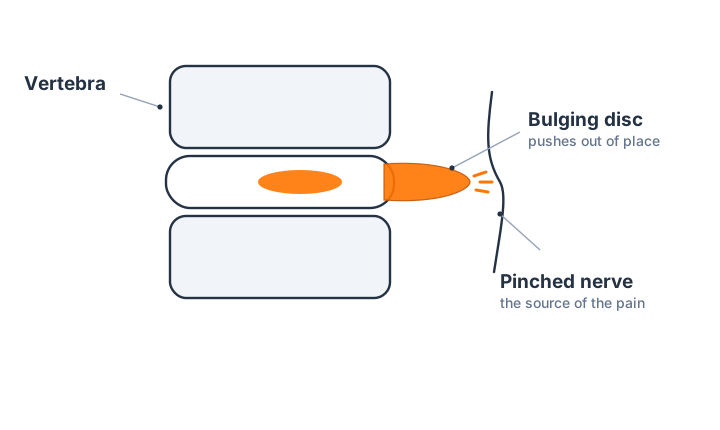
What's Happening in Your Spine
To understand stenosis, picture how the spine is built. The vertebrae stack in a column, each separated by a shock-absorbing disc. Running down the middle is a hollow central canal that protects the spinal cord and, in the lower back, the bundle of nerves that continues below it — the cauda equina, named for its resemblance to a horse's tail. At every level, a pair of nerve roots branch off and exit through small side openings on their way to the legs. Stenosis is what happens when one or more of these passages narrows.
Over decades of ordinary use, several changes tend to close that space down together:
- The ligaments thicken. The soft tissues lining the canal stiffen and bulk up with age, and this thickening is one of the leading contributors to central narrowing in the lower back.
- The discs flatten and bulge. As discs lose height — the process of degenerative disc disease — a bulging disc can encroach on the canal from the front.
- Bone spurs form. The body lays down extra bone at the edges of worn joints. If a spur grows into a side opening, it narrows the room a nerve root needs.
- A vertebra slips. Sometimes one vertebra drifts slightly forward on the one below — spondylolisthesis — which narrows the canal at that level.
Here's the piece that explains stenosis's signature behavior: the size of the canal actually changes with your posture. Leaning slightly forward — sitting, bending, or leaning on a cart — opens the canal and the side openings a little, giving the crowded nerves more room. Standing tall or leaning backward closes that space down. This is why so many people with lumbar stenosis feel fine sitting but ache in the legs after standing or walking a while, and why bending forward brings relief. When the crowding reaches the point of irritating the nerves, it can send pain, heaviness, or tingling into the legs — sometimes overlapping with sciatica and nerve-related neuropathy.
Common Symptoms
Lumbar spinal stenosis has a fairly recognizable signature, driven by that posture-dependent crowding of the nerves:
- Leg pain, heaviness, cramping, or tingling that comes on with standing and walking and often affects both legs
- Relief within a few minutes of sitting down or bending forward — the classic pattern doctors call neurogenic claudication
- Being able to walk farther when leaning on a cart or walking uphill, and struggling more walking upright or downhill
- Numbness or "pins and needles" in the legs or feet
- Back stiffness and aching, though the leg symptoms are often more bothersome than the back itself
- Legs that feel weak or unsteady after being on your feet a while, easing again with rest
Symptoms usually build gradually over months or years and tend to wax and wane. Many people quietly adapt — taking the elevator, leaning on the cart at the grocery store, choosing a seat sooner — before they realize a pattern has set in. That standing-and- walking-brings-it-on, sitting-relieves-it rhythm is the single most useful clue that stenosis, rather than a disc or muscle, is the driver.
Who's Most at Risk?
Because stenosis usually comes from accumulated wear, it's most common in:
- Older adults, by a wide margin — the age-related changes that narrow the canal take decades to add up, so most cases appear after the mid-fifties
- People with long-standing spinal arthritis or disc degeneration in the lower back
- People with an existing spondylolisthesis, where a slipped vertebra narrows the canal at that level
- Those with a naturally narrower canal from birth, who may develop symptoms somewhat earlier
- People with a history of significant back injury or heavy physical work, which can speed wear at the affected levels
Often several of these stack up over a lifetime. None of them guarantee symptoms — plenty of people with narrowing on a scan walk comfortably — but they make it more likely the ordinary narrowing of aging will eventually announce itself in the legs.
How Spinal Stenosis Is Evaluated
Because stenosis produces leg symptoms that overlap with other conditions, a careful evaluation is what makes targeted care possible. At Thrive Chiropractic, Dr. Rubinstein starts with a detailed history — where the symptoms are felt, whether they affect one leg or both, and above all what brings them on and what relieves them, since the standing-and-walking-versus-sitting pattern is so telling.
The physical exam typically includes:
- Posture and motion testing, noting whether bending backward provokes your leg symptoms and bending forward relieves them — a pattern characteristic of stenosis
- A neurological screen — checking reflexes, testing leg and foot strength, and mapping altered sensation to see which nerves are involved
- Walking and endurance observations, since how your symptoms behave with activity is part of the picture
- Circulation checks, because leg pain with walking can also come from the blood vessels rather than the nerves, and it's important to tell the two apart
Imaging plays a bigger role here than for simple back pain. Because the diagnosis hinges on the actual narrowing, an MRI — the test that shows the canal, discs, and nerves in detail — is often appropriate when symptoms and exam point to stenosis, especially if care is being considered beyond conservative measures. Even so, imaging is read alongside your symptoms, never on its own, since the degree of narrowing on a scan doesn't reliably predict how much someone hurts. If your exam or imaging suggests you'd benefit from a specialist's input, Dr. Rubinstein will coordinate that referral rather than continue hands-on care alone.
What to Expect at Thrive Chiropractic
At Thrive Chiropractic in Troy, MI, care for spinal stenosis is conservative, gentle, and matched to what your spine can comfortably handle — the aim is to ease the crowding on the nerves and keep you active, not to force motion an older, narrowed spine doesn't tolerate. Care often includes:
- Gentle chiropractic adjustments or mobilization to restore motion to stiff segments and reduce joint irritation, using techniques scaled to what your back tolerates. For spines that do better with a lighter touch, low-force and instrument-assisted methods are used.
- Flexion-based movement and stretches — exercises that work with stenosis's natural tendency to ease when the spine bends slightly forward, which many people find genuinely relieving
- Soft-tissue and massage therapy to release the tight, guarding muscles that build up around a crowded segment
- Gentle spinal decompression in selected cases, to reduce load on an irritated nerve root
- Activity and walking coaching — pacing, posture, and using a slight forward lean or a stationary bike so you can stay active without provoking symptoms
- Custom orthotics where foot or gait imbalances are adding uneven load to the lower back
The plan is honest about what's realistic: conservative care manages and relieves the symptoms of stenosis and helps you keep moving — it can't widen a canal that has narrowed over years, and it isn't a cure. What it often does very well is keep the condition livable, sometimes for years. You'll get a specific sense of your outlook after the exam. If your symptoms are severe, progressive, or steadily shrinking how far you can walk despite good conservative care, Dr. Rubinstein will say so plainly and coordinate the right medical or surgical referral.
Caring for Your Back at Home
A few habits can genuinely help you stay comfortable and active alongside professional care.
Here's the posture shift that so often makes the difference between a comfortable walk and a painful one — worth picturing before your next trip on foot:
A few more habits worth building in:
- Keep walking within comfort. Staying active matters; the trick is pacing — rest or sit briefly when symptoms build, then carry on, gradually extending your range.
- Strengthen your core gradually. Gentle, progressive trunk exercise gives the spine more support day to day; Dr. Rubinstein can guide what's safe for your stage.
- Mind your workspace and sleep. Support your lower back when sitting, and use a neutral sleep position — often with a pillow under or between the knees. The ergonomic principles that help with lower back pain apply directly.
If your leg symptoms are getting stronger, spreading, or coming on after shorter and shorter distances despite these steps, treat that as a signal to be re-evaluated rather than waited out.
When to Seek Prompt or Emergency Care
Most spinal stenosis is a slow, manageable condition — but a small set of warning signs suggests the narrowing has reached the point of seriously compressing the nerve bundle at the base of the spine, which is not something to wait out.
Short of that emergency, it's also worth being evaluated — sooner rather than later — when leg pain, heaviness, or tingling comes on reliably with standing or walking and eases when you sit; when the distance you can walk comfortably is shrinking; when a leg or foot feels weak; or when symptoms are disrupting sleep, activity, or daily life. Catching worsening nerve involvement early gives conservative care the best chance to keep you moving.
When Surgery Is Considered
For a great many people with spinal stenosis, surgery never enters the picture — the condition is managed with the kind of conservative care described above, and symptoms often stay livable for years. Surgery becomes a consideration in a narrower set of situations, generally when the narrowing is significantly compressing the nerves and causing:
- Progressive weakness or muscle wasting in a leg or foot
- Signs of serious nerve compression — including the cauda equina red flags above, which are an emergency and can require urgent surgery, or a steadily worsening narrowing that shrinks how far you can walk
- Severe, persistent leg symptoms that meaningfully limit your daily life and haven't responded to a fair course of conservative and medical care
The most common procedure for lumbar stenosis aims to relieve pressure on the nerves by creating more room in the narrowed space. Even so, apart from a true emergency, it's a decision made carefully with a spine specialist, weighing how much the symptoms are affecting your life against what a procedure can realistically offer. If your case heads that way, Dr. Rubinstein will explain why and coordinate the referral. For many people, though, an unhurried trial of conservative care keeps stenosis manageable without surgery entering the conversation.
Frequently Asked Questions
Spinal stenosis raises a lot of understandable questions — whether a chiropractor can help, why leg pain eases when you sit or lean forward, whether you'll need surgery, how it differs from sciatica, and whether walking will make it worse. Those are answered in detail in the FAQ section on this page.
If you're dealing with back pain or leg symptoms that come on with standing and walking and want a clear picture of what's going on, schedule a visit with Dr. Rubinstein at Thrive Chiropractic in Troy, MI. You'll get a thorough exam, an honest read on what's driving your symptoms, and a conservative plan aimed at easing the crowding and keeping you comfortably on your feet. You can also explore the wider Back Pain library for related topics like spinal arthritis and spondylolisthesis.
Back Pain Relief Guide (PDF)A one-page take-home guide: simple steps that help now, what's usually behind back pain, and the warning signs that mean it's time to see a doctor.PDFThis article is for general education and is not a substitute for professional medical advice, diagnosis, or treatment. Always consult a qualified healthcare provider about your specific situation.
Frequently Asked Questions
Can a chiropractor help with spinal stenosis?
Chiropractic care can't widen a narrowed canal, but it often helps with the symptoms. Gentle mobilization, soft-tissue work, and flexion-based movement and stretches aim to take pressure off the crowded nerves and keep you moving comfortably. Dr. Rubinstein matches the approach to your exam findings and uses lighter techniques where that's the better fit, with the honest goal of easing symptoms rather than curing the narrowing.
Why does my leg pain ease when I sit down or lean on a cart?
That's the telltale pattern of lumbar spinal stenosis, called neurogenic claudication. Bending slightly forward — sitting, leaning on a shopping cart, or walking uphill — opens up the spinal canal a little and gives the crowded nerves more room, so symptoms settle within a few minutes. Standing tall or walking downhill narrows the space again and brings them back. Noticing this pattern is genuinely useful information for your exam.
Do I need surgery for spinal stenosis?
Most people don't. A great many people with spinal stenosis manage well for years with conservative care, and surgery is generally reserved for the minority whose symptoms are severe, progressive, or significantly limiting how far they can walk despite non-surgical care — or who develop red-flag signs of serious nerve compression. Starting with conservative care is a reasonable first step for most people.
Is spinal stenosis the same as sciatica?
They're related but not the same. Sciatica is a symptom — leg pain from an irritated nerve — while stenosis is one of the things that can cause it, by narrowing the space around the nerves. Stenosis-driven leg symptoms often affect both legs and follow the standing-and-walking pattern above, whereas a disc-driven sciatica more often affects one leg. An exam sorts out what's actually driving your symptoms.
Will walking make my spinal stenosis worse?
Walking often brings symptoms on, but that doesn't mean it's harming your spine — and staying active matters. Many people do well by walking within comfort, resting or sitting briefly when symptoms build, then carrying on. Some find a stationary bike or walking while leaning slightly forward lets them go further comfortably. Dr. Rubinstein can help you find the activity approach that keeps you moving without provoking a flare.
Ready to get evaluated at Thrive Chiropractic?
Dr. Rubinstein will assess what’s really going on and build a care plan tailored to you. Reach out and we’ll get you scheduled.
2133 Crooks Road | Troy MI 48084