
Preventing Future Back Pain: A Practical Everyday Playbook
Most back pain isn't a single dramatic injury — it's the result of everyday habits stacking up over months and years. The good news is that the same everyday habits, aimed the other way, are your best protection. Here's a practical, holistic playbook for preventing future back pain — movement, lifting, ergonomics, sleep, weight, and core strength — plus how periodic care at Thrive Chiropractic in Troy, MI helps you stay ahead of it.
Why Prevention Beats Treatment
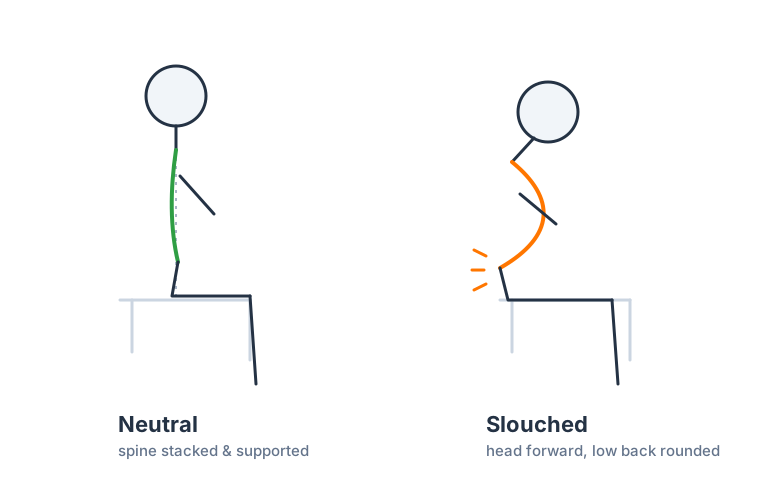
It's tempting to think of back pain as bad luck — a wrong move, a heavy box, a bad mattress on the wrong night. And sometimes a single event really is the trigger. But far more often, everyday back pain is the result of ordinary habits stacking up over months and years: hours of slumped sitting, lifts done carelessly, a core that's quietly weakened, nights of poor sleep, a body that's grown a little less active. The "wrong move" that finally sets it off is usually just the last straw on a back that was already loaded.
That's actually encouraging, because it means prevention is largely in your hands. The same everyday habits that stack up against your back can be aimed the other way to protect it — and they're simple, low-cost, and yours to control. This playbook walks through the ones that matter most. None of them is a magic fix on its own; the power is in the combination, kept up steadily. And prevention genuinely beats treatment: it's far easier to keep a healthy back healthy than to calm a flared one down.
Keep Moving Every Day
If there's one theme running through everything below, it's this: motion protects your spine. A back that moves regularly stays supple, well-nourished, and strong; a back that sits still for hours stiffens, weakens, and grows more sensitive. Regular, varied movement is the single most protective habit you can build.
You don't need to become an athlete. What matters is consistency and variety:
- Walk daily. Walking is one of the best things going for a healthy back — gentle, rhythmic, and easy to keep up. A brisk walk most days does more for your spine than an occasional hard workout.
- Break up stillness. Long stretches of sitting or standing both load the back; the fix for either is to change position and move regularly rather than holding one posture for hours.
- Stay generally active. Mix in whatever you enjoy and will keep doing — swimming, cycling, yoga, gardening. Variety keeps different muscles engaged and stops any one pattern from overloading the same tissue.
Lift Smart: The Hip Hinge
Lifting is where a lot of preventable back pain begins — and it's usually not the rare heavy lift that does it, but the countless everyday ones done carelessly: picking up a laundry basket, a child, a bag of groceries, a box off the floor. The single most valuable mechanic to learn is the hip hinge.
The idea is to bend from your hips and knees rather than rounding your lower back:
- Get close and set your feet. Stand right next to the load with a stable, shoulder-width stance — don't reach out for it.
- Hinge at the hips. Push your hips back and bend your knees, keeping your lower back in its natural position rather than rounding it forward. Your chest stays up.
- Brace and keep it close. Set a gentle core brace, grip the load, and hold it as close to your body as you can — distance from your body multiplies the strain.
- Drive up with your legs. Stand up by pushing through your hips and legs, not by yanking with your back.
- Turn with your feet. To change direction, step and pivot your feet rather than twisting your spine under load — twisting while lifting is a classic way to hurt a back.
And know your limits: if something is clearly too heavy or awkward, get help, split the load, or use a cart. For much more on this, including what to do if lifting has already caused trouble, see our guide to back pain from lifting.
Set Up Your Workspace
For anyone who works at a desk, the workspace is where the most hours — and often the most cumulative load — happen. A few adjustments go a long way toward preventing the slow-building ache of desk work:
- Support your lower back. Sit back into your chair with your lower back supported, using a lumbar cushion if the chair doesn't do it, so you're not slumping forward for hours.
- Set your screen at eye level. The top of your monitor around eye height keeps your head balanced over your shoulders instead of drifting forward and dragging on your neck and upper back.
- Keep your feet supported and hips slightly above knees. Feet flat on the floor or a footrest, thighs roughly parallel to the ground, so your pelvis sits in a neutral position.
- Bring the work to you. Keyboard and mouse close, chair pulled in, so you're not reaching or leaning throughout the day.
- Alternate sitting and standing if you can. A sit-stand setup lets you change position — but the real benefit is the changing, so keep moving regardless of which you're doing.
Even a great setup doesn't replace movement — the best workspace in the world still needs you to get up and move regularly. But a good one removes a large, constant source of daily strain.
Build a Strong, Supportive Core
A back is only as well-supported as the muscles around it. The deep core — the muscles that wrap and brace your lower spine — works like a natural corset, steadying your back through everything you do so the joints and discs aren't overloaded. When that core is strong and coordinated, your spine handles daily life with a wide margin of safety; when it's weak, small demands become strains.
Building it doesn't take crunches or a gym. Gentle, low-load stability exercises — the glute bridge, bird-dog, dead bug, planks, and pelvic tilts — train the deep core to do its protective job, and they're safe to build up at home. Because a strong core is such a cornerstone of prevention, it's worth giving it dedicated attention: our full guide to core stability for back pain walks through a safe, progressive routine, and our broader back pain exercises guide adds mobility work that pairs well with it. Build these gradually, keep them consistent, and they become quiet, always-on protection.
Sleep That Supports Your Back
You spend a third of your life in bed, so how you sleep matters more to your back than most people realize — both for recovery and for prevention. The aim is simple: keep your spine in a comfortable, neutral position through the night.
- Mind your position. Sleeping on your side with a pillow between your knees, or on your back with a pillow under your knees, tends to keep the spine best supported. Sleeping flat on your stomach is the position most likely to strain the lower back and neck over time.
- Get the right pillow height. Your pillow should keep your head level with your spine — not propped too high or too flat — so your neck and upper back aren't cranked all night.
- Have a supportive mattress. One that's neither sagging nor rock-hard, that keeps your spine roughly level, supports your back best. There's no single "right" firmness for everyone — comfort and support that keep you neutral are what count.
Good, sufficient sleep also lowers pain sensitivity and muscle tension across the board, so protecting your sleep isn't a side issue — it's genuine prevention.
Weight, Fitness, and the Whole Body
Your back doesn't work in isolation — it carries and balances the rest of you, so your overall health shows up in it. A couple of whole-body factors quietly shape how much strain your spine lives under:
- Carry a healthy weight. Extra weight, particularly around the midsection, increases the day-to-day load on the lower back and tips the pelvis in ways that add strain. Reaching and holding a healthy weight is one of the more meaningful things you can do to take pressure off your spine over the long run.
- Stay generally fit and flexible. Strong legs and hips, flexible hamstrings, and decent all-around conditioning all mean your back has help doing its job. Tight, weak surrounding muscles leave it doing more than its share.
- Mind your feet. How you stand and walk starts from the ground up, and poor foot mechanics can send strain up the chain into the lower back. For some people, supportive footwear or custom orthotics is a useful piece of the prevention picture.
None of this requires perfection. Steady, sustainable habits — a bit more movement, a bit more strength, a healthier weight over time — compound into a back that's far more resilient.
The Role of Maintenance Chiropractic Care
Everyday habits do the heavy lifting in prevention, but periodic — or maintenance — chiropractic care can be a valuable part of the plan, especially if you're prone to recurring episodes or have a physically demanding life. The idea isn't to treat pain you don't have; it's to keep your spine moving and functioning well and to catch small issues before they become flares.
At Thrive Chiropractic in Troy, MI, that can look like periodic visits to keep stiff, poorly-moving segments gliding freely, massage therapy to release tension that builds up before it turns into a spasm, and — just as importantly — ongoing coaching on the movement, lifting, workspace, and core habits in this playbook. Dr. Rubinstein tailors how often makes sense to your body and your life rather than putting everyone on the same schedule, and if you're recovering from a specific problem, a check-in helps you prevent a repeat by addressing the actual cause. If you're not sure whether it's time for a look, our guide to when to see a chiropractor for back pain can help you decide.
Prevention, though, has one firm boundary: certain symptoms aren't things to manage or wait out.
Frequently Asked Questions
Preventing back pain raises practical questions — how to stop it coming back, the single best thing to do, whether sitting is really the culprit, whether chiropractic care can help prevent it, and how to protect your back when lifting. Those are answered in detail in the FAQ section on this page.
If you keep having back trouble and want a prevention plan built for your body and habits rather than a generic list, schedule a visit with Dr. Rubinstein at Thrive Chiropractic in Troy, MI. You'll get a thorough exam, an honest read on the pattern behind your episodes, and practical guidance to stay ahead of it. You can also explore the wider Back Pain library, including core stability for back pain and back pain exercises.
Back Pain Relief Guide (PDF)A one-page take-home guide: simple steps that help now, what's usually behind back pain, and the warning signs that mean it's time to see a doctor.PDFThis article is for general education and is not a substitute for professional medical advice, diagnosis, or treatment. Always consult a qualified healthcare provider about your specific situation.
Frequently Asked Questions
How can I prevent back pain from coming back?
Work on the everyday drivers rather than just the last flare: stay active and moving daily, lift with a hip hinge instead of your lower back, set up your workspace so you're not slumped for hours, keep a strong core, protect your sleep, and stay generally fit. No single one is magic — it's the combination, kept up consistently, that reduces how often back pain returns. If you keep having episodes, an exam can pinpoint the specific pattern behind yours.
What is the best way to prevent lower back pain?
There isn't one single best thing — the most effective prevention is a handful of habits working together. If forced to pick the highest-value ones, regular movement, a strong deep core, and smart lifting mechanics protect the lower back the most. Layer in a sensible workspace, good sleep, and general fitness and you've addressed the main drivers of everyday lower back pain.
Does sitting all day cause back pain?
Prolonged, slumped sitting is one of the most common contributors to everyday back pain, because it loads the lower back continuously and leaves the supporting muscles underused. Sitting itself isn't the enemy so much as sitting still for hours in a poor position. Breaking it up with regular standing and movement, supporting your lower back, and setting up your workspace well takes most of that load off.
Can chiropractic care prevent back pain?
Periodic chiropractic care can be a useful part of a prevention plan for many people. Keeping the spine moving well, releasing tight muscles, and catching small restrictions before they become flares — alongside coaching on movement, lifting, and workspace setup — helps you stay ahead of recurring back pain. It works best combined with the daily habits, not as a replacement for them. Dr. Rubinstein tailors how often makes sense to you.
How do I protect my back when lifting?
Use a hip hinge: stand close to the load, set your feet, bend at your hips and knees rather than rounding your lower back, brace your core gently, keep the object close to your body, and drive up with your legs and hips. Turn with your feet instead of twisting your spine, and don't try to lift something that's clearly too heavy — get help or split the load. It's the everyday lifts done carelessly, more than the rare heavy one, that tend to cause trouble.
Ready to get evaluated at Thrive Chiropractic?
Dr. Rubinstein will assess what’s really going on and build a care plan tailored to you. Reach out and we’ll get you scheduled.
2133 Crooks Road | Troy MI 48084