
Non-Surgical Back Pain Treatment: Your Conservative Options
The great majority of back pain improves without surgery. Here's an honest overview of the conservative, non-surgical options — chiropractic adjustment, spinal decompression, soft-tissue and massage therapy, exercise and rehab, and ergonomics — how they work together, the reality of what recovery looks like, and the narrow set of situations where surgery genuinely is warranted. Care built around your exam at Thrive Chiropractic in Troy, MI.
Most Back Pain Doesn't Need Surgery
If you're worried that back pain means you're headed for the operating room, here's the reassuring reality: the great majority of back pain improves without surgery. For most people, back pain comes from mechanical problems — strained muscles, stiff or irritated joints, and disc irritation — and those respond well to conservative, non-surgical care. Surgery is the exception in back pain, not the starting point.
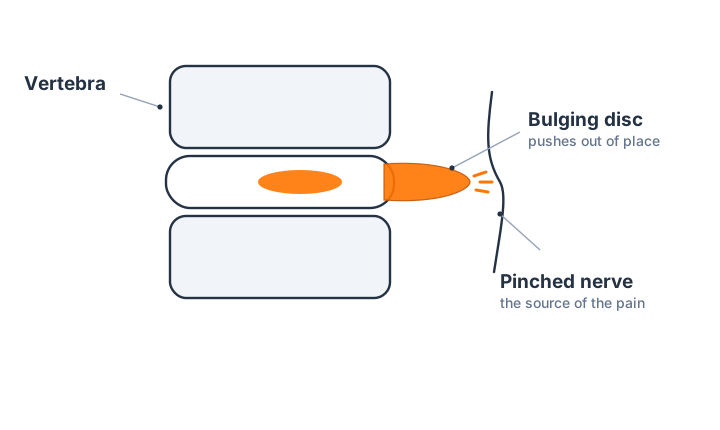
That's true even for problems that sound alarming. Most herniated and bulging discs, for instance, settle with conservative care and never require an operation, and much of the wear-and-tear that shows up on scans isn't the source of pain at all. The sensible path for nearly everyone is to start with the least invasive options that address the cause, give them a genuine chance to work, and reserve surgery for the narrow set of situations that truly call for it. This guide lays out those conservative options honestly — what each one does, how they work together, what recovery really looks like, and where the line to surgery actually sits.
The Conservative Options, Explained
Non-surgical care isn't one thing — it's a toolkit. Here are the main conservative options and what each one actually does:
- Chiropractic adjustment and mobilization. Gentle, specific movements restore motion to stiff, poorly-moving spinal and pelvic joints and reduce the irritation driving your pain. Restoring normal movement is often the foundation the rest of the plan builds on.
- Spinal decompression. When a disc is involved, this gently and gradually reduces pressure within the disc and on any crowded nerve, creating room for irritated tissue to settle. It's a mainstay for disc-related back and leg pain.
- Soft-tissue and massage therapy. Hands-on work releases the protective muscle spasm and chronic tightness that build up around a sore segment, easing pain and helping you move more freely.
- Exercise and rehabilitation. A structured plan of stretching and strengthening rebuilds the deep core and hip muscles that support your spine. It's the piece that makes improvement last — our back pain exercises guide walks through a safe home routine.
- Ergonomics and lifestyle changes. Setting up your workspace, improving posture and lifting mechanics, and — where foot mechanics are a factor — custom orthotics all take steady, everyday load off your back so it can recover and stay better.
Each of these is useful on its own, but none is a magic bullet in isolation. The real value comes from how they're combined.
How These Work Together
The reason conservative care works so well is that the pieces reinforce each other. No single one carries the whole load — they're layered to address both your pain now and the reasons it started.
Think of it as a sequence that overlaps: hands-on care — adjustment, decompression, and soft-tissue work — settles the irritated joints, discs, and muscles and opens up a comfortable window in which movement is possible again. Exercise and rehab then use that window to rebuild the support your spine needs, which is what keeps the pain from simply returning. And ergonomic changes run underneath all of it, cutting the daily strain that fed the problem in the first place. Relief comes from the hands-on work; durability comes from the movement and lifestyle side. Pulled together and matched to your exam, that combination is what resolves or controls the great majority of back pain without ever needing surgery.
What Recovery Actually Looks Like
It's worth being honest about the shape of recovery, because the right expectation is part of getting better. Non-surgical care rarely delivers an instant, one-visit fix — and anyone promising that isn't being straight with you. What it delivers, reliably, is steady improvement.
How long it takes depends on the cause, how long you've had the pain, and how you respond — a recent strain may settle in a few weeks, while a long-standing or disc-related problem takes a more sustained plan. Dr. Rubinstein gives you an honest estimate after your exam and adjusts it as you go, rather than committing you to an open-ended schedule. And if you're genuinely not improving with a solid course of conservative care, that's meaningful information that shapes the next step.
When Surgery Is Genuinely Warranted
Being pro-conservative doesn't mean being anti-surgery. Surgery is the right tool for a specific, narrow set of situations, and it's important to be clear about them so the exceptions aren't lost in the reassurance:
- True emergencies — the red-flag symptoms below, such as saddle numbness or loss of bladder or bowel control, can require urgent surgery to relieve pressure on the nerves.
- Significant or progressive nerve compression — for example, worsening weakness in a leg from a disc pressing on a nerve, where the deficit is advancing rather than settling.
- Instability or specific structural problems — certain cases of spondylolisthesis, severe spinal stenosis, or a clear structural cause that conservative care can't address.
- Failure of a genuine course of conservative care — when significant, disabling pain persists despite a real, well-run trial of non-surgical treatment.
Even in these situations, the decision belongs to a surgeon and you, made with full information — and conservative care often still has a role before and after. The point isn't that surgery is bad; it's that it's rarely the first answer, and starting conservatively costs you little while sparing most people an operation they never needed.
What to Expect at Thrive Chiropractic
At Thrive Chiropractic in Troy, MI, non-surgical care for back pain is conservative, hands-on, and built entirely around your exam. Dr. Rubinstein starts with a thorough history and physical exam to identify what's actually driving your pain, then builds a plan from the conservative options above — matched to your findings rather than applied off a template. Care commonly combines:
- Chiropractic adjustments or mobilization to restore motion to stiff joints
- Spinal decompression when a disc or nerve is involved
- Soft-tissue and massage therapy to release muscle spasm and tightness
- A structured exercise and rehabilitation plan to rebuild support and make progress last
- Ergonomic and lifestyle coaching, including custom orthotics when foot mechanics are a factor
Just as important, the plan is honest about its own limits. If your exam turns up something that needs medical or surgical attention — or if a solid course of conservative care isn't getting you where you should be — Dr. Rubinstein will say so plainly and coordinate the right referral. The goal is the least invasive path that actually works for you, whatever that turns out to be.
When to Seek Emergency Care
Most back pain is safe to manage conservatively and improves without surgery. A small set of symptoms, though, are true emergencies — they point to pressure on the nerves at the base of the spine and can require urgent surgery, so they should never be worked through conservatively.
Short of those emergencies, back pain that keeps coming back, doesn't ease within a couple of weeks, or interferes with your life is exactly what non-surgical care is built to handle. When you're ready, you can schedule a visit with Dr. Rubinstein and get a thorough exam, an honest read on your options, and a conservative plan aimed at getting you comfortably back to normal.
Frequently Asked Questions
Non-surgical back pain treatment raises fair questions — whether back pain can be treated without surgery at all, what the options actually are, whether they work for a herniated disc, how long recovery takes, and how to know if you truly need surgery. Those are answered in detail in the FAQ section on this page.
If your back is bothering you and you want to understand your non-surgical options, schedule a visit with Dr. Rubinstein at Thrive Chiropractic in Troy, MI. You'll get a thorough exam, an honest read on the cause, and a conservative plan built around your findings — with a straight referral if that's what you need. You can also explore the wider Back Pain library, including when to see a chiropractor for back pain and chronic back pain.
Back Pain Relief Guide (PDF)A one-page take-home guide: simple steps that help now, what's usually behind back pain, and the warning signs that mean it's time to see a doctor.PDFThis article is for general education and is not a substitute for professional medical advice, diagnosis, or treatment. Always consult a qualified healthcare provider about your specific situation.
Frequently Asked Questions
Can back pain be treated without surgery?
For the great majority of people, yes. Most back pain — including much disc-related pain — improves with conservative, non-surgical care such as chiropractic adjustment, spinal decompression, soft-tissue therapy, and a structured exercise plan. Surgery is reserved for a narrow set of situations, not the default. An exam is what determines the right mix of non-surgical options for your specific problem.
What are the non-surgical options for back pain?
The main conservative options are chiropractic adjustment and mobilization to restore joint motion, spinal decompression to gently ease pressure on an irritated disc or nerve, soft-tissue and massage therapy to release muscle spasm, exercise and rehabilitation to rebuild support, and ergonomic changes to reduce daily strain. They tend to work best combined rather than used in isolation, matched to what your exam finds.
Does non-surgical treatment work for a herniated disc?
Very often, yes. Most herniated and bulging discs improve with conservative care and never require surgery. Spinal decompression, chiropractic care, soft-tissue work, and a targeted exercise plan can reduce the irritation and help the disc settle over time. Surgery for a disc is considered mainly when there's significant or progressive nerve compression, or when a solid course of conservative care hasn't helped.
How long does non-surgical back pain treatment take?
It depends on the cause, how long you've had the pain, and how you respond, so there's no single answer. A recent strain may settle in a few weeks, while a long-standing or disc-related problem takes a more sustained plan. Recovery is usually steady rather than instant — hands-on care creates comfortable windows and the exercise plan makes the gains last. Dr. Rubinstein gives you an honest estimate after your exam.
How do I know if I need surgery for back pain?
Most people don't, and surgery is generally considered only in a narrow set of situations: certain emergencies, significant or progressive nerve compression causing weakness, or pain and disability that haven't responded to a genuine course of conservative care. Emergency signs like saddle numbness or loss of bladder or bowel control need immediate care. Short of those, a thorough evaluation clarifies whether conservative care is the right path — and it usually is.
Ready to get evaluated at Thrive Chiropractic?
Dr. Rubinstein will assess what’s really going on and build a care plan tailored to you. Reach out and we’ll get you scheduled.
2133 Crooks Road | Troy MI 48084