
Back Pain While Walking: Why It Happens & What It Means
Back or leg pain that comes on when you walk — and eases when you sit or bend forward — is a distinctive pattern with a name: neurogenic claudication. Here's what it usually means, how it differs from a circulation problem, how chiropractic care at Thrive Chiropractic in Troy, MI helps, and when it needs a closer look.
What Is Back Pain While Walking?
Back pain while walking — often felt as much in the legs as the back — is discomfort that comes on or builds up as you walk and eases when you stop, sit down, or bend forward. For many people it shows up as pain, heaviness, cramping, or tingling in the lower back, buttocks, and legs that limits how far they can walk before they need a break. That "walk a while, then have to sit" rhythm is a distinctive pattern, and it has a name: neurogenic claudication.
The word claudication just means pain brought on by activity that eases with rest. Neurogenic means it's coming from the nerves — specifically, from the nerves in the lower back not having quite enough room. Walking upright tends to narrow the spaces those nerves pass through, so they get crowded as you go, and bending forward opens the spaces back up and relieves them. The purpose of this guide is to explain that pattern, flag an important look-alike that comes from circulation rather than the spine, and point you to the right in-depth page rather than repeating the underlying condition here.
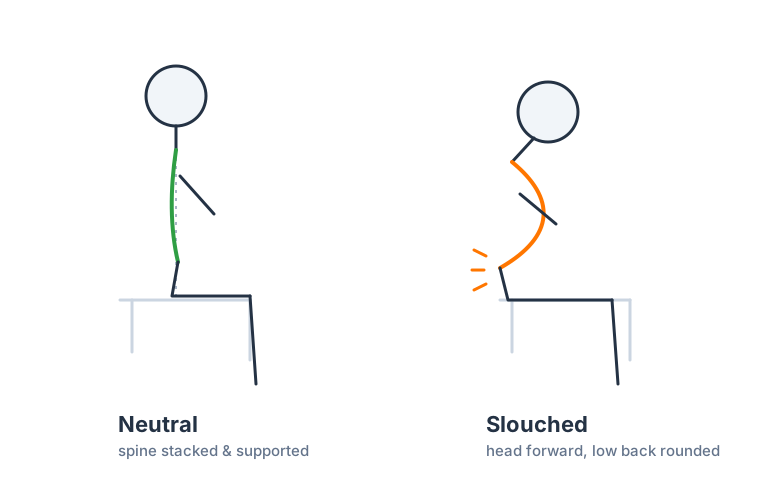
Why Walking Can Bring On Back and Leg Pain
To understand this pattern, picture what walking upright does to the lower spine. With each upright, slightly arched stride, a couple of things happen around the nerves:
- The nerve spaces narrow. Standing and walking tall extend the lower back, which slightly closes down the canal and the side openings where the nerves pass. In a spine that already has less room to spare, that crowds the nerves — and crowded nerves produce leg pain, heaviness, and tingling rather than just back ache.
- Symptoms build with time on your feet, then ease with rest. Because the crowding is worst while you're upright and moving, symptoms accumulate as you walk and then settle within a few minutes once you sit or bend forward and give the nerves room again.
That's the mechanism behind the classic story: comfortable at rest, symptoms climbing the longer you walk, quick relief on sitting, and — tellingly — being able to go further when leaning forward on a cart or walking uphill than when standing tall or heading downhill. Forward flexion opens the nerve spaces, so anything that bends the lower back forward tends to help.
What Walking Pain Usually Points To
Because upright walking narrows the space around the nerves, walking-pattern back and leg pain most often points toward that narrowing or toward an irritated nerve. Rather than re-explain those conditions here, these pages cover the causes in depth:
- Spinal stenosis — a narrowing of the spinal canal or the nerve openings, most common with age, and the classic cause of neurogenic claudication. The spinal stenosis page walks through why standing and walking bring it on and leaning forward relieves it.
- Sciatica — leg pain from an irritated nerve, which can also be provoked by walking depending on what's crowding the nerve. The sciatica page explains how nerve irritation produces leg symptoms and how it's managed.
Not every walking-related ache is one of these — hip problems, muscle fatigue, and foot mechanics can all contribute — so the pattern is a clue rather than a diagnosis. The point of naming them is to show you where to read further if the picture fits; an exam is what actually confirms the source, so there's no need to self-diagnose from the walking clue alone.
Neurogenic vs. Vascular: An Important Distinction
There's one look-alike worth understanding, because it changes who you need to see. A similar "hurts when I walk, better when I stop" pattern can come from the circulation rather than the spine — when narrowed arteries can't supply enough blood to the leg muscles during activity. That's called vascular claudication, and it's a medical (not chiropractic) issue that needs a proper workup.
A few rough distinctions help tell them apart, though only an exam confirms it:
- What relieves it. Spine-related (neurogenic) pain typically eases when you bend forward or sit — changing your back position matters, and simply standing still may not be enough. Circulation-related (vascular) pain typically eases just by stopping and standing still, regardless of your back position.
- What else brings it on. Neurogenic symptoms can also come on with prolonged standing, not only walking. Vascular symptoms are tied more strictly to the effort of walking and predictably ease with rest.
- Accompanying signs. Vascular claudication may come with cold feet, color changes in the skin, or weak pulses in the feet — signs pointing to circulation rather than nerves.
Because the two overlap and the right care differs, this is exactly the kind of thing an evaluation is for. If the pattern or exam points to a vascular cause, Dr. Rubinstein will refer you for the appropriate medical assessment rather than treat it as a spine problem.
What to Expect at Thrive Chiropractic
At Thrive Chiropractic in Troy, MI, care for walking-related back and leg pain starts with sorting out the pattern — neurogenic, vascular, or something else. Dr. Rubinstein will ask how far you can walk before symptoms build, exactly what relieves them, whether standing also provokes them, and whether there are any signs pointing to circulation, along with a hands-on and neurological exam.
When the cause is spinal, care is conservative and often combines flexion-based movement and stretches, gentle mobilization, and soft-tissue and massage therapy to take pressure off the crowded nerves and keep you moving. Spinal decompression may factor in, and custom orthotics can help when foot mechanics add to the load. The honest goal is easing symptoms and helping you stay active — chiropractic care can't widen a narrowed canal, and most improvement comes over a series of visits. If the exam points to a vascular cause or anything else needing medical attention, Dr. Rubinstein will say so plainly and coordinate the right referral.
Staying Active When Walking Hurts
A few approaches genuinely help you keep moving alongside professional care — though the cause should be confirmed first rather than pushed through:
- Walk within comfort, rest, then carry on. Many people do well walking until symptoms build, sitting briefly to let them settle, then continuing.
- Try leaning slightly forward. Because forward flexion opens the nerve spaces, walking with a slight forward lean, using a cart, or choosing uphill routes often lets you go further comfortably.
- Consider a stationary bike. The seated, forward-leaning position keeps the nerve spaces open, so many people tolerate cycling better than walking.
- Keep gently active overall. Staying mobile within comfort beats long rest, which tends to deconditioning and stiffness.
- Don't force your back. Never try to twist or crank your own spine to relieve it — ease the load and change position instead.
If your walking distance is shrinking, or leg weakness or numbness is creeping in, treat that as a signal to be evaluated rather than waited out.
When to See a Chiropractor
Occasional stiffness after a long walk is normal. It's worth getting evaluated when back or leg pain with walking keeps coming back, limits how far you can go, or is paired with numbness, tingling, or heaviness in the legs — and, importantly, any time you're not sure whether it's coming from your spine or your circulation, since that distinction shapes the right care.
A small set of symptoms, though, are emergencies and should never be waited out.
Short of those emergencies, any leg pain, heaviness, or numbness that comes on with walking is a good reason to be seen — both to confirm the source and to get moving comfortably again. When you're ready, you can schedule a visit with Dr. Rubinstein for a thorough exam and a conservative plan. You can also explore the wider Back Pain library for related patterns like back pain while standing and back pain while sitting.
Back Pain Relief Guide (PDF)A one-page take-home guide: simple steps that help now, what's usually behind back pain, and the warning signs that mean it's time to see a doctor.PDFThis article is for general education and is not a substitute for professional medical advice, diagnosis, or treatment. Always consult a qualified healthcare provider about your specific situation.
Frequently Asked Questions
Why do my legs hurt or feel heavy when I walk but feel fine when I sit?
That pattern — leg pain, heaviness, or tingling that builds as you walk and settles within a few minutes of sitting or bending forward — is called neurogenic claudication. Walking upright narrows the spaces the nerves pass through in your lower back; sitting or leaning forward opens them back up and relieves the crowded nerves. It's a recognizable spine pattern, and noticing that sitting reliably relieves it is genuinely useful information for your exam.
Why can I walk further when leaning on a shopping cart?
Leaning forward on a cart flexes your lower spine, which opens the spaces around the nerves and gives them more room. That's why many people find they can walk noticeably further bent forward — on a cart, uphill, or up stairs — than standing tall or walking downhill. It's such a consistent clue that it even has a nickname, the 'shopping-cart sign,' and it points toward narrowing around the nerves rather than a muscle or disc strain.
How do I know if my leg pain is from my back or my circulation?
They can feel similar, which is exactly why it's worth having sorted out. As a rough guide, spine-related (neurogenic) leg pain often eases when you bend forward or sit — not just when you stop moving — and can be brought on by standing too. Circulation-related (vascular) leg pain tends to ease simply by stopping and standing still, regardless of your back position, and may come with cold feet or skin changes. An exam distinguishes the two, and a vascular cause needs a medical workup.
Can a chiropractor help with back pain when walking?
When the cause is spinal, yes — chiropractic care uses flexion-based movement, gentle mobilization, and soft-tissue work to take pressure off the crowded nerves and help you stay active. It can't widen a narrowed canal, so the honest goal is easing symptoms and keeping you moving rather than curing the narrowing. If the exam points to a circulation problem instead, Dr. Rubinstein will refer you for the right medical evaluation.
Should I keep walking if it brings on leg pain?
For spine-related walking pain, staying active usually matters, and many people do well walking within comfort — resting or sitting briefly when symptoms build, then carrying on. Some find walking while leaning slightly forward, or using a stationary bike, lets them go further comfortably. What you shouldn't do is push through leg pain you haven't had evaluated, since the cause should be confirmed first. Dr. Rubinstein can help you find an activity approach that keeps you moving without provoking a flare.
Ready to get evaluated at Thrive Chiropractic?
Dr. Rubinstein will assess what’s really going on and build a care plan tailored to you. Reach out and we’ll get you scheduled.
2133 Crooks Road | Troy MI 48084