
Back Pain While Standing: Why It Happens & What It Means
Back pain that builds the longer you stand — and eases the moment you sit or lean forward — is a distinctive pattern that usually points to the joints at the back of the spine. Here's why prolonged standing loads those joints, what the pattern means, how chiropractic care at Thrive Chiropractic in Troy, MI helps, and how to stand more comfortably.
What Is Back Pain While Standing?
Back pain while standing is lower back discomfort that builds the longer you're on your feet — waiting in a line, cooking, working at a counter, standing at an event — and typically eases when you sit down or lean forward on something. It's almost the mirror image of back pain while sitting: where sitting pain points toward the discs at the front of the spine, standing pain tends to point toward the joints at the back of the spine. That difference in which position hurts is one of the more useful clues your back can give you.
The reason is posture-driven. When you stand tall, your lower back settles into a slight arch, and that arch loads a specific set of structures — the small paired facet joints that guide how each level of your spine moves, and the spaces alongside them where nerves pass. Hold that arched, loaded position for a while and those structures get irritated, so the ache grows with time on your feet. The purpose of this guide is to explain why standing does this, what the pattern usually means, and — because it overlaps with a couple of specific conditions — where to read more rather than repeating it here.
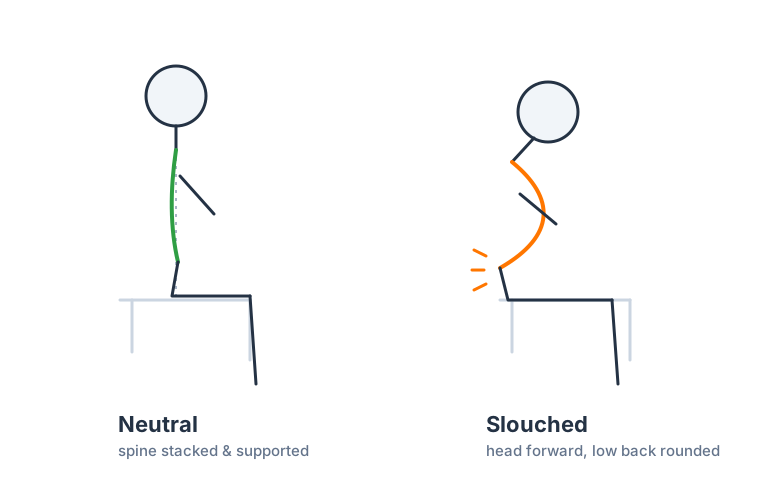
Why Standing Loads the Back of Your Spine
To understand standing pain, picture what the arch of standing does to the lumbar spine. When you're upright and still, a few things happen at the back of each spinal level:
- The facet joints bear load. These small joints, paired at the back of every vertebra, guide bending and twisting. Standing tall presses them together and loads them; the longer you stand, the more that sustained contact irritates them.
- The nerve spaces narrow. Extending the lower back — the natural standing arch — slightly closes down the openings alongside the spine where nerves exit. In a spine that already has less room to spare, that can crowd the nerves and add leg symptoms into the mix.
- The postural muscles fatigue. Holding you upright is active work for the deep back and hip muscles. Standing in one spot without shifting lets them tire, so they support the spine less and the joints take more.
Bending forward reverses all three at once — it opens the facet joints, widens the nerve spaces, and gives the tired muscles a break — which is exactly why sitting or leaning forward brings such quick relief. As with sitting, the real problem is usually static standing rather than standing itself, so the fix leans on movement, weight-shifting, and support rather than staying off your feet entirely.
What Standing Pain Usually Points To
Because standing loads the back of the spine, pain that builds with standing and eases with bending forward often points toward the facet joints or the spaces around the nerves. Rather than re-explain those conditions here, these pages cover the underlying causes in depth:
- Facet syndrome — irritation or wear of the facet joints themselves, which classically hurts more with standing, arching, and twisting, and eases with forward bending. The facet syndrome page explains what's happening in the joint and how it's managed.
- Spinal stenosis — a narrowing of the spinal canal or the nerve openings, most common with age, which produces the standing-and-walking pattern and often adds leg pain or heaviness. The spinal stenosis page walks through why leaning forward relieves it.
Not every standing-pattern ache is one of these — plain joint irritation, muscle fatigue, tight hip flexors, and posture can all produce it in an otherwise healthy spine. The point of naming them is so you know where to read further if the pattern fits; an exam is what confirms whether wear-related changes are actually involved, so there's no need to self-diagnose from the standing clue alone.
How to Stand More Comfortably
Since static standing and an exaggerated arch drive much of the load, a few adjustments help. The core idea is to avoid holding one arched position and to give your lower back ways to unload while you're up.
Alongside better standing posture:
- Use a footrest. Resting one foot on a low step, rail, or box gently reduces the lower-back arch and unloads the facet joints — an old trick for a reason.
- Shift your weight and move. Rock between feet, step in place, or take a few steps rather than locking into one spot.
- Mind your footwear and surface. Supportive shoes and a cushioned mat make a real difference during long standing tasks.
What to Expect at Thrive Chiropractic
At Thrive Chiropractic in Troy, MI, care for standing-related back pain is conservative and built around your exam. Dr. Rubinstein will ask how long you can stand before it builds, whether sitting or leaning forward relieves it, whether anything travels into a leg, and what your posture and footwear are like — because that pattern helps point to whether the facet joints or the nerve spaces are involved.
Care often combines chiropractic adjustments and mobilization to restore motion to stiff, irritated spinal joints, soft-tissue and massage therapy to release the muscle fatigue and guarding that standing builds up, and corrective posture and movement coaching to take load off the back of the spine. Custom orthotics may factor in when foot mechanics are adding uneven load during standing, and spinal decompression can play a role when a disc or crowded nerve is also involved. This is management rather than a one-time cure — most improvement comes over a series of visits — and if your history or exam suggests something that needs medical attention, Dr. Rubinstein will say so and coordinate the right referral.
Easing Standing-Related Back Pain at Home
A few habits genuinely help alongside professional care:
- Break up long standing by shifting weight, using a footrest, and taking brief seated or forward-leaning breaks.
- Optimize where you stand a lot — a cushioned mat at the kitchen or workbench, and supportive shoes.
- Stretch tight hip flexors and strengthen the core and glutes gradually, since both help hold a neutral, less-arched posture.
- Keep gently active. Staying mobile within comfort beats long rest, which tends to stiffen the back.
- Don't force it. Never try to twist or crank your own back to relieve it — ease the load instead.
If your pain is getting worse despite these steps, or leg pain, heaviness, or numbness comes on when you stand or walk, treat that as a signal to be evaluated rather than waited out.
When to See a Chiropractor
Occasional stiffness after a long day on your feet is normal. It's worth getting evaluated when back pain from standing keeps coming back, doesn't ease within a couple of weeks, or starts limiting how long you can stand or the things you enjoy. Getting ahead of it gives conservative care the best chance to work before an ache settles in.
A small set of symptoms, though, are emergencies and should never be waited out.
Short of those emergencies, leg pain or heaviness that comes on with standing and walking — a pattern often linked to sciatica or a narrowed canal — is a good reason to be seen sooner. When you're ready, you can schedule a visit with Dr. Rubinstein for a thorough exam and a conservative plan. You can also explore the wider Back Pain library for related patterns like back pain while walking and back pain while sitting.
Back Pain Relief Guide (PDF)A one-page take-home guide: simple steps that help now, what's usually behind back pain, and the warning signs that mean it's time to see a doctor.PDFThis article is for general education and is not a substitute for professional medical advice, diagnosis, or treatment. Always consult a qualified healthcare provider about your specific situation.
Frequently Asked Questions
Why does my lower back hurt when I stand for a long time?
Standing tall puts your lower back into a slight arch, which loads the facet joints — the small paired joints at the back of each spinal level — and closes down the spaces the nerves pass through. Hold that for a while and those joints and tissues get irritated, so the ache builds the longer you're on your feet. Bending forward or sitting opens the joints back up, which is why the pain often eases the moment you do.
Why does leaning forward or sitting relieve my back pain?
Bending slightly forward — sitting, leaning on a cart, or resting your hands on a counter — flexes the lower spine, which opens the facet joints and widens the spaces around the nerves. That takes pressure off the very structures that standing loads, so relief comes within a minute or two. This 'better bent forward, worse standing tall' pattern is a recognizable clue and useful to mention at your exam.
Is standing all day bad for your back?
Prolonged static standing is hard on the back for the same reason prolonged sitting is — your spine isn't built to hold any one loaded position for hours. Standing in one spot keeps the facet joints under sustained load and lets the muscles fatigue. The fix isn't to avoid standing but to shift your weight, move, and use a footrest, so no single position is held too long.
Can a chiropractor help with back pain from standing?
Yes. Chiropractic care restores motion to stiff, irritated spinal joints and relieves the muscle fatigue that long standing creates, aiming to make time on your feet more comfortable. Dr. Rubinstein also looks at posture, footwear, and how you stand, since those feed into the load. After an exam, you'll get a plan matched to what's driving your pain.
Does standing back pain mean I have arthritis or stenosis?
Not necessarily. Standing-pattern pain often involves the facet joints, and worn facet joints or a narrowed canal can produce it — but so can simple joint irritation, muscle fatigue, and posture in an otherwise healthy spine. The pattern is a clue, not a diagnosis. An exam is what sorts out whether wear-related changes are involved and how significant they are, which is why it's better to be evaluated than to assume the worst.
Ready to get evaluated at Thrive Chiropractic?
Dr. Rubinstein will assess what’s really going on and build a care plan tailored to you. Reach out and we’ll get you scheduled.
2133 Crooks Road | Troy MI 48084