
Back Pain While Sleeping: Causes, Fixes & When to Get Help
Back pain that shows up at night usually comes down to your mattress and sleeping position — but there's one nighttime pattern that is an important red flag. Here's what causes back pain during sleep, how to set up your bed, the warning sign worth taking seriously, and how chiropractic care at Thrive Chiropractic in Troy, MI helps.
What Is Back Pain While Sleeping?
Back pain while sleeping is lower back discomfort that shows up at night or in the first minutes after you wake — an ache, stiffness, or soreness that either disturbs your sleep or greets you in the morning. Because you can't consciously adjust your posture while you're asleep, your back can spend six, seven, or eight hours in a position it would never tolerate for long while awake. You simply don't have the reflex to shift out of a bad angle the way you would during the day.
For the great majority of people, nighttime back pain comes down to the setup: a mattress that no longer supports the spine evenly and a sleeping position that lets the lower back bend out of its neutral shape for hours. That's a mechanical, fixable problem, and most of this guide is about how to set your bed up so you wake up comfortable. But there's one important exception — a specific nighttime pattern that isn't about your mattress and does warrant a medical look — and this guide spells that out clearly so you know the difference.
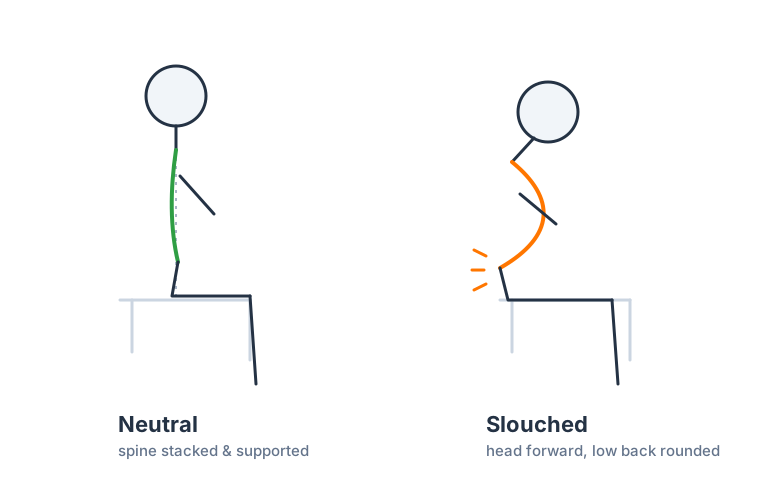
Why Your Back Hurts at Night
Nighttime back pain usually isn't an injury — it's the result of your sleep setup quietly working against your spine for hours. A few things drive it:
- Hours in one position. Asleep, you hold whatever position your setup puts you in with no chance to shift, so a small strain that would be nothing for a minute becomes hours of low-grade load on the joints and muscles.
- A spine bent out of neutral. If your mattress sags or your position rounds or arches the lower back, the discs, joints, and ligaments spend the night slightly out of alignment and greet you stiff and sore.
- An already-irritated back. If your back is sore from the day — a strain, stiffness, or a flare of an existing issue — lying still overnight can let it tighten further, so the morning feels worse before movement loosens it again.
There's often an overlap with morning back stiffness, since the overnight discs-and-stillness picture is shared — that page covers the "stiff on waking, loose with movement" rhythm in more depth. The common thread is that the same setup repeats night after night, so a poor mattress or position tends to produce sore mornings most days rather than just once.
The Mattress and Sleep-Position Factor
Because it all happens in bed, your mattress and position are the first places to look. A sagging mattress lets your hips and midsection sink so the spine bows out of neutral, while a mattress that's too firm can leave the natural curve of your lower back unsupported and put pressure on your hips and shoulders. Signs the setup is part of the problem: your back is clearly worst on waking and eases once you're up, the mattress is old or visibly dips, or you reliably sleep better in a different bed.
Position matters just as much as the mattress:
- Back sleeping is generally easy on the lower back — a pillow under the knees keeps the lumbar spine in a comfortable neutral.
- Side sleeping works well with a pillow between the knees, which stops the top leg from dropping forward and twisting the pelvis and lower back.
- Stomach sleeping is the hardest on the back, flattening the lower back's curve and forcing the neck to stay turned. It's the position most worth changing.
The Night-Pain Red Flag Worth Taking Seriously
Here's the exception to the "it's probably your mattress" reassurance, and it's worth reading carefully.
Ordinary mechanical back pain generally behaves like a mechanical problem: it's eased by finding a comfortable position, tends to improve with rest, and loosens up once you get moving in the morning. That's the reassuring pattern the rest of this guide addresses.
Back pain that behaves differently at night is the one to take seriously. Specifically, back pain that is distinctly worse at night, that wakes you from sleep, or that is unrelenting regardless of how you lie — no position brings relief — does not fit the ordinary mechanical picture. That kind of night pain is a recognized warning sign that warrants a medical evaluation to look into the cause, rather than being managed as a simple setup problem. It doesn't mean something is necessarily wrong, but it's exactly the pattern where a proper check is the right call.
What to Expect at Thrive Chiropractic
At Thrive Chiropractic in Troy, MI, care for sleep-related back pain starts with sorting out which pattern you're in. Dr. Rubinstein will ask how your back feels at night versus on waking versus later in the day, whether any position gives relief, and what your mattress and sleeping position are like — because the classic "worse on waking, better with movement" story points to a setup problem, while the night-pain pattern above points toward a medical evaluation first.
When it's mechanical, care is conservative and typically combines chiropractic adjustments to restore motion to stiff spinal joints, soft-tissue and massage therapy to release the muscle tension a rough night leaves behind, and practical guidance on your mattress and sleeping position so it stops repeating. Spinal decompression may factor in when a disc is involved. If your history matches the night-pain red flag or your exam turns up anything needing medical attention, Dr. Rubinstein will say so plainly and coordinate the right referral rather than continue hands-on care alone. This is management rather than a one-time cure, and you'll get a realistic sense of your timeline after the exam.
How to Sleep With Less Back Pain
A few adjustments to your sleep setup can make a real difference — often the difference between a sore morning and a good one:
- Support your spine by position. Back sleeper: a pillow under the knees. Side sleeper: a pillow between the knees. Both keep the lower back closer to neutral all night.
- Rethink stomach sleeping. It's the hardest position on the back — the pillow-hugging trick above helps you switch off it.
- Address a sagging mattress. If your bed dips or is well past its prime, replacing or firming it up removes a common overnight strain.
- Ease into the morning. Gentle movement, a slow walk, or a warm shower loosens a stiff back far better than forcing it — and never twist or crank your own back to relieve it.
- See the broader home-care guide. For a fuller set of self-care steps, the back pain relief at home page pulls together safe, practical measures.
If your back pain fits the night-pain pattern above, don't rely on these setup changes alone — that's the situation to have evaluated.
When to See a Chiropractor
An occasional sore morning that clears once you're moving is normal. It's worth getting evaluated when back pain around sleep keeps coming back most mornings, doesn't ease the way it used to as the day goes on, or starts interfering with your sleep and daily routine. Getting ahead of it gives conservative care the best chance to keep a mechanical pattern from settling in.
Book a check sooner — and think medical evaluation, not just hands-on care — if your back pain is worse at night, wakes you, or is unrelenting no matter how you lie, or if any of the red-flag symptoms above appear. When you're ready, you can schedule a visit with Dr. Rubinstein for a thorough exam, an honest read on which pattern you're dealing with, and a plan aimed at comfortable nights. You can also explore the wider Back Pain library for related topics like morning back stiffness and back pain while sitting.
Back Pain Relief Guide (PDF)A one-page take-home guide: simple steps that help now, what's usually behind back pain, and the warning signs that mean it's time to see a doctor.PDFThis article is for general education and is not a substitute for professional medical advice, diagnosis, or treatment. Always consult a qualified healthcare provider about your specific situation.
Frequently Asked Questions
Why does my back hurt when I sleep or first thing in the morning?
Overnight your spine holds one position for hours with no chance to shift, and if your mattress sags or your position lets your back bend out of neutral, the joints and muscles stay strained the whole time. A mattress that no longer supports you evenly is a common culprit. If your back is worst on waking and eases once you're up and moving, that mechanical, setup-related pattern is usually the reason.
What is the best sleeping position for back pain?
Back and side sleeping tend to be easiest on the lower back when you support the spine. On your back, a pillow under your knees keeps the lumbar spine in a comfortable neutral. On your side, a pillow between your knees stops the top leg from twisting your pelvis and lower back. Stomach sleeping is generally the hardest on the back, since it flattens the lower back's curve and forces the neck to turn — switching off it often helps the most.
Can my mattress cause back pain at night?
Yes, it's one of the most common contributors. A mattress that sags in the middle lets your hips sink so the spine bends out of neutral all night, while one that's too firm can leave the lower back unsupported. If your back is clearly worse on waking, the mattress is old or dips, or you sleep better in a different bed, the setup is worth addressing — though it's usually one piece of the picture rather than the whole story.
Is it bad if back pain wakes me up at night?
It's worth paying attention to. Ordinary mechanical back pain is usually eased by finding a comfortable position and tends to be better with rest. Back pain that is distinctly worse at night, wakes you from sleep, or stays intense no matter how you lie is a different pattern, and it's one of the signs that warrants a medical evaluation rather than being managed as a simple setup problem. If that's your experience, it's genuinely worth getting checked.
Can a chiropractor help with back pain from sleeping?
When the cause is mechanical — a poor setup or an irritated, stiff back — yes. Chiropractic care restores motion to stiff spinal joints and relieves the muscle tension a rough night leaves behind, while mattress and position guidance helps stop it repeating. If your history points to the night-pain red flag above, Dr. Rubinstein will steer you toward medical evaluation first rather than treat it as a setup issue.
Ready to get evaluated at Thrive Chiropractic?
Dr. Rubinstein will assess what’s really going on and build a care plan tailored to you. Reach out and we’ll get you scheduled.
2133 Crooks Road | Troy MI 48084