
Back Pain Relief at Home: What Actually Helps
Most everyday back pain can be eased at home with a few simple, sensible steps — heat or ice, staying gently active, smart sleep positions, and modifying the activities that aggravate it. Here's what actually helps, what to skip, the honest signs that home care isn't enough, and how care at Thrive Chiropractic in Troy, MI picks up where self-care leaves off.
Can You Treat Back Pain at Home?
For most people, most of the time — yes. The great majority of everyday back pain comes from ordinary strain on the muscles, joints, and discs of the spine, and that kind of pain usually settles with a few sensible steps at home over a week or two. You don't need to rush to intervention for a garden-variety sore back; you need to help it along and stay out of its way while it recovers.
The honest framing matters, though. Home care is the right first move for an ordinary flare — the kind that follows a heavy lift, a long drive, or an awkward twist and stays in your back. It is not a substitute for getting evaluated when pain is severe, keeps coming back, travels down your leg, or simply isn't improving. Think of self-care as the sensible starting point with a built-in check: give it a fair try, but know when it's time to bring in a professional. The sections below cover what genuinely helps, what to skip, and exactly where that line is.
Heat or Ice: Which and When
Both heat and ice are safe, cheap, and genuinely helpful for easing back pain — and the honest answer to "which one" is that either can help, so you can go with whatever feels better. That said, there's a rough guide:
- Ice tends to suit a fresh strain or a hot, inflamed flare in the first day or two. It calms irritation and can numb a sharp ache. Wrap it in a thin towel and apply for about 15 to 20 minutes at a time.
- Heat is soothing for muscle tightness, stiffness, and ongoing aches — the deep, guarded soreness that lingers. A heating pad, warm pack, or a hot shower relaxes tense muscles and improves comfort and movement. Again, 15 to 20 minutes, and protect your skin.
- Alternating the two works well for many people — a bit of heat to loosen up before moving, ice afterward if things feel inflamed.
A couple of safety notes: always keep a layer of cloth between the source and your skin, don't fall asleep on a heating pad, and skip heat on an area that's swollen, red, and hot to the touch. Beyond that, let comfort be your guide — the "right" choice is the one that eases your pain.
Stay Gently Active, Not Bedridden
This is the single most important shift in how back pain is managed, and it runs against instinct. For the vast majority of everyday back pain, gentle movement beats bed rest. Lying still for more than a day or two lets the joints stiffen, the supporting muscles weaken, and the back grow more sensitive — so prolonged rest tends to leave you worse, not better.
That doesn't mean pushing through hard workouts. It means staying as active as your comfort allows:
- Keep walking. Short, easy walks through the day keep your spine moving and blood flowing without loading it heavily. It's one of the best things you can do.
- Change position often. Don't sit — or stand — locked in one posture for hours. Get up, shift, and move every half hour or so.
- Do gentle mobility work. Easy, within-comfort stretches keep things from seizing up. Our back pain exercises guide walks through a safe home routine, including which movements to ease off during a flare.
If a bad flare genuinely floors you, taking it easy for a day is reasonable — just treat that as a brief pause, not a strategy, and ease back into gentle movement as soon as you can.
Sleep Positions That Take the Strain Off
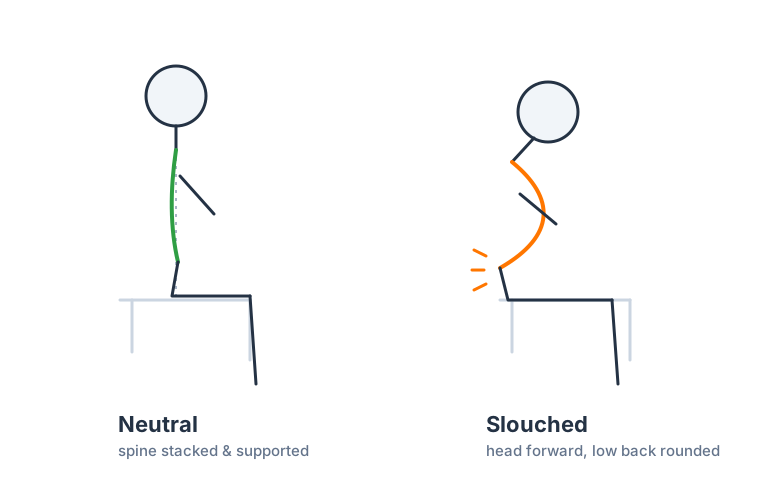
You spend hours asleep with no ability to shift out of a bad position, so how you lie matters — a poor setup can keep a sore back strained all night and leave you stiff by morning. A few simple adjustments keep your spine neutral:
- On your back? Slip a pillow under your knees. It takes tension off the lower back by letting the lumbar spine settle into a comfortable, neutral curve.
- On your side? Put a pillow between your knees. It keeps your hips, pelvis, and spine aligned instead of letting the top leg drag your lower back into a twist.
- Avoid sleeping on your stomach when your back is sore — it tends to flatten the lower back's natural curve and load the joints.
- Mind your mattress. A mattress that sags in the middle lets your spine sink out of line all night. It doesn't have to be brand new, but it should support you evenly.
Getting into and out of bed matters too: roll onto your side and push up with your arms rather than jackknifing straight up from lying flat, which spikes the load on your lower back.
Modify the Activities That Aggravate It
Alongside heat, movement, and sleep, the fourth pillar of home care is simply easing off — for a few days — whatever is clearly flaring your back, then easing back in as it settles.
This is temporary and targeted, not permanent avoidance. Backing off aggravating activities for a few days gives irritated tissue a chance to calm down; staying active in every other way keeps the rest of you from stiffening up. As you improve, add the modified activities back gradually rather than all at once.
What to Skip or Be Careful With
A few things people reach for either don't help or can make matters worse:
- Don't stay in bed for days. Bears repeating, because it's the most common self-care mistake — prolonged bed rest slows recovery.
- Don't try to "crack" or twist your own back. Wrenching your spine to force a pop bypasses the control that keeps movement safe and can irritate a joint or nerve. Leave any adjusting to a hands-on exam.
- Don't push through sharp or radiating pain. Working out or stretching into pain that shoots down your leg is a signal to stop, not to power on.
- Be sensible with over-the-counter medication. Used briefly and as directed, it can help you stay comfortable enough to keep moving — but it masks pain rather than fixing the cause, so it's a bridge, not a solution. Follow the label, and check with a pharmacist or doctor about what's appropriate for you.
Home care is about helping your back recover, not about heroics. Gentle and consistent wins.
When Home Care Isn't Enough
Here's the honest part self-care articles often skip: sometimes home remedies aren't the answer, and knowing when to stop trying them is as important as the remedies themselves. Give sensible self-care a fair run of a week or two for an ordinary flare — but if the pain isn't clearly improving, keeps coming back, or is spreading down your leg, that's your cue to get it evaluated rather than keep cycling through heat packs.
Some situations shouldn't wait even that long. A few symptoms are true emergencies — skip home care and seek help immediately.
Short of those emergencies, persistent, recurring, or radiating pain is exactly what conservative care is built to address. At Thrive Chiropractic in Troy, MI, Dr. Rubinstein can find the actual source of your pain and pair hands-on care — chiropractic adjustments, massage therapy, and spinal decompression when a disc is involved — with practical self-care guidance so relief lasts rather than returning. When your back pain outlasts your home remedies, schedule a visit and get a clear, honest read on what's going on. You can also read more in our lower back pain and acute back pain guides.
Frequently Asked Questions
Relieving back pain at home raises practical questions — how to actually do it, whether heat or ice is better, whether to rest or move, the fastest route to comfort, and how long to try remedies before seeing someone. Those are answered in detail in the FAQ section on this page.
If your back has been bothering you and home care isn't cutting it, schedule a visit with Dr. Rubinstein at Thrive Chiropractic in Troy, MI. You'll get a thorough exam, an honest read on the cause, and a plan that pairs hands-on relief with self-care you can keep doing. Explore the wider Back Pain library for related guides like back pain exercises.
Back Pain Relief Guide (PDF)A one-page take-home guide: simple steps that help now, what's usually behind back pain, and the warning signs that mean it's time to see a doctor.PDFThis article is for general education and is not a substitute for professional medical advice, diagnosis, or treatment. Always consult a qualified healthcare provider about your specific situation.
Frequently Asked Questions
How can I relieve back pain at home?
For most everyday back pain, the basics work well: apply heat or ice for comfort, keep gently moving rather than lying in bed, sleep in a position that keeps your spine neutral, and ease off the activities that flare it for a few days. Give it a week or two of sensible self-care — but if it's severe, spreading down a leg, or not improving, that's the point to get it evaluated.
Is heat or ice better for back pain?
Both help, and it's fine to go with whichever feels better to you. Ice tends to suit a fresh strain or a hot, inflamed flare in the first day or two, while heat is soothing for muscle tightness, stiffness, and ongoing aches. Many people alternate. Just protect your skin with a layer of cloth and limit each session to about 15 to 20 minutes.
Should I rest or move with back pain?
Move — gently. For the great majority of everyday back pain, staying active within your comfort helps far more than bed rest, which stiffens the joints and weakens the supporting muscles. A day of taking it easy during a bad flare is fine, but beyond that, easy movement like walking and gentle stretching speeds recovery.
What is the fastest way to relieve back pain?
There's no true instant fix, but the combination that tends to bring the quickest comfort is gentle movement to keep things from seizing up, heat or ice for symptom relief, and easing off whatever aggravates it — all while avoiding the temptation to lie still for days. If you want faster, more lasting relief, hands-on care that addresses the actual cause is usually what does it.
How long should I try home remedies before seeing someone?
A reasonable rule of thumb is a week or two of sensible self-care for an ordinary flare. If it isn't clearly improving in that window — or if at any point it's severe, keeps coming back, spreads down your leg, or comes with numbness, tingling, or weakness — stop waiting and get it evaluated. And treat the red-flag symptoms on this page as an immediate emergency, not something to manage at home.
Ready to get evaluated at Thrive Chiropractic?
Dr. Rubinstein will assess what’s really going on and build a care plan tailored to you. Reach out and we’ll get you scheduled.
2133 Crooks Road | Troy MI 48084