
Back Pain from Poor Posture: Why Slouching Hurts & How to Fix It
Slouching, an anterior pelvic tilt, and a rounded upper back quietly load the lumbar spine hour after hour — until your back aches for no obvious reason. Here's how poor posture fatigues and strains your lower back, the corrective habits that unwind it, and how conservative chiropractic care at Thrive Chiropractic in Troy, MI helps you sit and stand comfortably again.
How Posture Loads Your Back
Poor posture rarely announces itself with a single painful moment. Instead it works slowly: an off-balance position, held for hours, that quietly asks more of your lower back than it should have to give. By the end of a day spent slouched, the muscles that have been straining to hold you upright are fatigued, and the discs and joints they're supposed to protect have been carrying uneven load the whole time. That's the pattern behind so much unexplained lower back pain — no injury, no obvious trigger, just an ache that seems to appear from nowhere.
The key idea is sustained load. Your spine is built to move and to shift position, not to hold one shape for hours. A healthy lumbar spine has a gentle inward curve that lets your muscles, discs, and joints share load efficiently. When posture flattens or exaggerates that curve, the sharing breaks down: certain muscles work overtime while others switch off, and the discs and small facet joints at the back of the spine take a bigger share of the strain than they're meant to. None of that hurts in a given minute. Repeated across weeks and months, it adds up to real, persistent pain.
The Postures That Cause Back Pain
Three patterns account for most posture-related back pain. They often show up together.
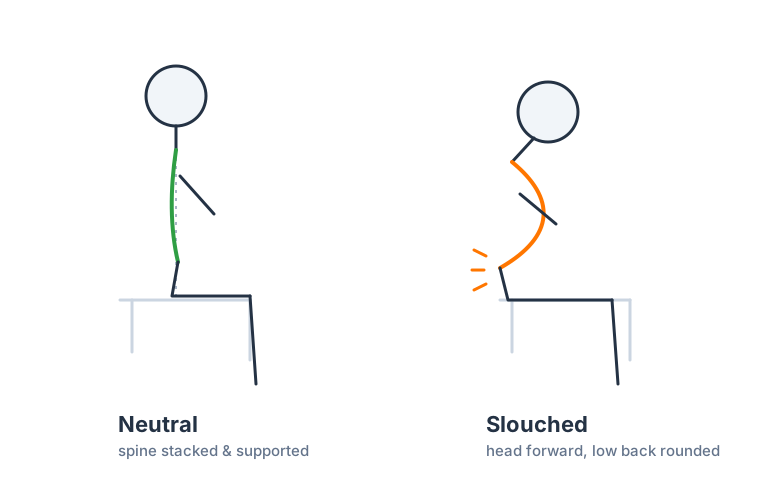
- Sustained slouching. Rounding forward while seated flattens the lower back's natural curve and lets the supporting muscles switch off, so the discs and ligaments hold you up instead. It's comfortable at first, which is exactly why it's easy to sit that way for hours — until the strain catches up.
- Anterior pelvic tilt. When the pelvis rotates forward, the lower back arches more sharply than it should. That deepened curve crowds the facet joints and keeps the low-back muscles in a shortened, working state all day, a common driver of a tired, achy lumbar spine.
- A rounded upper back. A hunched mid- and upper-back — often paired with a forward head — throws your whole posture off balance. Your lower back then compensates to keep you upright, so a problem that starts higher up quietly becomes lower-back strain. This links closely to the desk-driven patterns behind neck pain as well.
Often it's a chain reaction: a rounded upper back tips the pelvis, the pelvis tilts, the lumbar curve changes, and the low-back muscles fatigue trying to hold everything steady. That's why chasing a single "bad habit" rarely fixes it — the whole posture tends to move together.
Common Symptoms
Posture-related back pain has a recognizable signature:
- A dull ache or stiffness across the lower back that builds through the day rather than starting suddenly
- Pain that eases when you move or change position and returns when you settle back into the same posture
- Tired, tight muscles in the low back and often across the upper back and shoulders too
- A sense that you're "holding yourself up" by late afternoon, with relief the moment you stand, stretch, or lie down
- Discomfort that's worse after long stretches of sitting or standing in one spot
The tell-tale sign is the rhythm: it tracks how long you've held a position, and it responds to movement. Pain that instead travels down a leg, or comes with numbness or tingling, points toward a nerve being involved and is worth having looked at sooner — that can shade into sciatica rather than simple postural strain.
Who's Most at Risk?
Anyone can develop posture-related back pain, but it's most common in:
- Desk and remote workers who sit for long stretches — the workstation angle is covered in depth in back pain from office and desk work
- Teens and students hunched over devices and schoolwork for hours
- Older adults, as a lifetime of posture habits and normal joint wear add up
- People with a weak or deconditioned core, whose spine gets less support to begin with
- Anyone who spends long hours looking down at a phone or tablet, pulling the whole posture forward
Frequently more than one applies. A sedentary workday layered on top of evenings spent on the couch and phone is a very common recipe for the slow build of postural back pain.
Corrective Habits That Unwind Poor Posture
The good news is that posture responds to attention. You don't need a rigid, military stance — you need a neutral spine you can return to easily, plus movement and strength to make it stick. Here's the difference the position itself makes:
A few habits do most of the work:
- Reset, don't freeze. Aim for a neutral, stacked spine — then change position and move regularly rather than holding any one pose. Variety spreads the load.
- Support the curve when seated. A small lumbar support or rolled towel behind your low back helps keep its natural inward curve instead of letting it collapse into a slouch.
- Take movement breaks. Stand, walk, and gently arch or roll your shoulders back every half hour or so, so no posture gets held long enough to fatigue you.
- Build core stability. A stronger trunk gives your spine the support to hold a neutral posture without effort — see core stability for back pain for a plain-English starting point.
- Move the whole chain. Gentle stretches and strengtheners for the hips, upper back, and core, as covered in back pain exercises, help unwind a posture that has stiffened into place.
What to Expect at Thrive Chiropractic
At Thrive Chiropractic in Troy, MI, care for posture-related back pain is conservative and built around your exam. Once a long-held posture has stiffened joints and tightened muscles, self-correction alone often isn't enough to fully undo it — that's where hands-on care makes the difference. Dr. Rubinstein typically combines chiropractic adjustments to restore motion to stiff lumbar and mid-back segments, soft-tissue and massage therapy to release the muscles a slouched posture keeps tight, and posture and core coaching so your body can hold a neutral position without constant effort. When foot mechanics tilt the whole chain, custom orthotics may be part of the plan, and if postural strain has been layered on top of a disc issue, spinal decompression can enter the conversation.
The plan is honest about what's realistic: chiropractic care and habit change together relieve posture-related back pain and help you move better — it isn't a one-time fix, and lasting change comes over a series of visits as new patterns take hold. You'll get a specific timeline after your exam.
When to See a Chiropractor
A little stiffness after a long day is normal. It's worth getting evaluated when posture-related back pain keeps coming back, doesn't ease with movement and position changes, or starts to interfere with sleep, work, or the things you enjoy. Getting ahead of it gives conservative care and posture retraining the best chance to work before a short-term ache settles into a habit.
A small set of symptoms, though, are true emergencies and should never be waited out or dismissed as "just posture."
Short of those emergencies, radiating leg pain, numbness, or tingling are all good reasons to be seen sooner rather than later. When you're ready, you can schedule a visit with Dr. Rubinstein for a thorough exam, an honest read on whether posture is the driver, and a conservative plan aimed at getting you comfortably upright again.
Frequently Asked Questions
Posture-related back pain raises a lot of fair questions — whether bad posture can really cause pain, how to tell if posture is your problem, what "good posture" even means, and how care helps. Those are answered in detail in the FAQ section on this page.
If your back aches by the end of the day and you suspect posture is behind it, schedule a visit with Dr. Rubinstein at Thrive Chiropractic in Troy, MI. You'll get a thorough exam, an honest read on the cause, and a conservative plan aimed at relieving the pain and retraining the pattern that's driving it. You can also explore the wider Back Pain library for related topics like back pain while sitting.
Back Pain Relief Guide (PDF)A one-page take-home guide: simple steps that help now, what's usually behind back pain, and the warning signs that mean it's time to see a doctor.PDFThis article is for general education and is not a substitute for professional medical advice, diagnosis, or treatment. Always consult a qualified healthcare provider about your specific situation.
Frequently Asked Questions
Can bad posture really cause back pain?
Yes. It usually isn't the posture in any single moment that hurts you — it's holding an off-balance position for hours, day after day. That sustained load fatigues the muscles that support your spine and shifts extra strain onto the discs and joints, which you eventually feel as aching and stiffness. Correcting the pattern is often what finally settles that kind of pain.
How do I know if my back pain is from posture?
Posture-related back pain tends to build over the day rather than start with an injury, ease when you change position or move, and worsen after long stretches of sitting or standing in one spot. That said, other causes can feel similar, so an exam is the reliable way to confirm posture is the driver rather than something else that needs a different approach.
What is the best posture to avoid back pain?
The best posture is really the next one — your back does best with variety and movement, not one 'perfect' position held rigidly. Aim to keep your spine in a neutral, stacked position with your low back gently supported, then change position and move regularly. Dr. Rubinstein can show you what neutral feels like for your body and how to return to it easily.
Can a chiropractor fix posture-related back pain?
Yes — it's a common reason people come in. Chiropractic care restores motion to the segments a long-held posture has stiffened, relieves the muscle tension it creates, and pairs that with posture and core coaching so the pattern doesn't simply rebuild. Care and habit change together tend to hold far better than either one alone.
How long does it take to correct posture and relieve the pain?
It varies with how long the pattern has been building. Many people feel looser within the first few visits, but lasting change comes from retraining the posture and strengthening the support around your spine, which happens over weeks rather than days. Dr. Rubinstein will give you a realistic timeline after your exam.
Ready to get evaluated at Thrive Chiropractic?
Dr. Rubinstein will assess what’s really going on and build a care plan tailored to you. Reach out and we’ll get you scheduled.
2133 Crooks Road | Troy MI 48084